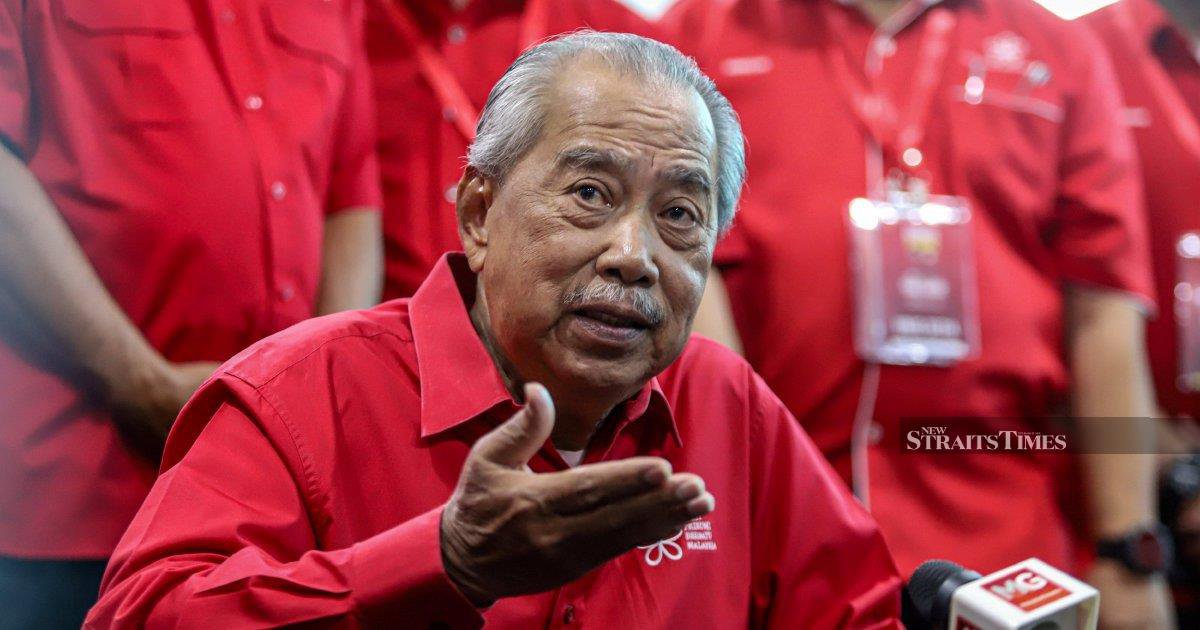
Tan Sri Muhyiddin Yassin has firmly rejected suggestions from Tan Sri Annuar Musa that Bersatu voluntarily chose to mufarakah, or separate, from Perikatan Nasional in the aftermath of tensions surrounding the Negri Sembilan state election. The former Prime Minister's public rebuttal marks the latest escalation in a dispute between two senior figures within Malaysia's fragmented opposition landscape, each advancing competing narratives about responsibility for the coalition's breakdown.
Muhyiddin's denial comes against a backdrop of deteriorating relations between Bersatu and its coalition partners in Perikatan Nasional, a bloc that has struggled to maintain internal cohesion since its formation. The party's leader has consistently maintained that external pressures rather than internal strategic decisions drove the separation, suggesting that Bersatu was responding to circumstances beyond its direct influence. This framing proves critical in shaping public perception of which party bears culpability for weakening the opposition alliance when it faces mounting challenges from the ruling Pakatan Harapan government.
The disagreement over the circumstances of the split carries significant implications for Malaysian opposition politics. Perikatan Nasional, which combines Bersatu with PAS and other smaller parties, has positioned itself as a credible alternative to Pakatan Harapan. However, internal divisions threaten the coalition's electoral credibility and its ability to present a united front in forthcoming contests. For Bersatu specifically, the perception of voluntary abandonment could undermine claims that the party remains committed to opposition unity while simultaneously suggesting leadership instability.
Annuar Musa, whose role as a senior political operator extends across multiple portfolios, appears to have suggested that Bersatu's withdrawal reflected deliberate party strategy rather than forced circumstances. This interpretation, if accurate, would portray Muhyiddin and his faction as prioritising narrow party interests over the broader opposition coalition's survival. The Negri Sembilan election itself became a flashpoint for coalition tensions, with candidate selection and resource allocation decisions generating friction between partners who struggle to agree on shared objectives.
Muhyiddin's counterargument implicitly questions whether Annuar's characterisation accurately reflects the sequence of events. By contesting the voluntary nature of the separation, Muhyiddin seeks to reposition Bersatu as a reluctant party forced to protect its interests when coalition partners failed to honour prior agreements or provide equitable treatment. This narrative construction matters enormously for internal party morale and external perceptions of Bersatu's reliability as a coalition member in future arrangements.
The episode reflects deeper structural problems within Perikatan Nasional that have plagued the coalition since its inception. Multiple ideological perspectives, competing leadership ambitions, and disagreements over electoral strategy have created persistent friction points. Bersatu, as the coalition's largest component by seat count in parliament, occupies a position of considerable leverage but also bears proportionate responsibility for coalition stability. Muhyiddin's insistence on external causation rather than internal choice effectively deflects accountability while simultaneously raising questions about why Bersatu remained unable to resolve disputes through negotiation.
For Malaysian voters and political observers, these disputes underscore the challenges facing any opposition coalition seeking to dislodge an incumbent government. Internal recriminations over who bears blame for separation waste precious political capital and reinforce perceptions of opposition disunity. The detailed disagreement between Muhyiddin and Annuar over whether the separation was voluntary or imposed demonstrates how easily coalition partners can drift into conflicting public versions of shared events, a dynamic that inevitably damages credibility with the electorate.
The timing of Muhyiddin's response suggests an attempt to regain narrative control following what he apparently viewed as unfair characterisation by Annuar. In Malaysian political culture, public refutations of this type often signal that behind-the-scenes communications have failed and disputes are being escalated to the broader public domain. This escalation carries risks, as it invites further responses from Annuar or other coalition figures, potentially deepening divisions rather than resolving them.
Looking forward, the trajectory of Bersatu-Perikatan Nasional relations will significantly influence opposition electoral prospects across multiple state contests and eventual federal elections. If leadership figures continue engaging in public blame-shifting regarding past decisions, grassroots party members and aligned voters may conclude that coalition unity remains aspirational rather than achievable. Conversely, if Muhyiddin can effectively reframe the narrative around external constraints rather than internal choice, he preserves greater flexibility for future coalition arrangements without permanently damaging Bersatu's reputation for reliability.
The dispute also illuminates how Malaysian opposition politics has become increasingly personality-driven and fragmented. Rather than fundamental policy disagreements or ideological cleavages, the breakdown often traces to interpersonal tensions between senior figures and disagreements over resource allocation. For ordinary Malaysians seeking a credible alternative to the incumbent government, such internal disputes generate concern about whether opposition parties possess sufficient unity and maturity to govern effectively should electoral fortunes shift.
What remains uncertain is whether Muhyiddin's public rebuttal will establish the dominant interpretation of events surrounding the Bersatu-Perikatan Nasional separation, or whether Annuar and others will mount countering narratives that further complicate the historical record. In Malaysian political culture, such disputes often remain unresolved, with each faction maintaining competing versions that persist indefinitely in party and media circles, creating ongoing confusion about institutional memory and leadership credibility.

