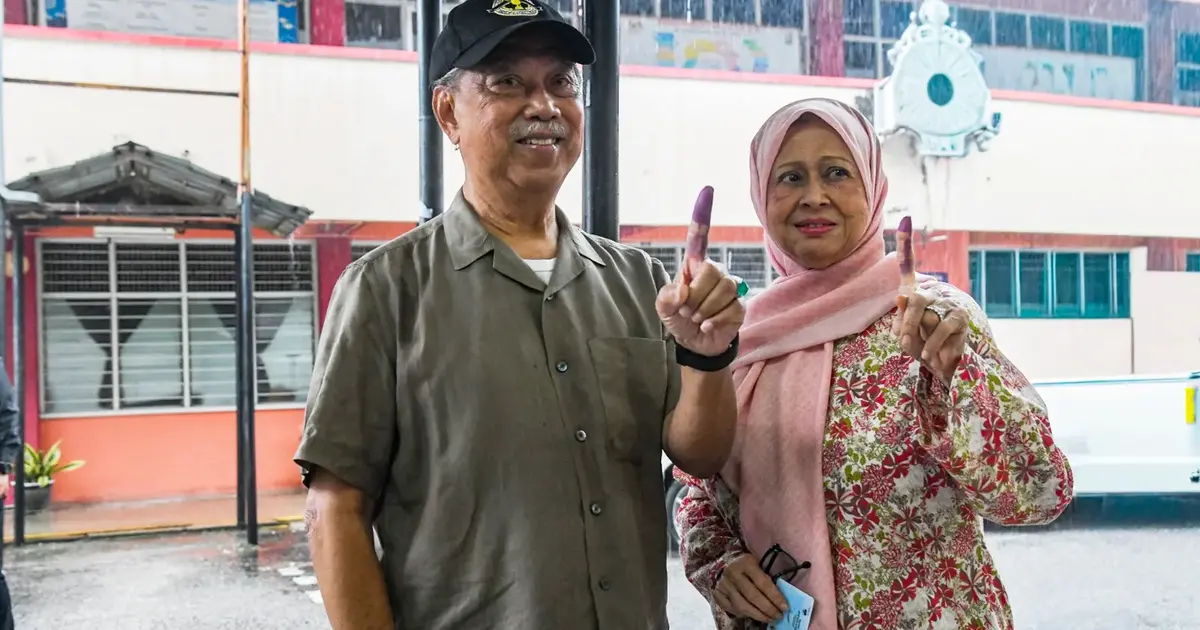
Bersatu president Muhyiddin Yassin has sought to minimise concerns surrounding the recent resignations of the Perlis Menteri Besar and an executive councillor from the party's Supreme Council, asserting that such matters are best handled through internal party mechanisms rather than public scrutiny. The departures have raised questions about internal cohesion within Bersatu at a time when the party is consolidating its influence in several state governments, particularly in the northern region where Perlis represents a significant electoral asset.
Muhyiddin indicated that he has not yet received comprehensive details about the circumstances leading to the resignations and therefore prefers to withhold judgment until a thorough investigation is completed. This measured approach reflects a broader strategy within Bersatu to manage internal disputes privately, avoiding the kind of public discord that could undermine party solidarity or invite unnecessary criticism from rival political coalitions. The party leadership has consistently emphasised the importance of resolving intra-party grievances through established channels rather than allowing them to fester or escalate in the public domain.
The resignations from the Supreme Council, which functions as Bersatu's primary decision-making body, nonetheless signal potential friction within the party's upper echelons. The Perlis leadership's move to step back from this influential platform suggests either a principled disagreement with certain party directions or concerns about their voice and influence within the broader party structure. Such withdrawals can have ripple effects across party hierarchies, potentially affecting recruitment, policy alignment, and electoral coordination in states where Bersatu maintains significant representation.
Perlis, despite being Malaysia's smallest state by population, holds disproportionate political importance in Malaysia's coalition calculations. Control of the state government provides Bersatu with a demonstration of administrative competence and a platform for advancing its policy agenda at the state level. Any perception of instability or internal dissent within Bersatu's Perlis machinery could therefore carry implications that extend beyond the state itself, affecting the party's standing within the broader Perikatan Nasional coalition and its negotiations with other political partners.
The timing of these resignations warrants consideration, coming as Malaysian politics continues to evolve in the post-2022 period. Bersatu, under Muhyiddin's leadership, has navigated significant political transitions and consolidation of power at both federal and state levels. The party's performance and internal stability remain subjects of keen observation among political analysts and rival parties, who scrutinise any signs of weakness or organisational challenges that might affect Bersatu's electoral prospects in future elections.
Muhyiddin's insistence on resolving the matter internally reflects established practice within Malaysian political parties, where public displays of internal conflict are generally avoided to prevent external actors from exploiting party divisions. This approach also provides the party leadership with discretionary space to address underlying issues, whether they involve personality conflicts, policy disagreements, or structural concerns within the party apparatus. However, it also means the public may never fully understand the nature or scope of the disagreements that prompted the resignations.
The Supreme Council's composition and the participation of state-level leaders is crucial to Bersatu's functioning as a cohesive political force. When prominent office-holders choose to step back from such platforms, it can indicate broader concerns about how the party operates at the central level or how state-level perspectives are integrated into national decision-making processes. The absence of the Perlis leadership from these deliberations might diminish the council's regional perspective, particularly regarding northern Malaysian concerns and priorities.
For Malaysian observers and political stakeholders, these developments underscore the ongoing challenges faced by coalition partners in maintaining unified messaging while accommodating diverse interests across multiple states. Bersatu's ability to manage internal disagreements without fragmenting will be critical as the party seeks to consolidate its position and demonstrate that it offers a stable alternative within Malaysia's evolving political landscape. The party's approach to resolving this specific situation will likely serve as a template for how it handles future internal disputes.
Looking forward, the resolution of this matter—whenever it occurs and whatever form it takes—will provide important signals about Bersatu's internal health and the sustainability of its current power-sharing arrangements. Muhyiddin's measured response suggests confidence in the party's ability to work through these challenges, but the ultimate success will depend on whether the underlying issues are genuinely addressed or merely shelved temporarily. For Perlis residents and Bersatu members, transparency about the party's internal functioning, when achieved, will be important for maintaining confidence in the leadership and the party's strategic direction.

