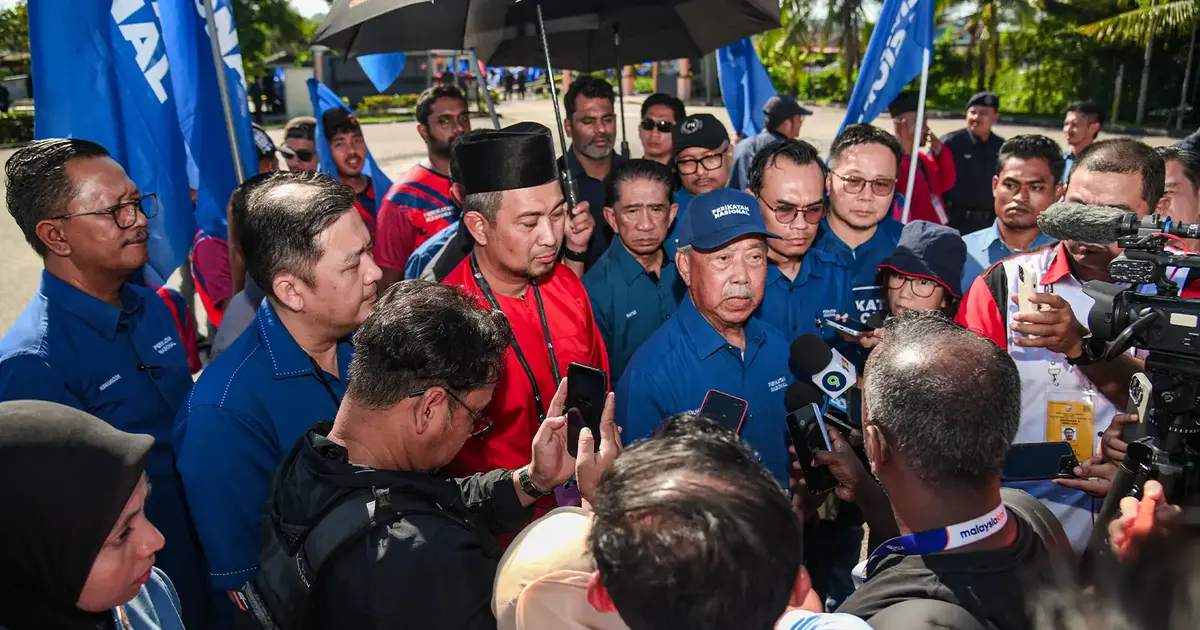
Perikatan Nasional's capacity to form state governments remains intact despite Malaysian electoral volatility, according to coalition president Muhyiddin Yassin, who points to an expanding network of political partners extending well beyond the current formal membership structure. The Bersatu chief's confidence reflects calculations that PN can broker successful alliances at the state level through negotiations with independent parties and smaller political entities dissatisfied with alternative arrangements. This assessment arrives at a moment when Malaysia's political landscape continues fragmenting, creating opportunities for coalitions willing to build broader consensus across disparate factions.
Muhyiddin's statement carries particular weight given Bersatu's pivotal position within PN's hierarchy and the party's recent experiences navigating coalition politics. The party president acknowledges that success in state-level politics frequently depends less on formal coalition structures than on the ability to identify and mobilise sympathetic political actors who operate outside traditional alliance frameworks. This pragmatic approach suggests PN strategists have learned from both earlier victories and subsequent setbacks in state-level contests, where marginal gains from unexpected quarters often determine outcomes.
The inclusion of Muda in Muhyiddin's calculations signals recognition of younger voters' political preferences and the importance of parties appealing to demographics previously alienated from PN's messaging. Muda's position as an ostensibly independent actor despite informal coordination with PN reflects evolving patterns in Malaysian politics, where formal coalition membership increasingly coexists with looser collaborative arrangements. Such flexibility allows PN to present different political identities to various constituencies while maintaining effective operational unity where it matters most—in legislative voting.
State-level politics in Malaysia have historically served as testing grounds for national political configurations, with coalition strength at the state level frequently translating into enhanced federal negotiating positions. Muhyiddin's confidence in PN's state government prospects therefore implies broader assertions about the coalition's organisational capacity and political viability as a potential national alternative. The coalition's ability to construct working majorities through combinations of formal members and aligned external parties demonstrates the resourcefulness required to sustain competitive politics in Malaysia's complex federal structure.
For Malaysian readers evaluating political developments, Muhyiddin's statement underscores the continued fragmentation of the country's party system and the increasingly important role of smaller parties and independents in determining governance outcomes. The traditional binary competition between two large coalitions has given way to a more complex multipolar landscape where success requires sophisticated alliance-building and an willingness to accommodate diverse political interests. This transformation has significant implications for policy formulation and the stability of state administrations, where narrow majorities sometimes force governments to accede to demands from junior partners to maintain legislative confidence.
The explicit mention of allies outside PN's formal structure also reflects tactical communication aimed at reassuring internal coalition members and potential partners that PN possesses sufficient numerical strength to govern effectively. By publicly identifying Muda and potentially other sympathetic parties as available partners, Muhyiddin sends signals to state-level politicians that aligning with PN offers viable pathways to influence and ministerial positions. This recruitment message matters particularly in states where electoral mathematics leave multiple coalition arrangements mathematically feasible, allowing politicians to choose partners on grounds of perceived longevity and influence.
Southeast Asian regional observers monitoring Malaysian political development will recognise in Muhyiddin's confidence assertions about PN's relevance in an unstable political system where no coalition has achieved decisive dominant-party status. Unlike earlier periods when Malaysia's politics were dominated by single coalitions with overwhelming majorities, the current environment rewards flexibility, negotiating skill, and the capacity to integrate independent actors into governing arrangements. PN's relative youth as a coalition structure might paradoxically prove advantageous in this environment, as older established structures struggle to adapt to more fluid political conditions.
The state government formation question carries implications extending beyond local administration, as control of state legislatures provides platforms for policy experimentation, political recruitment, and the development of leadership cadres. Muhyiddin's assertion that PN can form state governments implicitly claims that the coalition produces competent administrators capable of delivering services and managing state resources effectively. State-level performance in turn influences national perceptions of coalition viability, creating incentive structures that reward competent governance over purely partisan considerations.
Looking forward, the credibility of Muhyiddin's confidence in PN's state government potential will be tested in forthcoming state elections where the coalition faces opportunities to translate rhetorical assertions into electoral victories and successful administration. The effectiveness with which PN integrates external allies like Muda into governing arrangements while maintaining internal coalition cohesion will determine whether such optimism reflects strategic realism or aspirational thinking. Malaysian voters assessing PN's prospects would be wise to distinguish between the coalition's capacity to assemble parliamentary majorities—increasingly straightforward in a fragmented political system—and its ability to govern those state administrations competently once formed.

