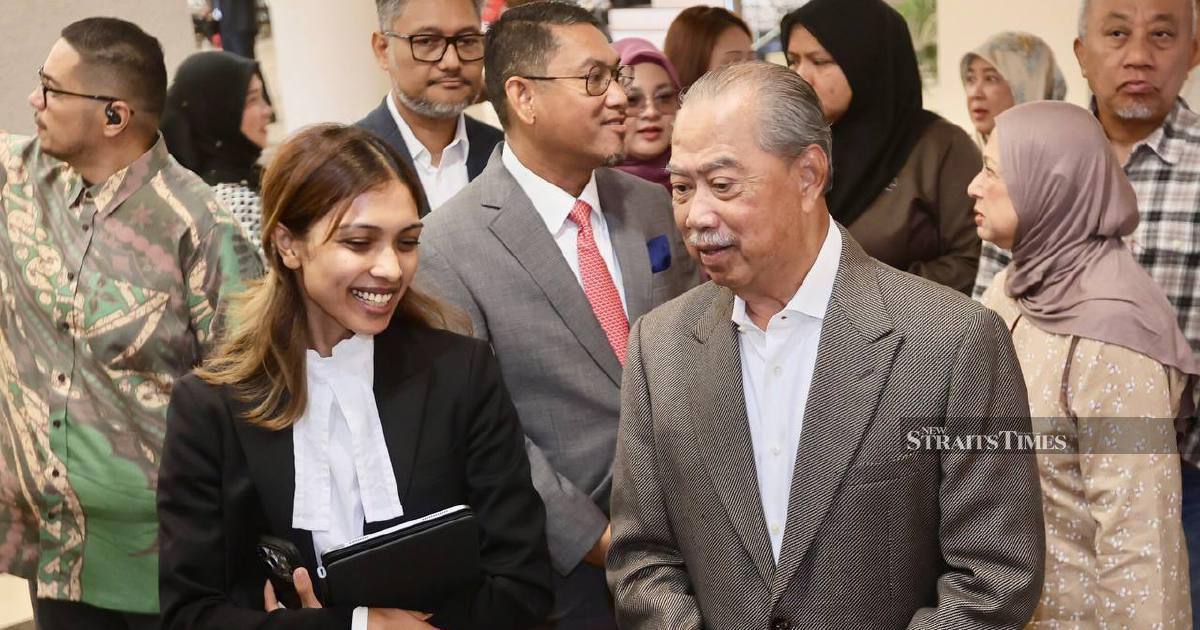
The High Court in Kuala Lumpur heard fresh testimony on Monday that former Prime Minister Tan Sri Muhyiddin Yassin did not personally seek financial contributions during the Jana Wibawa case proceedings. The claim emerged from a witness statement that directly contradicts the prosecution's contentions regarding the alleged illicit fundraising scheme that forms the basis of charges against the veteran politician.
Jana Wibawa, a company at the centre of the trial, has been scrutinised for its purported role in channelling substantial sums to political figures. The witness, whose identity remains part of the court record, provided what amounts to exculpatory evidence by specifically stating that neither Muhyiddin nor his Bersatu party made any direct solicitations for money through the arrangement in question. This testimony carries particular weight given that personal requests for funds would typically constitute a crucial element of any fundraising conspiracy charge.
The development marks a significant juncture in Muhyiddin's legal battle, which has dominated Malaysian political discourse since the charges were initially filed. The former occupant of the Prime Minister's office, who led the country through turbulent pandemic years, faces a carefully constructed prosecution case that hinges on establishing knowledge of and participation in questionable financial flows. By contrast, the defence strategy emphasises the absence of direct involvement in solicitation activities.
Muhyiddin's legal team has consistently maintained that the ex-premier had no hand in orchestrating donations and was instead kept in the dark about the mechanics of any such arrangements. The witness account aligns with this defence position by confirming the absence of direct requests originating from either Muhyiddin personally or his political outfit. Such corroborating evidence becomes increasingly valuable as the trial progresses toward its adjudication phase.
For Malaysian observers following this high-profile case, the implications extend beyond the courtroom. Political funding practices and the murky interface between business interests and elected representatives remain contentious issues in local governance. The trial itself has thrust these questions into sharper relief, forcing public reckoning with how money flows through Malaysia's political ecosystem. The Jana Wibawa case thus serves as both a legal proceeding and a barometer of national scrutiny over political accountability.
The prosecution bears the burden of proving its allegations beyond reasonable doubt, a standard that gains greater significance when defence witnesses offer contrary testimony. The High Court's adjudication will ultimately determine whether Muhyiddin's actions crossed legal boundaries or remained within acceptable bounds of political conduct as understood by Malaysian law. Presently, the accumulation of witness statements favouring the defence narrative suggests the case may not be as air-tight as initial proceedings implied.
Witness testimony in complex financial crime prosecutions frequently proves decisive, particularly when specific facts such as the initiation of solicitations come into question. A witness statement explicitly denying that Muhyiddin requested contributions carries forensic weight that general assertions cannot match. The court is hearing detailed accounts from individuals with direct knowledge of events, whose credibility and consistency under cross-examination will ultimately shape judicial conclusions.
For Bersatu, the political implications of this trial remain substantial. As a constituent member of the current governing coalition, the party's reputation depends partly on the outcome of Muhyiddin's legal proceedings. Political commentators note that extended litigation casts shadows over both the party's institutional standing and its former leader's political future. However, positive developments in trial proceedings, such as supportive witness testimony, gradually shift perceptions and may influence broader political calculations.
The trial exemplifies the intersection of law and politics in Malaysia, where judicial outcomes frequently reverberate through the political establishment. Legal scholars observing the case have noted how witness credibility becomes paramount when documentary evidence proves ambiguous or subject to competing interpretations. The present testimony regarding the absence of direct donation requests illustrates how factual clarifications can pivot the entire trajectory of complex prosecutions.

