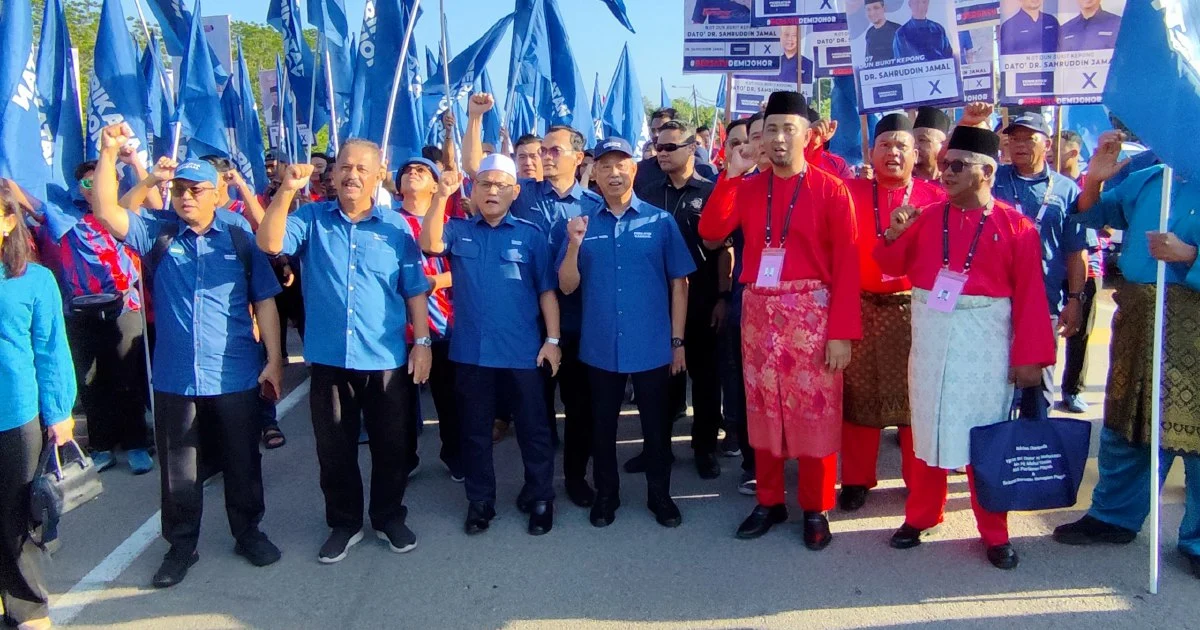
Tan Sri Muhyiddin Yassin, the president of Bersatu, made an early appearance at the Pagoh Sports Complex Hall nomination centre in the constituency of Bukit Kepong, arriving at 8.45 am to lend visible support to party candidate Sahruddin as he filed his nomination papers for the Johor state election.
The personal attendance of Bersatu's top leadership at the nomination filing underscores the strategic importance the party places on the Bukit Kepong seat and the broader contest in Johor. Such public shows of solidarity have become routine in Malaysian electoral politics, where party leaders use nomination day events to energise grassroots supporters and project confidence about their electoral prospects. The timing of Muhyiddin's appearance and the formality of the nomination process itself serve as media opportunities for parties to frame their candidates in the best possible light.
Bukit Kepong, located within the Pagoh parliamentary area, has historically been a significant constituency within Johor's political landscape. The seat has witnessed intense competition between coalitions in previous contests, making it a bellwether for understanding voter sentiment across the state. Bersatu's decision to field Sahruddin in this particular division reflects calculations about where the party believes it can mount a credible challenge or consolidate existing support.
Bersatu's recent political trajectory has been marked by volatility and coalition realignments. As a splinter from the United Malays National Organisation (UMNO) founded in 2016 by Muhyiddin himself, the party has navigated multiple shifts in alliances and government configurations. The Johor state election presents an opportunity for Bersatu to demonstrate its continued relevance at the state level and maintain leverage within coalition politics. Any performance gains in Johor could strengthen the party's negotiating position ahead of future national elections.
The nomination period in Johor represents a critical juncture where parties mobilise their machinery and test their organisational capacity. Constituencies like Bukit Kepong attract attention not merely for their individual significance but as indicators of broader voter sentiment. How candidates are received during nomination, the turnout of party supporters, and the tone of campaign messaging all provide early signals about the competitive environment in each division.
Muhyiddin's presence at the nomination centre also carries symbolic weight within Bersatu's internal dynamics. The party has experienced leadership challenges and internal tensions in recent years. By actively participating in nomination events and appearing alongside candidates, the party president reinforces his control over the party apparatus and demonstrates engagement with grassroots-level contest. This kind of visible support can prove invaluable for candidate morale, particularly in competitive seats where the margin between victory and defeat may prove narrow.
For Malaysian voters in Johor, the state election serves as a referendum on governance and political preferences at the state level, independent of national politics. The distinction between state and federal elections has become increasingly important as voters develop more sophisticated expectations about accountability and governance performance. Parties contesting these elections must address local concerns—infrastructure, land development, fiscal management, and service delivery—alongside broader national messaging.
The nomination of candidates in constituencies across Johor marks the formal opening of the electoral contest. From this point forward, candidates and their teams enter into intensive campaigning, community engagement, and voter outreach. The quality of candidates fielded, their local connections, and their track record become crucial factors influencing voter decision-making. In seats like Bukit Kepong, the contest may ultimately hinge on local personalities and issues rather than national political trends.
Bersatu's campaign strategy in Johor, as reflected in its candidate selections and leadership involvement, will be closely watched by political analysts assessing the health of Malaysia's coalition system. The party's ability to retain or expand its legislative representation will have ramifications for post-election coalition negotiations and the formation of state-level administrations. Results in key constituencies will determine whether Bersatu emerges as a kingmaker capable of influencing government formation or faces diminished political influence.
The Johor state election also occurs within the broader context of Malaysian politics, where demographic shifts, urbanisation patterns, and changing voter preferences continue to reshape electoral geography. Traditional political strongholds have become more competitive, while previously opposition-leaning areas have opened to alternative political messaging. Understanding how these trends play out in constituencies like Bukit Kepong contributes to the larger picture of political change unfolding across the country.
As nomination proceedings unfold across Johor's constituencies, the quality of candidates and the intensity of leadership engagement from national-level figures like Muhyiddin will help shape expectations around campaign dynamics and likely outcomes. The weeks ahead will reveal whether Bersatu can mobilise sufficient support to achieve its electoral objectives in the state, and whether the party's investment in constituencies like Bukit Kepong translates into tangible gains at the ballot box.

