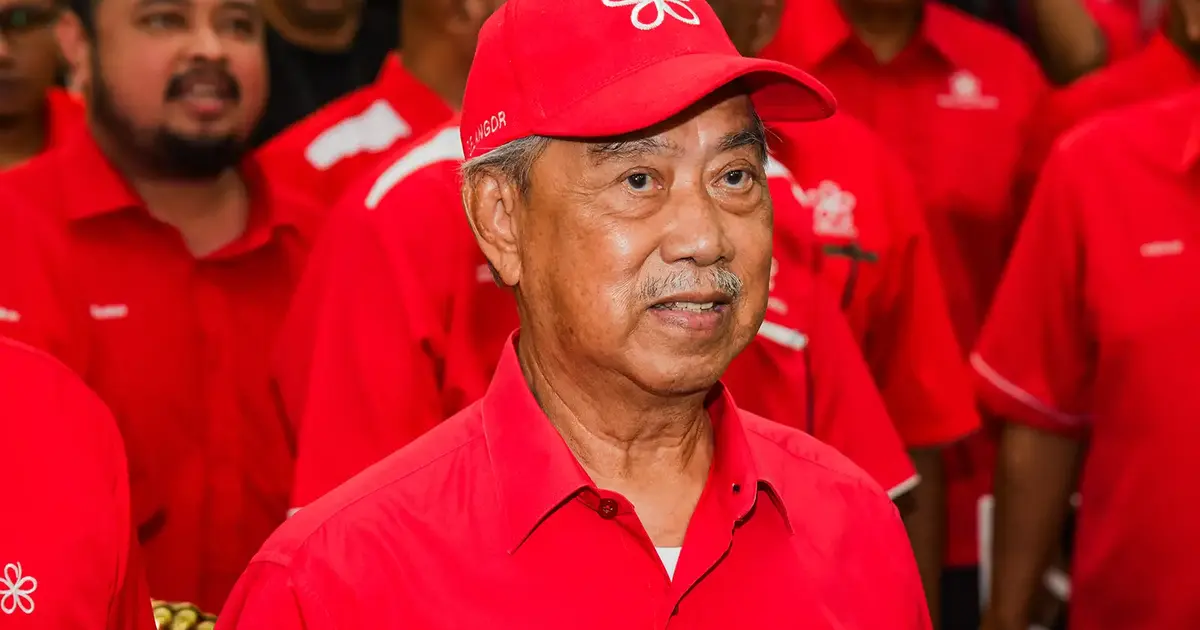
Bersatu president Muhyiddin Yassin has expressed confidence that his party can expand its electoral base among non-Malay communities independently of any partnership with PAS, marking a significant strategic repositioning for the Malay-majority party as it contemplates its political direction ahead of future elections.
The assertion represents a notable shift in Bersatu's political calculus, particularly given the party's recent history of coalition arrangements with PAS and other Bumiputera-focused organizations. Muhyiddin's comments suggest internal party discussions about broadening the party's appeal beyond its core Malay-Muslim constituency, a move that would require substantive repositioning on policy and messaging.
According to Muhyiddin's assessment, Bersatu previously faced significant headwinds in securing non-Malay electoral support primarily because potential voters from Chinese, Indian, and other minority communities harboured reservations about PAS's approach to politics and governance. This explanation places responsibility for the party's limited minority appeal not on Bersatu's own policy positions or messaging, but rather on the perceived incompatibility of coalition partners with diverse electorates.
This interpretation carries important implications for understanding Malaysian coalition dynamics. Political analysts have long observed that PAS's Islamic-centric platform and rhetoric, while mobilizing segments of the Malay-Muslim electorate, simultaneously creates hesitation among voters concerned about religious considerations dominating governance. Muhyiddin's framing suggests Bersatu believes it can escape this electoral trap by pursuing independent political positioning or alternative alliance strategies that do not centre on Islamic-focused messaging.
The statement reflects broader competitive dynamics within Bumiputera-focused politics in Malaysia. With Umno maintaining its traditional dominance over the Malay-Muslim vote, Bersatu has consistently sought differentiation and growth. One potential avenue involves repositioning as a more inclusive, multi-ethnic alternative that retains Bumiputera principles while appearing non-threatening to minority communities. Such repositioning could theoretically allow Bersatu to capture swing voters and coalition seats previously held by moderate parties.
However, the feasibility of Bersatu's ambition faces considerable practical challenges. The party's founding premises, leadership composition, and historical positioning all remain rooted in Malay-Muslim identity politics. Transforming voter perceptions would require sustained effort across multiple election cycles, consistent policy messaging, and genuine organizational commitment to minority concerns. Voters develop deep-seated perceptions of political parties over extended periods, and such perceptions shift slowly absent dramatic catalysts or consistent counternarrative messaging.
For Malaysian voters and stakeholders monitoring coalition possibilities, Muhyiddin's comments carry significance beyond simple party positioning. They suggest potential fragmentation within the broader Bumiputera coalition framework, which has characterized Malaysian politics since independence. If Bersatu genuinely pursues independent non-Malay outreach, this could create new coalition configurations and alter the mathematical possibilities for government formation in future parliamentary sessions.
Regionally, such dynamics merit attention from observers tracking Southeast Asian political realignment. Malaysia's multi-ethnic coalition politics serve as a model and point of reference for other nations managing similar diversity challenges. Shifts in how Malaysian parties approach minority outreach and coalition formation can inform comparative political analysis across the region.
The timing of Muhyiddin's remarks also deserves consideration. Whether these comments reflect genuine strategic recalibration or tactical positioning in ongoing negotiations with various political actors remains subject to interpretation. Malaysian political observers have grown accustomed to parties articulating divergent public messages depending on their current coalition status and immediate political objectives.
For non-Malay communities, the prospect of Bersatu expanding outreach presents both opportunities and risks. Greater competition for minority votes could theoretically increase responsiveness to community concerns, but could equally reflect performative politics lacking substance. Voter scepticism appears warranted until evidence emerges of concrete policy commitments and institutional changes within Bersatu supporting the party's stated inclusive ambitions.
The statement also raises questions about Bersatu's medium-term political trajectory. Maintaining internal cohesion while pursuing strategically divergent positioning—Bumiputera-focused for Malay voters, inclusive for minorities—presents genuine organizational challenges. Parties attempting such balancing acts often face accusations of inconsistency and lack of clear ideological foundation, potentially alienating both target audiences.
Moving forward, the substantive test of Bersatu's strategic intentions will emerge through observable actions: candidate selection and diversity, policy platform development, grassroots engagement initiatives, and actual performance in attracting minority electoral support. Until such evidence accumulates, Muhyiddin's confidence statements remain largely aspirational, reflecting political ambition rather than demonstrated capability. Malaysian voters will ultimately determine whether Bersatu successfully translates its stated intentions into meaningful electoral expansion across community lines.

