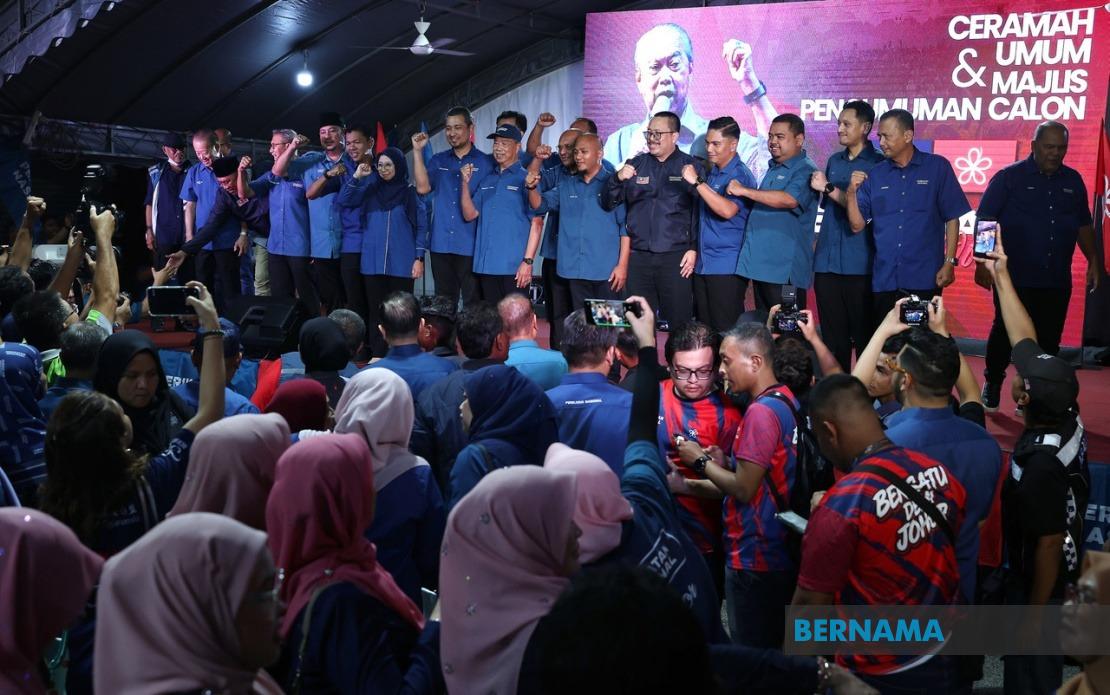
Tan Sri Muhyiddin Yassin, president of Parti Pribumi Bersatu Malaysia, revealed the party's complete roster of 16 candidates contesting the 16th Johor State Election at a public event in Muar on June 25. The announcement ceremony, held at the Pagoh Parliamentary Service Centre in Taman Pagoh Jaya, provided the first comprehensive glimpse of Bersatu's electoral strategy in Malaysia's southern stronghold, a state where political competition remains intensely contested among competing coalitions and independent-aligned parties.
The election calendar is now firmly in place following the Johor State Assembly's dissolution on June 1, setting in motion the electoral machinery for one of Malaysia's most significant state-level contests. The Election Commission designated June 27 as nomination day, allowing candidates and parties to formally register their contestants across all electoral districts. This compressed timeline means political parties must mobilise their ground operations rapidly to reach voters before polling day arrives on July 11, leaving approximately two weeks for campaigning and voter engagement across the state's sprawling constituencies.
Bersatu's slate reflects the party's broader positioning within Malaysia's fractured political landscape. As a component of the Perikatan Nasional coalition, Bersatu has sought to establish itself as a credible alternative to the long-dominant Barisan Nasional while maintaining distance from Pakatan Harapan. The selection of 16 candidates to contest all available state seats indicates the party's ambition to secure substantive parliamentary representation, though success will depend on whether these nominees can connect with local voters and overcome entrenched political machines in their respective constituencies.
Mohd Idzharruddin Mohd Nasirruddin has been fielded to contest the N8 Bukit Pasir seat, exemplifying Bersatu's attempt to field candidates with established local credentials and community connections. Such selections typically reflect internal calculations about electability, grassroots support networks, and the capacity to translate party machinery into votes. The choice of candidates across all 16 seats represents weeks of negotiation and vetting within party structures, balancing factional interests, incumbent performance, and demographic considerations specific to each district.
Johor's electoral significance extends beyond its individual importance as a state. As Malaysia's second-largest state by population and a traditional political battleground, the outcome will reverberate through national political calculations and coalition dynamics. A strong Bersatu performance could strengthen Perikatan Nasional's credentials as a viable national alternative, while disappointing results might prompt internal reckonings about the coalition's overall viability and force restructuring of alliances ahead of potential federal elections.
The timing of Johor's election also occurs amid broader shifts in Malaysian politics. The state has traditionally been influenced by personalities and family dynasties rather than purely ideological considerations, creating unique electoral dynamics distinct from other Malaysian states. Voters in Johor have demonstrated willingness to shift political allegiances when they perceive governance failures or when appealing figures emerge, making ground-level campaigning and personal connections crucial to electoral outcomes.
Bersatu's performance in Johor will likely influence the party's standing within Perikatan Nasional and shape negotiations over seat allocations in other forthcoming elections. The coalition's internal balance of power depends partly on demonstrating electoral viability across different state contests. A credible showing in Johor could enhance Bersatu's negotiating position, while weak results might disadvantage the party in future power-sharing arrangements within the broader coalition structure.
The compressed campaign period necessitates efficient deployment of party resources and rapid activation of organisational networks. Digital campaigning, grassroots engagement, and strategic coalition messaging must all operate simultaneously across 16 constituencies with diverse demographic profiles. Candidates will need to address local concerns—economic issues, infrastructure development, education provision—while articulating broader party narratives about governance quality and political renewal.
For Malaysian voters, particularly in Johor, this election presents an opportunity to assess whether Perikatan Nasional offers genuinely different governance approaches or whether it represents merely a reshuffling of political personnel. Bersatu's campaign messaging and candidate quality will communicate the coalition's seriousness about delivering alternative governance models. Success requires moving beyond generic political rhetoric to address concrete community priorities that resonate across diverse constituencies ranging from urban centres to semi-rural areas.
The election also reflects ongoing evolution of Malaysia's party system, where traditional boundaries between ruling and opposition coalitions continue blurring. Perikatan Nasional's electoral challenge in Johor represents a real-world test of whether Malaysian voters perceive viable alternatives to established political arrangements. Bersatu's 16 candidates will serve as direct representatives of this evolving political positioning, with their individual performances contributing to broader assessments of political feasibility and voter appetite for systemic change in Malaysian electoral politics.

