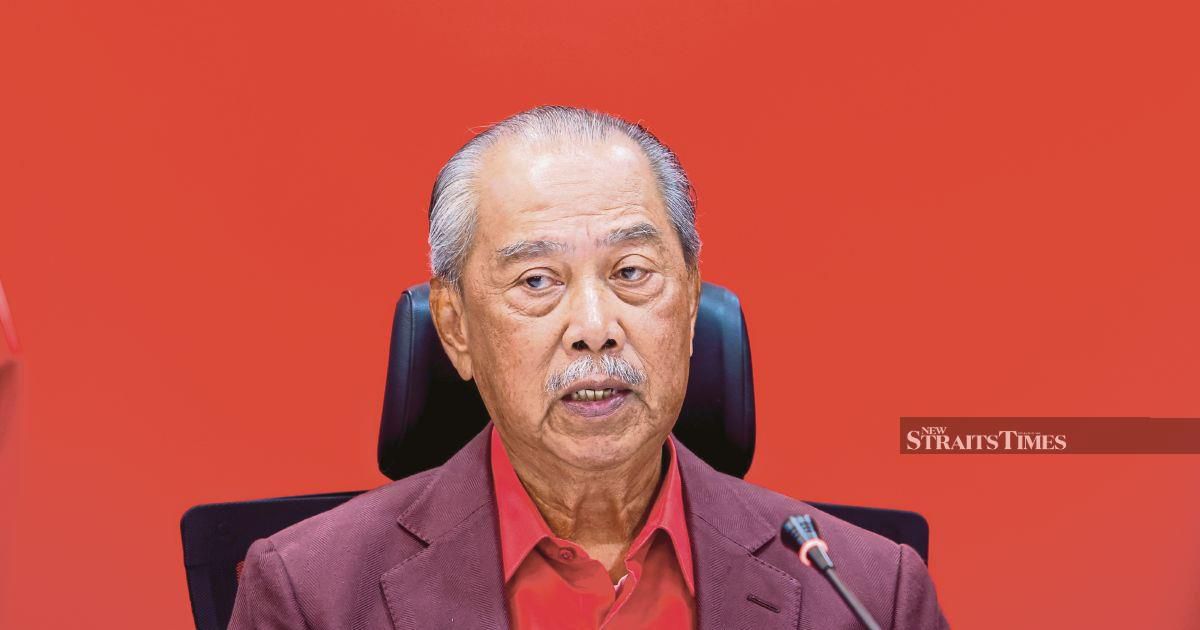
Bersatu president Tan Sri Muhyiddin Yassin has raised alarm over what he characterises as a deliberate effort by Umno to engineer the collapse of Malaysia's ruling unity government, asserting that the party is replicating the political manoeuvres that previously dismantled the PN administration. The accusation strikes at the heart of ongoing coalition tensions, highlighting the fragility of the broad-based government that has governed since 2022 and bringing into sharp focus the intricate calculations shaping Malaysian politics.
Muhyiddin's statement underscores the persistent vulnerability of Malaysia's current political arrangement, where multiple parties spanning ideological divides have been forced into an uneasy alliance. The unity government, comprising Bersatu, Pakatan Harapan, and other coalition partners, relies on managing divergent interests and navigating constant power dynamics. The Bersatu leader's public allegations suggest that internal coherence within the coalition remains strained, with suspicions about the commitment of major partners to maintaining the status quo.
The reference to tactics employed to topple the previous PN government carries particular weight in Malaysian political discourse. The PN administration, which Muhyiddin himself led, collapsed in 2021 amid defections and political manoeuvring, marking a turbulent chapter in the nation's recent governance. By invoking these memories, Muhyiddin appears to be signalling that similar destabilisation strategies may now be at work within the current coalition, suggesting cyclical patterns in Malaysian politics where coalitions face recurring threats from component parties seeking strategic advantage.
Umno's position within the unity government has been a source of ongoing friction. As Malaysia's oldest political party and historically the dominant force in government, Umno has struggled with its role within a coalition that includes ideological opponents. The party's leadership, particularly under Prime Minister Datuk Seri Anwar Ibrahim's broader coalition strategy, has had to compromise on various policy matters and power-sharing arrangements that differ markedly from the party's previous governing status. This dynamic creates natural incentives for Umno to reassess its coalition commitment whenever political circumstances shift.
Muhyiddin's allegations reflect deeper anxieties about coalition stability that periodically surface in Malaysian politics. The unity government, despite representing the most ideologically diverse ruling coalition in recent Malaysian history, lacks the organic cohesion of previous single-party or tight two-party coalitions. Each partner organisation maintains its own political base, electoral interests, and ideological positions, making coordinated governance inherently challenging. When disputes arise over policy direction or resource allocation, the temptation for individual parties to pursue independent political strategies becomes pronounced.
The timing of Muhyiddin's assertion carries significance for understanding current political temperatures. Malaysian observers have noted that government coalitions often face their greatest stress during periods of economic difficulty, policy disagreements, or when electoral calculations suggest changing political winds. Muhyiddin's public warning suggests he perceives current conditions as creating incentive structures that might push Umno toward reconsidering its coalition commitment, warranting preemptive communication to party members and the broader public about perceived threats.
For Malaysian readers and the Southeast Asian region more broadly, the stability of Malaysia's government holds material consequences. Political instability in Southeast Asia's third-largest economy reverberates across the region through trade relationships, investor confidence, and broader geopolitical calculations. Previous cycles of Malaysian political turbulence have disrupted government effectiveness in addressing economic challenges, implementing policy reform, and maintaining regional engagement. Repeated cycles of coalition formation, collapse, and reformation consume political energy that might otherwise address pressing national issues.
The nature of Muhyiddin's allegations—suggesting coordinated conspiracy rather than ordinary political disagreement—implies he views the threat as systematic rather than circumstantial. This framing suggests possible specific incidents or patterns that prompted the warning, though the Bersatu leader provided limited detail regarding concrete evidence or particular instances. The vagueness of the accusation allows multiple interpretations and prevents immediate response or refutation, a common rhetorical strategy in Malaysian political messaging.
Bersatu's interests in maintaining coalition stability diverge from those of larger coalition partners. As a relative newcomer to Malaysia's political landscape, Bersatu depends on its coalition alignment for political viability and access to government resources. By contrast, Umno and Pakatan Harapan retain significant independent political bases and could potentially sustain themselves outside the current arrangement. This structural asymmetry creates divergent risk calculations, with Bersatu having greater incentive to preserve the coalition even when policy disagreements emerge.
The accusations also reflect broader questions about whether the unity government represents a stable political settlement or a temporary arrangement awaiting the next electoral opportunity. Malaysian voters in recent elections demonstrated appetite for checking single-party dominance and demanding coalition politics, yet the stability of such arrangements depends on political actors choosing compromise over opportunism. Muhyiddin's warning suggests that such choices remain uncertain and that political actors continue calculating whether long-term coalition participation or short-term competitive advantage serves their interests better.
These developments carry implications for Malaysia's broader governance agenda. If coalition stability remains precarious, energy diverted toward managing internal political threats limits capacity for addressing substantive policy challenges including economic diversification, educational reform, and infrastructure development. The perpetual threat of coalition collapse creates incentive structures that privilege short-term political positioning over long-term national strategy, a pattern that has constrained Malaysian governance effectiveness during previous periods of coalition fragility.
Moving forward, how Umno responds to these allegations and whether the party's leadership reaffirms commitment to the unity government will help clarify whether Muhyiddin's concerns reflect genuine destabilisation efforts or serve as political positioning ahead of potential future contests. The balance between maintaining current coalition arrangements and pursuing electoral advantage remains Malaysia's central political tension, shaping the country's governing capacity and regional stability.

