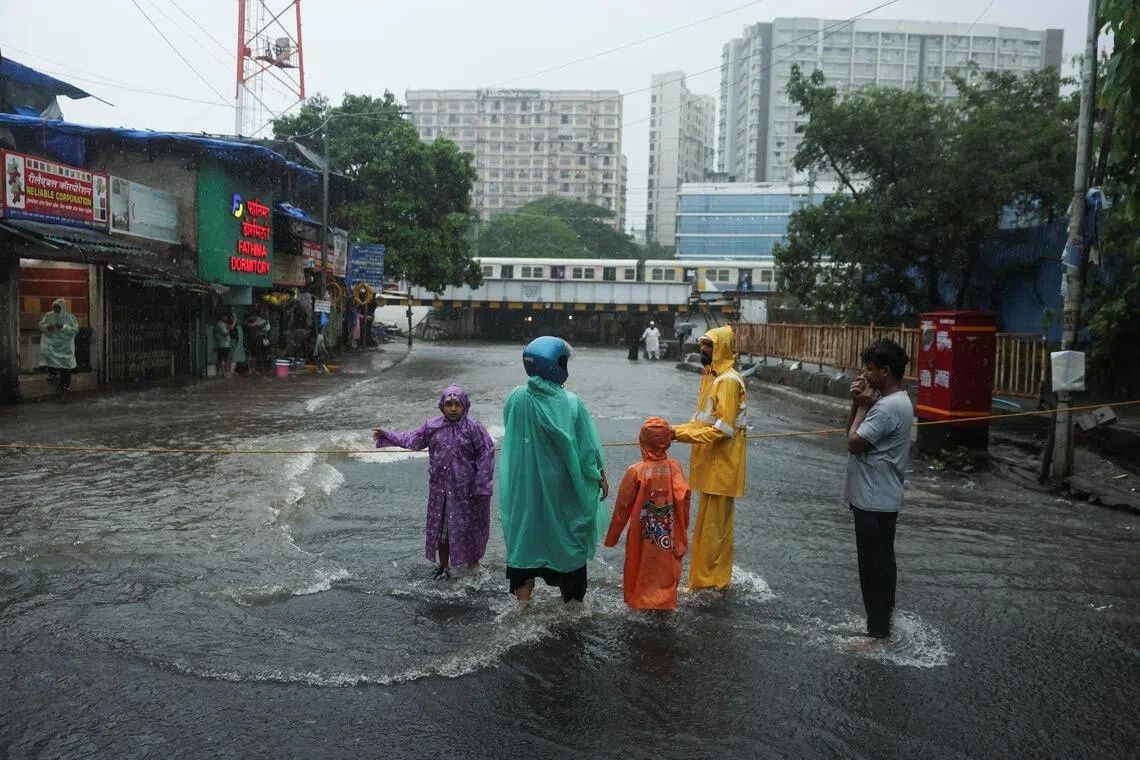
Mumbai's monsoon season has turned deadly, with two fatalities exposing the city's vulnerability to the annual deluge and raising uncomfortable questions about governance and administrative oversight. A tree-felling incident on June 30 claimed the life of 11-year-old Vihan Shrivastav, while three days later, 60-year-old Aslam Isak Shaikh perished after falling into an inadequately secured manhole. The incidents underscore a troubling pattern in India's financial capital: despite annual monsoons and established protocols, civic infrastructure remains dangerously unprepared. With the India Meteorological Department issuing an orange alert for July 3 and forecasts predicting continued heavy downpours, Mumbai faces a precarious situation where faulty preparations could trigger further loss of life.
The death of young Vihan Shrivastav occurred when powerful winds tore a large tree from its roots, sending it crashing onto a school bus near Chembur carrying students from Universal High School and Tilak Nagar School. The boy was among several children trapped inside the vehicle, requiring emergency personnel to deploy specialized cutting equipment for what became a lengthy and traumatic rescue operation. Vihan was rushed to Zen Hospital with critical injuries but could not be saved, while other students were distributed between multiple medical facilities for treatment. The incident crystallizes a problem that plagues many Indian cities: inadequate maintenance of green spaces, particularly along high-traffic routes where falling trees pose catastrophic risks to commuters during adverse weather.
Political leaders, including Maharashtra Minister Ashish Shelar, acknowledged responsibility but framed the incident in deliberately cautious language. Shelar stated that both the state government and the Brihanmumbai Municipal Corporation bore responsibility for supporting the bereaved family, yet his comments focused on procedural responses rather than systemic reform. More pointed criticism emerged from Rohit Pawar, an MLA who visited the family and pointedly questioned whether accountability was reaching those truly responsible. Pawar emphasized that the boy was the family's only child and stressed that holding only junior officials answerable represented a fundamental failure of governance. His intervention reflects growing frustration among elected representatives that accountability measures routinely stop at lower-level staff, insulating senior administrators from consequences.
The second fatality represents an even more egregious lapse in basic operational procedure. Aslam Isak Shaikh, a 60-year-old resident, fell into an open manhole in Sakinaka on July 2 when maintenance work had left the drainage cover removed without proper barricading or warning signage. Shaikh was reportedly using his mobile phone when fast-moving floodwater swept him into the excavation. Recovery of his body required approximately three hours of intensive search operations, adding tragedy to tragedy as his family waited for news. The circumstances surrounding this death are particularly troubling because they involve a preventable human error rather than a natural disaster beyond human control.
MLA Vijay Wadettiwar demanded criminal proceedings against officials responsible, highlighting the elementary nature of the failure. Proper protocol during monsoon season demands that any open excavation be sealed or surrounded by barriers; the fact that this basic measure was omitted suggests either negligence, complacency, or systemic dysfunction within municipal oversight mechanisms. Wadettiwar's call for registering a formal first information report indicates that political pressure is mounting for genuine consequences. Mumbai Mayor Ritu Tawde characterized the incident as an "administrative mistake"—language that arguably undersells what appears to be a procedural violation that cost a human life. The announced compensation of 10 lakh rupees, while substantial, cannot restore the life lost nor address the underlying governance failures.
These incidents coincide with a broader deterioration in urban mobility across Mumbai. Heavy rain has submerged critical thoroughfares, paralyzing traffic across multiple neighborhoods and stranding commuters in protracted delays. Near the Kharghar Toll Plaza on the Sion-Panvel Highway, a truck overturned during the rainfall, blocking multiple lanes and causing cascading congestion that emergency responders struggled to manage. Waterlogging persists in established problem areas including Dadra East and Sion Gandhi Market, locations that chronically flood despite decades of monsoon cycles. The recurrence of these traffic disruptions year after year suggests that capital investment in drainage infrastructure and road maintenance remains inadequate.
Rohit Pawar's interrogation of pre-monsoon inspection protocols points toward a critical vulnerability in how Mumbai prepares for its predictable seasonal challenge. Roads, drains, manholes, and other civic systems should theoretically be thoroughly inspected before the monsoon arrives, yet repeated failures indicate that inspections either occur superficially or are conducted without meaningful follow-up. The existence of preventable incidents clustered within days of each other suggests that inspection reports either go unacted upon or that inspectors themselves lack authority to enforce remediation. For Malaysian readers familiar with managing tropical monsoon conditions, the pattern should resonate: proper seasonal preparation requires genuine commitment from senior administrative levels, not merely checkbox exercises performed by field staff.
The political discourse surrounding these deaths reveals a broader South Asian governance challenge. Legislative members are correctly identifying that accountability must reach decision-makers and supervisory staff, not merely frontline workers. However, translating this recognition into actual institutional change remains elusive. MLA Speaker Rahul Narwekar's comment that the matter had been discussed in the House and a detailed report sought suggests the typical procedural response—investigation, documentation, and presumably eventual archiving—without necessarily implying structural reform. Maharashtra's monsoon deaths illustrate how repeated crises can become normalized within urban governance rather than catalyzing genuine transformation.
The orange alert issued by the India Meteorological Department and warnings of continued heavy rainfall over the following 24 hours compound the urgency of the governance failures on display. Authorities have advised residents to minimize unnecessary travel as civic teams attempt to clear flooded routes and remove fallen debris. For a megacity of Mumbai's scale and density, this creates a difficult paradox: the city cannot simply shut down during monsoon season, yet current preparedness levels appear inadequate to manage the predictable seasonal deluge safely. The expectation that residents will navigate hazardous conditions while civic authorities scramble to respond represents a reversal of the typical social contract wherein functioning infrastructure precedes public circulation.
These developments carry implications extending beyond Mumbai itself. As Southeast Asian cities including Kuala Lumpur, Bangkok, and Jakarta grapple with increasingly intense rainfall driven by climate change, Mumbai's difficulties underscore the consequences of deferred infrastructure maintenance and insufficient investment in drainage systems. The region faces a choice: invest proactively in resilient urban infrastructure before disasters occur, or continue reactive crisis management that exacts tolls in human life and economic disruption. The political pressure now building in Mumbai around accountability represents a necessary beginning, but whether it translates into sustained budgetary commitment and genuine administrative reform remains uncertain. The city's upcoming weeks will prove whether these incidents catalyze meaningful change or fade into institutional memory as another monsoon season passes.
For residents and authorities alike, the immediate priority involves navigating the current weather system without further fatalities. Yet the longer-term imperative requires a fundamental recalibration of how Mumbai—and by extension, other South Asian urban centers—prepares for and manages the monsoon challenge. Compensation payments and expressions of regret from officials, however well-intentioned, cannot substitute for the infrastructure investment and administrative rigor necessary to protect vulnerable populations. The deaths of Vihan Shrivastav and Aslam Isak Shaikh demand not merely procedural accountability but systemic transformation that prioritizes public safety over bureaucratic convenience.

