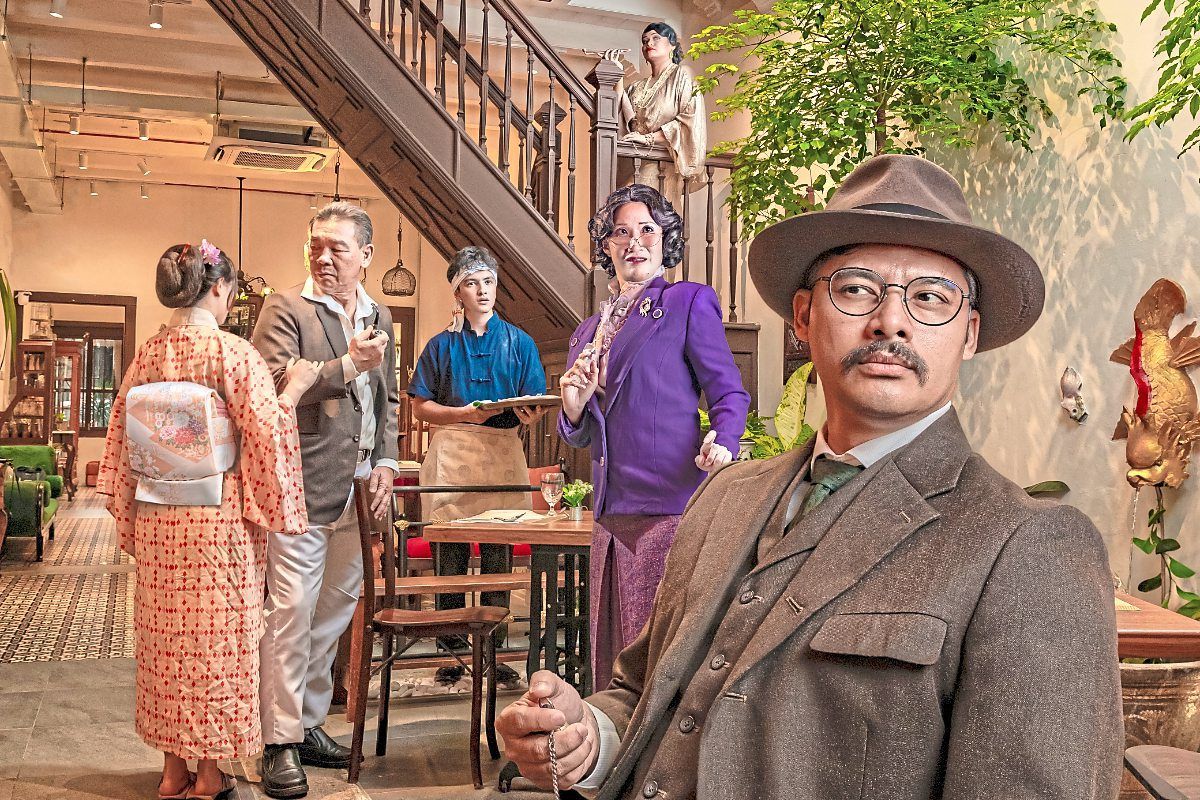
An innovative theatrical venture is bringing the classic whodunit experience to Melaka's cultural landscape through an immersive murder mystery dinner series running across four separate weekends in July and August. The production, a collaboration between Krate Creative Space and The Garden@Heeren—a heritage Peranakan establishment on Jalan Tun Tan Cheng Lock—invites participants to become active investigators rather than passive observers, testing their deductive abilities while savouring authentic traditional cuisine.
The evening unfolds as an integrated sensory experience beginning with a multi-course Peranakan dinner showcasing signature dishes including pie tee, pongteh chicken, and cincalok omelette. Rather than serving as mere prelude, the meal forms an integral part of the narrative, with the mystery gradually intensifying as courses progress. Guests are encouraged to embrace the 1930s setting through vintage or Peranakan-inspired formal wear, creating an atmosphere where theatrical immersion extends beyond performance into visual presentation and period authenticity.
The narrative framework centres on the grand reopening of a celebrated restaurant, where invited guests arrive to experience the cuisine of renowned Chef Fa. This celebratory premise rapidly transforms when a shocking incident occurs, prompting the arrival of Detective Raymond, who immediately initiates a formal investigation. From this juncture, audience members transition from dinner guests into active participants, alongside the professional cast, examining crime scenes throughout the venue, pursuing hidden clues, and interrogating suspects as the mystery deepens across the two-and-a-half-hour production.
The interactive design allows genuine audience agency in determining the investigation's direction and ultimate resolution. Participants may opt to remain peripheral observers or assume central roles in shaping how events unfold. This structural flexibility ensures no two performances proceed identically, as varying groups of guests pose distinct questions, uncover different evidence sequences, and engage with suspects through personalised interactions. The production further distinguishes itself through deliberately engineered alternate endings—the inaugural two weekends feature one resolution, while subsequent performances present an entirely different conclusion, enabling repeat attendance to yield substantially fresh narrative experiences.
The cast comprises both emerging and established performers from Melaka's theatrical community, featuring Francis Augustine as Detective Raymond, Sonia Lee as Miss Irene, Lee You Meng as Baba Pang, Elijah Skye as Peter Pang, and Neena Shu as Mama Maria. These actors function not as distant performers but as interactive elements within the mystery's environment, requiring sophisticated improvisational capacity to respond authentically to audience-driven investigation pathways.
The production emerges from the creative vision of Krate founder Wee, who articulated a deliberate ambition to synthesise theatrical performance with Malaysia's celebrated food traditions. She recognised that a heritage venue naturally lends itself to mystery narratives, with the physical space itself becoming a character within the unfolding drama. By grounding the experience in Melaka's distinctive culinary heritage and 1930s aesthetic, the production transcends conventional theatre to engage multiple sensory registers—sight, sound, taste, smell, and tactile interaction—thereby transporting participants temporally and emotionally into the narrative world.
Established in 2016, Krate Creative Space has positioned itself as Melaka's pioneering independent creative enterprise specialising in bespoke, interactive, and multidisciplinary live performance. Across its operational tenure, the company has mounted over ten original productions, cultivating a dedicated audience cohort and establishing credibility for delivering culturally resonant experiences. Significantly, Krate's constituency extends beyond Melaka's immediate population, with substantial numbers travelling from the Klang Valley, Penang, Johor, and Singapore, whilst international tourists increasingly seek such distinctive cultural encounters beyond conventional heritage tourism frameworks.
This geographic reach underscores growing regional appetite for immersive theatrical experiences that foreground local cultural narratives and spaces. Malaysian audiences increasingly recognise the value of live performance that authentically connects them to ancestral heritage through contemporary artistic practice. For visitors to Melaka—whether domestic or international—such offerings provide meaningful engagement with Peranakan culture beyond museum exhibitions or architectural observation, instead facilitating embodied understanding through active participation and sensory immersion.
Sustaining independent creative practice within Malaysia's theatrical ecosystem remains challenging, compelling Krate to adopt strategic diversification. The organisation operates a creative hub in Bukit Beruang that encompasses rehearsal facilities, studios, discussion spaces, and a functioning cafe, thereby generating multiple revenue streams whilst maintaining cultural production as its core mission. This adaptive model reflects pragmatic recognition that immersive theatre cannot survive solely through ticket sales, necessitating ancillary income sources that remain complementary to the artistic vision.
Wee articulates an ambitious vision positioning immersive theatre as integral to Malaysia's cultural tourism infrastructure, particularly within heritage-designated cities. Her stated objective involves establishing a permanent Melaka venue hosting regular heritage-inspired immersive experiences accessible year-round to both residents and visitors. Such institutionalisation would fundamentally alter how Malaysia markets its cultural assets internationally, potentially differentiating the nation's tourism offerings through authentic, artist-driven, intellectually substantive experiences rather than purely architectural or culinary tourism.
Preceding this murder mystery initiative, Krate successfully premiered The Best Nyonya in Georgetown, Penang during May of the previous year, demonstrating both the company's capacity to operate across regional locations and growing institutional confidence in the commercial viability of heritage-focused immersive theatre. Successive productions in distinct heritage cities suggest emerging infrastructure supporting such artistic ventures, potentially catalysing broader industry development across Southeast Asia's established cultural destinations.
For Malaysian audiences contemplating participation, the experience offers exceptional value as both entertainment and cultural education, requiring active intellectual engagement whilst celebrating Peranakan culinary and aesthetic traditions. The recommended age threshold of fifteen years ensures accessibility across generational demographics, whilst the deliberate narrative multiplicity—particularly the alternate endings—encourages repeat visitation and social circulation of word-of-mouth recommendations. As immersive theatre gains increasing prominence within Malaysia's cultural discourse, this Melaka initiative exemplifies sophisticated artistic practice that respects heritage authenticity whilst embracing contemporary performance innovation.

