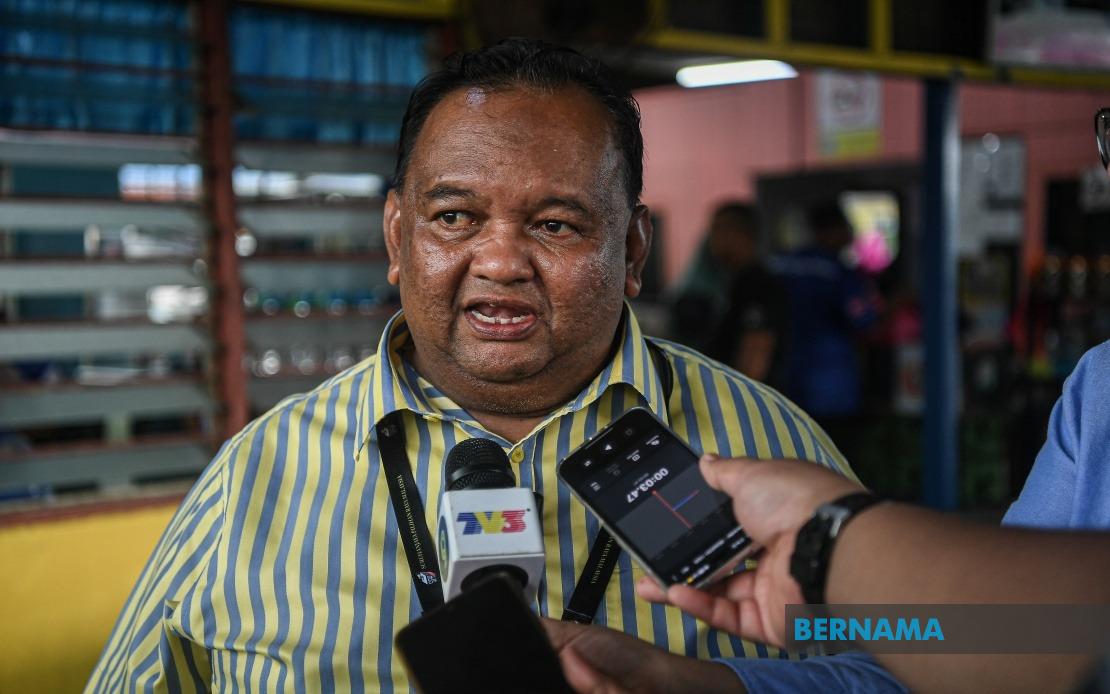
Barisan Nasional's Muszaide Makmor, the sitting Sedili state assemblyman, has laid out an economic development blueprint centred on agricultural modernisation as he seeks a second-term mandate in the July 11 Johor state election. His manifesto prioritises the expansion of agro-technology initiatives into Felda settlements, a strategic move aimed at bolstering household incomes across the rural constituency where land-dependent communities form a significant voter base.
The core of Muszaide's pitch involves scaling up partnership programmes with two major Malaysian research institutions: Universiti Putra Malaysia and Universiti Malaysia Terengganu. These collaborative schemes would bring specialised farming techniques to Felda residents, introducing income-generating ventures such as giant freshwater prawn hatcheries, mud crab breeding operations, and commercial ginger cultivation. By situating these modern agricultural projects within existing Felda frameworks, the assemblyman argues that second-generation settlers—a demographic often squeezed by limited economic mobility—would gain access to diversified revenue streams beyond traditional palm oil cultivation.
Two pilot projects already underway in the constituency serve as proof-of-concept for Muszaide's approach. The giant freshwater prawn hatchery established in Sungai Sedili Kecil and the mud crab breeding initiative in Sungai Sedili Besar represent the type of value-added aquaculture that generates higher margins than commodity crops. During recent campaign visits to Aping Timur, residents reportedly expressed enthusiasm for replicating these models across Felda blocks, signalling grassroots appetite for economic diversification in an area historically reliant on plantation employment.
Complementing the agricultural agenda is a substantial infrastructure project: the opening of an integrated palm oil mill designed to process locally sourced fruit bunches. Muszaide contends that the facility would create over 200 direct employment opportunities for young people in the district, addressing a persistent rural challenge of youth outmigration. The mill represents not merely a processing facility but a cornerstone of an integrated economic ecosystem, keeping value-addition within the local supply chain and anchoring employment in Sedili itself rather than forcing residents to seek work elsewhere.
The incumbent frames these initiatives within a broader narrative of rural economic sustainability. Beyond raw job creation, he emphasises income stabilisation for Felda participants whose livelihoods have historically fluctuated with commodity prices and seasonal factors. By introducing technology-intensive, higher-value activities alongside traditional agriculture, the strategy attempts to create a more resilient economic foundation less vulnerable to palm oil price volatility—a concern acutely felt in Johor, Malaysia's largest palm oil-producing state.
Yet Muszaide faces a competitive three-way contest that underscores deep local frustrations. Rasman Ithnain, representing Perikatan Nasional and the former Sedili assemblyman, is staging a comeback largely on grievance-based messaging. He highlights that nearly 3,000 second-generation Felda lot recipients have obtained land titles but remain unable to construct or occupy homes, saddled with monthly loan instalments of RM300 to Syarikat Perumahan Negara Berhad whilst properties sit vacant. This situation—where residents hold paper titles but face infrastructure deficits—suggests a critical gap between policy intention and ground-level implementation that resonates powerfully in Felda constituencies.
Rasman's challenge to the incumbent rests substantially on allegations of deliberate administrative delays in approving basic infrastructure development, which he characterises as politically motivated obstruction. The credibility of such claims hinges partly on documented patterns of infrastructure rollout and partly on perceptual factors shaped by campaign narratives. For Felda residents accustomed to dependency relationships with government agencies, the perception of political weaponisation of essential services—roads, electrical connections, water systems—carries significant emotional weight.
Perhaps the most potent issue Rasman has elevated is the intermittent clean water supply crisis affecting both traditional villages and Felda settlements within Sedili. Water disruptions intensifying during festive seasons create hardship that transcends normal campaign rhetoric, producing tangible grievances that voters experience directly. Rasman's proposed solution—securing a special federal loan despite Johor's settled water sector debt—represents a direct counter-offer to Muszaide's agricultural modernisation vision, positioning water security as a foundational prerequisite that must precede economic development projects.
The third contestant, Pakatan Harapan's Amirul Husni Onn, enters the race with less prominence in available reporting but nonetheless represents the opposition coalition's claim to represent Sedili voters. The three-way dynamics complicate the usual binary narratives of Malaysian state elections, forcing each candidate to differentiate not simply between government and opposition but among distinct visions of rural development priorities.
Muszaide's developmental approach—emphasising technology transfer, value-addition, and employment generation—reflects contemporary state-level strategies to modernise rural economies rather than simply redistributing traditional agricultural rents. The agro-tech emphasis also aligns with national agricultural transformation agendas and Johor's positioning as an innovation-focused state. However, the strategy's success ultimately depends on execution at the implementation level: whether university partnerships materialise, whether young people adopt novel farming techniques, whether the palm oil mill achieves operational efficiency, and whether these initiatives generate the promised income improvements.
The Sedili contest encapsulates broader tensions within Malaysian rural electoral politics: the pull between infrastructure-focused immediate grievance redressal and longer-term economic restructuring, between incumbent development records and challenger accountability narratives, and between government delivery capacity and voter scepticism after prior disappointments. With 172 candidates contesting 56 state seats across Johor, the July 11 polling will test whether voters prioritise Muszaide's growth-oriented agenda, Rasman's focus on infrastructure completion and service reliability, or PH's alternative vision for the constituency.

