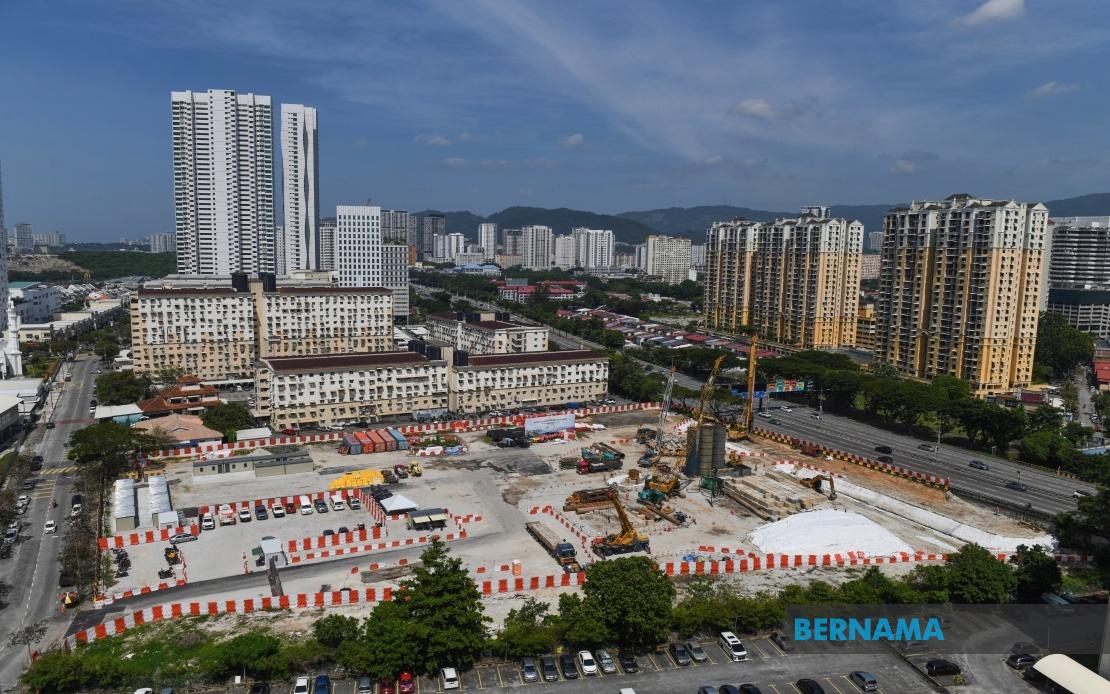
Penang's ambitious Mutiara Line Light Rail Transit project has crossed several crucial thresholds in its development trajectory, with Malaysia Rapid Transit Corporation announcing the appointment of Malaysian Resources Corporation Berhad and Theta Edge Berhad as a joint venture to deliver the RM3.028 billion System Turnkey Contract. This major procurement decision represents a pivotal moment for the regional rail infrastructure initiative, enabling detailed engineering work on critical railway systems to progress in tandem with ongoing ground construction activities, thereby maintaining momentum across the entire development programme.
The successful tenderer will oversee the integration of seven interconnected railway system packages that collectively form the technological backbone of the new transit line. These components span electric train procurement and associated depot facilities, along with sophisticated signalling infrastructure and train control mechanisms that will orchestrate vehicle operations across the network. The contract further encompasses automated platform gate installations designed to enhance passenger safety and operational efficiency, reflecting modern rapid transit standards increasingly adopted throughout the Southeast Asian region.
Beyond the visible infrastructure, the systems package includes trackwork installation alongside conductor rail systems and dedicated maintenance vehicle procurement. Power generation and distribution networks form another critical element, ensuring reliable electricity supply to all operational components. The contract additionally covers the Railway Supervisory Control and Data Acquisition system and computerised maintenance management frameworks that will enable real-time monitoring and predictive maintenance capabilities long after the line commences operations.
Communications infrastructure represents another substantial component, with telecommunications and information technology systems allowing seamless passenger information dissemination and operational coordination. The automatic fare collection infrastructure will streamline the commuter experience while generating valuable ridership data for future service optimisation. This comprehensive systems approach reflects international best practices in rapid transit development, where integrated technology deployment ensures coherent passenger journeys from ticketing through boarding to alighting.
Simultaneously, procurement activities for the Civil Main Contract 2 package, which will extend the alignment from Komtar through to Penang Sentral, continue advancing with tender evaluations currently underway. The Malaysia Rapid Transit Corporation has established November 2026 as the anticipated timeline for formalising this contract award, indicating a carefully sequenced construction methodology that prioritises completing earlier segments before commencing subsequent extensions. This phased approach allows project teams to refine operational procedures and address lessons learned during initial construction phases.
The Civil Main Contract 1, covering the Silicon Island to Komtar alignment, demonstrates sustained progress through a parallel design-and-build delivery model that compresses traditional sequential timelines. Construction teams have already erected 45 pile caps and 32 pier columns, with active site operations now occurring across 14 of the 19 planned construction sections. This widespread activity distribution indicates sophisticated project coordination capabilities, with multiple work fronts advancing simultaneously while design teams continue finalising engineering specifications for subsequent construction phases.
Bumiputera participation metrics underscore the project's commitment to indigenous Malaysian business integration and capability development. The Civil Main Contract 1 subcontracting arrangements have now exceeded 20 per cent Bumiputera participation calculated against total contract value, demonstrating substantive engagement with local enterprises rather than tokenistic involvement. This threshold accomplishment reflects deliberate procurement strategies that balance project delivery timelines with local industry advancement objectives, creating employment opportunities and knowledge transfer throughout Penang's construction and engineering sectors.
Land acquisition efforts have achieved notable progress, with 93 per cent of required properties for the Civil Main Contract 1 package now secured through coordinated efforts between Federal Government authorities, the Penang State Government, and relevant agency stakeholders. This substantial acquisition rate minimises future construction disruptions and demonstrates effective inter-governmental collaboration across federal-state administrative boundaries. The remaining seven per cent represents manageable residual parcels unlikely to impede construction schedules, though continued attention remains necessary to prevent acquisition delays from cascading into downstream construction impacts.
Depot infrastructure development represents another critical workstream moving forward deliberately. At Silicon Island, geotechnical investigation activities have commenced to characterise subsurface conditions and inform depot construction design specifications. The Penang State Government's April 2026 handover of the Tapak Pesta site enabled demolition of existing structures and comprehensive site preparation activities, establishing readiness for imminent construction commencement. These preparatory activities, though unglamorous, constitute essential foundations for the permanent maintenance and operational facilities that will sustain long-term Mutiara Line operations.
The convergence of these multiple project elements—systems procurement, civil construction, land acquisition, and depot preparation—reflects the sophisticated orchestration required for major transit infrastructure delivery. Successful coordination across these parallel workstreams will determine whether the Mutiara Line achieves its envisioned operational timeline and cost targets. For Malaysian urban planners and regional transport commentators, the project's methodical advancement offers encouraging signals about domestic capacity for implementing complex, technology-intensive infrastructure initiatives that increasingly distinguish developed from developing transport sectors.
The Mutiara Line's progression also carries broader significance for Malaysian transport policy and Southeast Asian regional development patterns. Modern rapid transit networks generate substantial economic multiplier effects through enhanced labour market accessibility, commercial property value appreciation along corridors, and productivity improvements from reduced commute times. Penang's geographic position as a major industrial and tourism centre amplifies these potential benefits, potentially reinforcing the state's competitive advantages within Malaysia's economic hierarchy while demonstrating viable models for other Malaysian cities contemplating similar transit investments.

