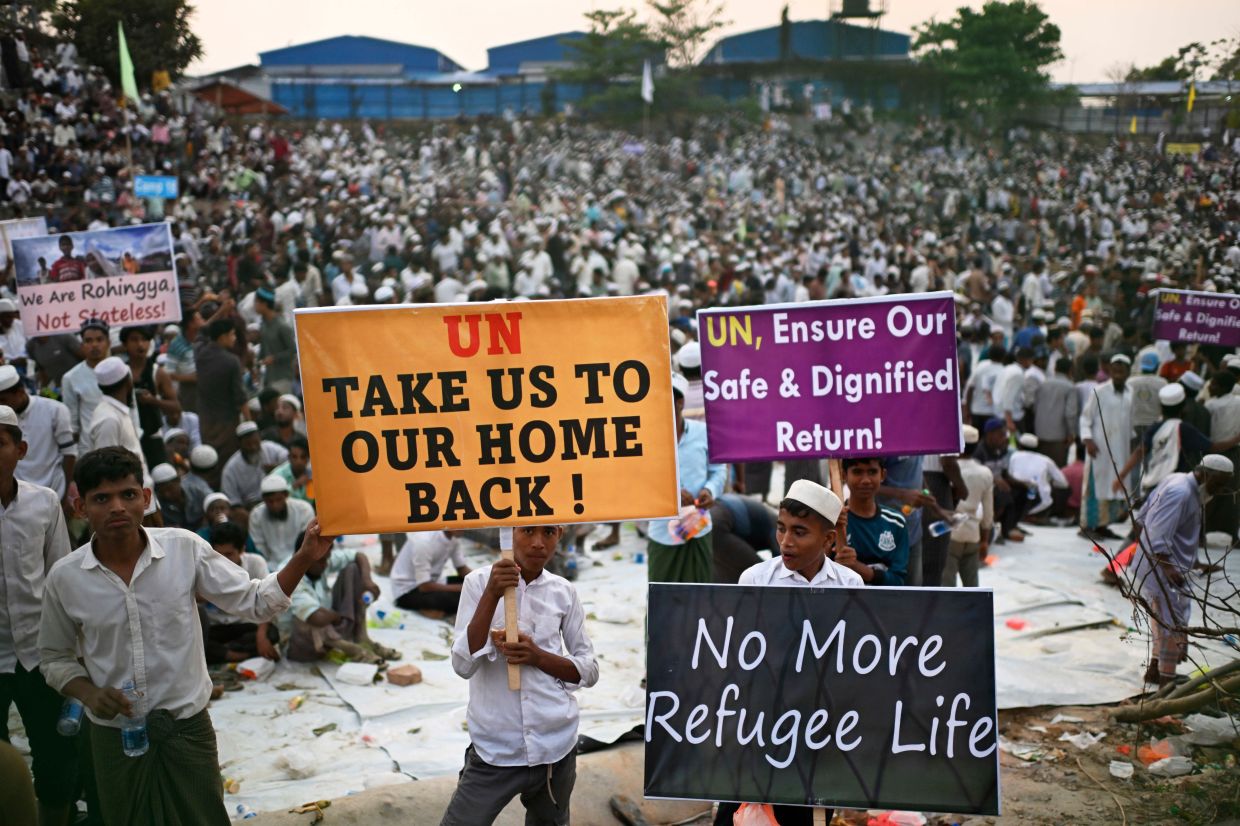
Myanmar's military-backed government announced on Saturday that it has verified the status of more than 300,000 Rohingya refugees living in sprawling camps across Bangladesh, declaring them eligible for eventual repatriation to western Rakhine state once security conditions stabilize. The statement from Myanmar's Ministry of Foreign Affairs marks the latest development in a humanitarian crisis that has now persisted for nine years, with hundreds of thousands of displaced people trapped in limbo across the border as political and military instability shows no signs of resolving.
The verification announcement comes nearly nine years after the initial exodus in August 2017, when Myanmar's military launched a sweeping crackdown in Rakhine state following attacks by a Rohingya insurgent group on military guard posts. That operation was extraordinarily destructive, forcibly displacing more than 700,000 Rohingya into Bangladesh in what international observers characterised as systematic ethnic cleansing. These newly displaced refugees joined hundreds of thousands of others already residing in Bangladeshi camps, themselves fleeing previous cycles of violence and persecution that had accumulated over decades.
According to Myanmar's figures, the government verified 426,545 individuals from a list of 828,824 refugees provided by Bangladesh as of late July. Of those verified, Myanmar determined that 308,797 were formerly residents of Rakhine state and therefore eligible for return. The remaining numbers paint a more complex picture: the government said 113,507 people could not be verified through its screening process, while 4,241 were identified as having involvement in what Myanmar characterises as terrorist activities. These classifications are significant because Myanmar does not officially recognise the Rohingya as one of the country's 135 lawful ethnic minorities, instead referring to them dismissively as Bengalis to suggest they originate from Bangladesh and have illegally settled in Myanmar territory.
The verification exercise, whilst appearing to be a technical step forward, masks deeper political and security obstacles that have prevented any meaningful repatriation for years. Myanmar and Bangladesh initially agreed to a two-year repatriation framework in 2018, but implementation has consistently failed to materialise. The situation deteriorated sharply following Myanmar's military coup in February 2021, which overthrew Aung San Suu Kyi's elected government and triggered widespread armed resistance across the country. Since then, Myanmar has descended into increasingly chaotic civil conflict, eliminating any realistic possibility of safely returning refugees to their former homes.
The security environment in Rakhine state itself has become markedly more volatile in recent years. Fighting between the military and the Rakhine-based Arakan Army ethnic armed organisation has intensified, with the Arakan Army gradually capturing significant territory from government forces. In 2023, this renewed fighting forced additional waves of refugees to flee desperately toward Bangladesh and other neighbouring countries, compounding the existing humanitarian crisis rather than reducing it. The loss of military control over much of Rakhine raises serious questions about Myanmar's ability to provide stable conditions for any large-scale repatriation programme, regardless of verification statistics.
The deteriorating conditions within the refugee camps themselves have created a secondary crisis that directly affects Malaysia and other Southeast Asian nations. Chronic underfunding from international donors, inadequate food rations, and the complete absence of meaningful economic opportunities have driven increasing numbers of Rohingya to attempt perilous maritime journeys to Malaysia, Indonesia, and Thailand aboard overcrowded and unseaworthy vessels. These dangerous crossings have become more frequent precisely because hope for repatriation has faded and camp conditions have worsened, pushing desperate people toward the only available option they perceive as offering any future.
Malaysia has found itself at the centre of renewed diplomatic efforts to address the crisis. Prime Minister Anwar Ibrahim announced in late July that Myanmar had agreed to accept 5,000 Rohingya refugees currently residing in Malaysia as part of a bilateral repatriation programme. However, statements from Myanmar officials immediately muddied the waters, with Han Win Aung from the foreign ministry telling international media that any repatriation programme would be limited strictly to verified Myanmar nationals held in detention facilities and would not involve the broader Rohingya population. This contradiction between Malaysia's public statements and Myanmar's official position reveals the diplomatic confusion surrounding any potential returns.
Myanmar's position on the scale of the original displacement also remains contentious. The government rejected international claims that more than one million people were displaced from Rakhine, instead asserting that approximately 540,000 crossed into Bangladesh during the 2017 violence whilst over 200,000 remained in northern Rakhine. These figures are significantly lower than assessments from human rights organisations and the United Nations, which documented displacement exceeding 700,000 in the initial exodus alone. The disagreement over basic facts of the crisis reflects Myanmar's continuing resistance to full accountability for the military operation.
For Malaysia and the broader Southeast Asian region, Myanmar's repatriation announcement carries limited immediate practical significance given the demonstrated inability to implement any actual returns. The persistence of the refugee camps in Bangladesh and the growing numbers of Rohingya attempting maritime migration suggest that Myanmar's verification of 300,000 refugees is unlikely to translate into meaningful repatriation in the foreseeable future. Instead, neighbouring countries including Malaysia must prepare for continued pressure as refugees seek alternative routes out of camps that have become warehouses for human despair.
The international characterisation of the 2017 military operation as ethnic cleansing and genocide remains contested by Myanmar, but the nine-year inability to repatriate refugees or resolve the underlying political situation speaks volumes about the country's commitment to addressing the crisis. Until Myanmar experiences significant political transformation and genuine security improvements in Rakhine state, verification exercises and diplomatic statements will likely remain empty gestures that offer false hope to refugees whilst masking the continued breakdown of governance and human rights in Myanmar.

