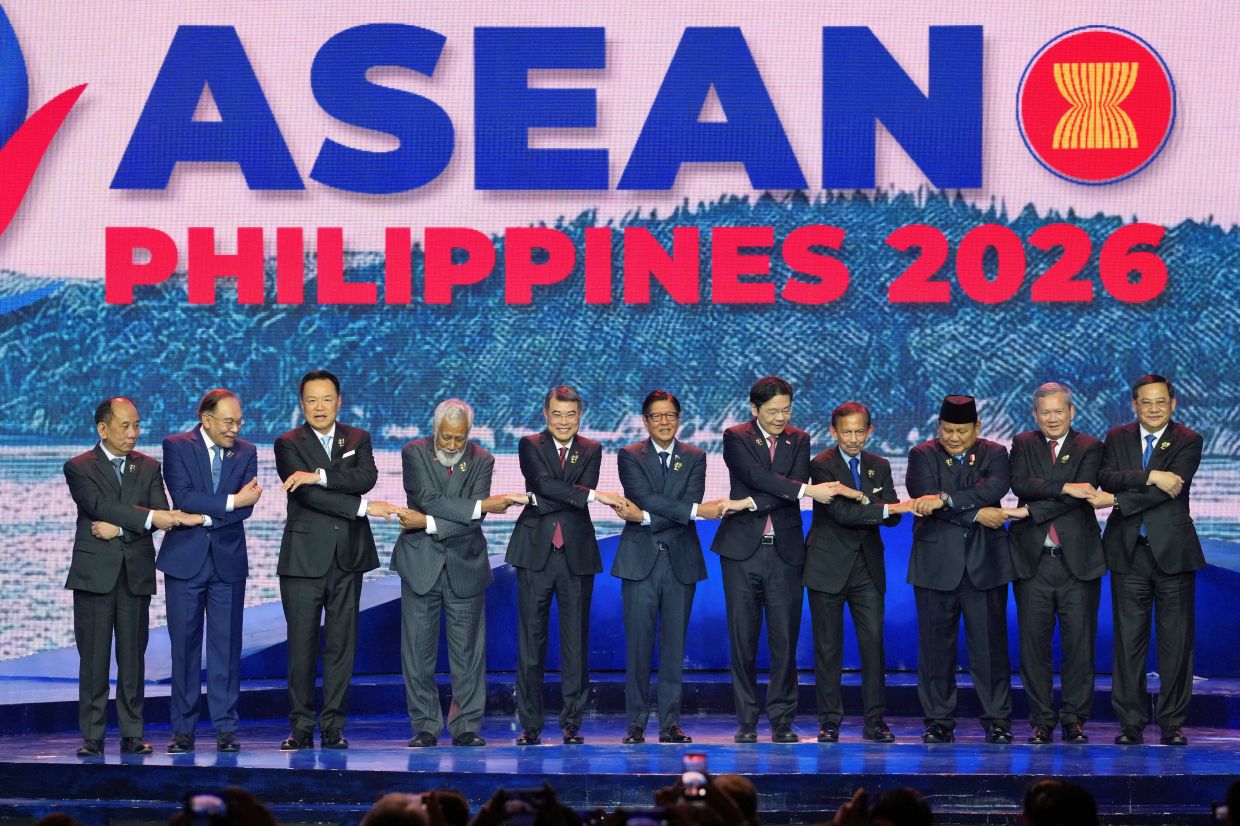
The Association of Southeast Asian Nations brings together its most senior diplomatic representatives this week in Manila for discussions that will stretch well beyond the region's traditional sphere of concern. Hosted by the Philippines, which currently holds ASEAN's rotating chairmanship, the three-day ministerial meeting will see participation from global powerhouses including United States Secretary of State Marco Rubio, Chinese Foreign Minister Wang Yi, Russian Foreign Minister Sergey Lavrov, and representatives from the European Union. The convergence of these figures underscores the interconnected nature of contemporary geopolitical challenges, where conflicts originating thousands of kilometres away carry direct ramifications for one of the world's most economically dynamic regions.
At the forefront of ASEAN's collective concerns is the escalating military confrontation between the United States and Iran, which increasingly threatens to destabilise one of the world's most critical chokepoints for global commerce. Roughly one-fifth of all petroleum traded internationally traverses the Strait of Hormuz, a passage that lies at the intersection of the Persian Gulf and Gulf of Oman. When hostilities spike in this theatre, the reverberations travel swiftly across continents. Southeast Asia, a region encompassing more than 680 million people with limited domestic hydrocarbon reserves, finds itself particularly vulnerable to supply disruptions and price volatility stemming from Middle Eastern instability. The bloc's foreign ministers plan to issue a coordinated statement expressing serious concern about the renewed fighting and will appeal to all parties to pursue diplomatic channels instead of military escalation.
The economic stakes for Southeast Asia could hardly be higher. The region's energy infrastructure and industrial base depend substantially on reliable access to Middle Eastern crude oil and natural gas. The repercussions of recent geopolitical shocks have already rippled through ASEAN economies, prompting immediate policy responses at the highest levels. Philippine President Ferdinand Marcos Jr. felt compelled to declare a national energy emergency in March, establishing measures aimed at safeguarding supplies of fuel, food and essential commodities whilst simultaneously preventing speculative hoarding and excessive pricing by merchants. Such declarations reveal how directly external crises translate into domestic vulnerability for ASEAN member states.
Paradoxically, American strategic preoccupation with the Middle East has generated anxiety within ASEAN capitals about potential distraction from the Indo-Pacific region itself. The Trump administration has explicitly committed to supporting Taiwan against Chinese military pressure, and Beijing's increasingly assertive posture across the South China Sea remains a persistent irritant in ASEAN members' dealings with their most powerful neighbour. Several ASEAN nations, particularly the Philippines and Vietnam, have experienced direct confrontations with Chinese coast guard vessels and fishing fleets in contested waters. Some officials worry privately that Washington's military resources and diplomatic attention devoted to Middle Eastern theatre may come at the expense of credible commitment to regional security. Rubio's presence at the Manila talks serves partly to address these lingering concerns and reaffirm American dedication to what the State Department describes as maintaining a free and open Indo-Pacific.
Rubio has indicated openness to bilateral engagement with his Chinese counterpart Wang Yi during the Manila visit, though no formal meeting had been scheduled at the time of his departure from Washington. The dynamic between these two great powers inevitably shapes the diplomatic atmosphere at multilateral gatherings. Rubio acknowledged the inherent friction between Washington and Beijing, noting that powerful nations must persist in dialogue despite fundamental disagreements. He indicated expectations that Chinese President Xi Jinping may visit the United States in September, suggesting at least a veneer of diplomatic normalcy despite underlying tensions over trade, technology, and geopolitical influence.
On the periphery of the official ASEAN meetings, Rubio is anticipated to convene with fellow members of the Quad grouping—the United States, India, Japan, and Australia. This informal strategic partnership has become central to American efforts to maintain technological and military balance against rising Chinese power, though Beijing consistently characterises the Quad as a thinly veiled containment mechanism aimed at thwarting its legitimate rise.
Within ASEAN itself, however, members grapple with an intractable internal crisis that resists external solutions. Myanmar's military coup in 2021 displaced the democratically elected government of Aung San Suu Kyi, triggering a civil war that has claimed more than 8,100 lives and resulted in nearly 22,500 detained individuals, according to the Assistance Association for Political Prisoners. The junta's consistent disregard for ASEAN's 2021 five-point peace plan has rendered that blueprint largely ineffective, prompting the bloc to exclude Myanmar's military leadership from high-level meetings including this week's Manila gathering. The stalemate reflects broader challenges facing ASEAN's consensus-based diplomacy when confronted with governments unwilling to compromise.
Recently, however, ASEAN has shifted tactics. Philippine Foreign Secretary Theresa Lazaro, serving as ASEAN's special envoy, met her Myanmar counterpart Tin Maung Swe in Bangkok this month—the first such high-level encounter in five years. Subsequently, Lazaro and Thai Foreign Minister Sihasak Phuangketkeow travelled to the resort city of Pattaya for consultations with representatives of Myanmar's ethnic armed groups. These moves represent an attempt to re-engage all warring parties and foster dialogue across fractured lines. Lazaro characterised the approach as resolute diplomacy rather than abandonment of ASEAN's previous principled stance, insisting that peaceful resolution demands engagement with all stakeholders.
Human rights organisations have criticised these diplomatic overtures sharply, arguing that ASEAN's decision to meet Myanmar's junta representatives effectively nullifies the bloc's earlier commitment to impose consequences on military leaders and constitutes a reward for intransigence without reciprocal concessions. This tension between pragmatic engagement and principled condemnation will likely preoccupy ASEAN deliberations throughout the week, reflecting the organisation's perpetual struggle to balance diplomatic effectiveness with moral clarity.
Equally pressing for ASEAN is the protracted standoff in the South China Sea, where overlapping territorial claims create persistent friction. China, Taiwan, and ASEAN members Brunei, Malaysia, the Philippines, and Vietnam all assert competing jurisdictional rights across the strategically vital waters. Recent years have witnessed particular intensity in confrontations between Chinese and Philippine maritime forces, with repeated incidents involving coast guard vessels and fishing activities. ASEAN and China have been negotiating a proposed "code of conduct" intended to establish protocols that would prevent territorial disputes from cascading into military conflict. Foreign ministers will assess progress on these negotiations during the Manila meetings, seeking movement on an agreement that remains elusive despite years of discussion.
The convergence of these multiple crises—Middle Eastern instability, Chinese assertiveness in Asian waters, Myanmar's internal warfare, and great power competition for influence—presents ASEAN with simultaneous challenges that test the organisation's coherence and relevance. The bloc's role as a convening authority brings global leaders to its table, yet its limited enforcement mechanisms constrain its ability to resolve external conflicts or compel compliance from wayward members. This week's Manila talks will reveal whether ASEAN can marshal sufficient collective will to address any of these interconnected dilemmas or whether the organisation will once again issue carefully worded statements expressing concern whilst circumstances continue deteriorating on the ground.

