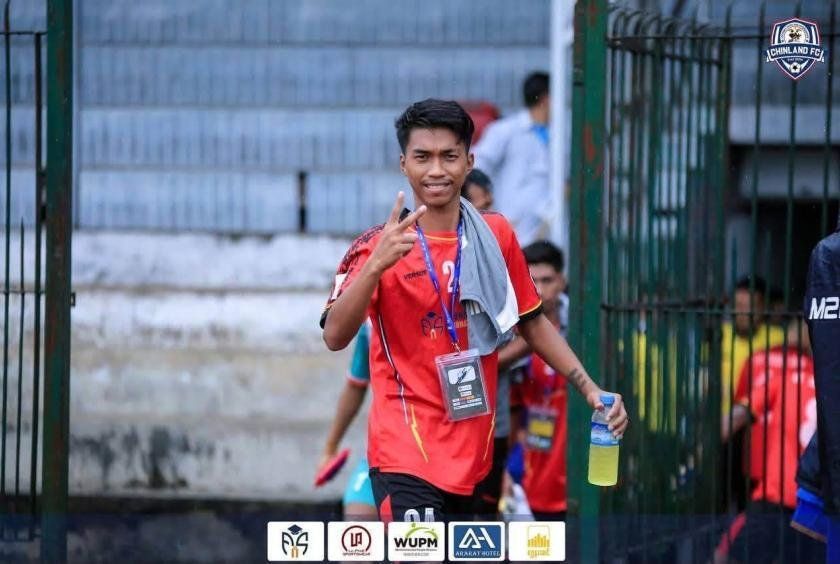
Chinland FC announced late on August 29 that its player Pa Lung, who had vanished from contact seven days earlier, had been located safely and was back with the team following an unexpected family crisis. The discovery resolved a period of considerable anxiety for the football club, which had mounted an intensive search operation after initially losing touch with the athlete without explanation.
According to the club's statement released through its Facebook page, Pa Lung had made the urgent decision to return to his hometown without alerting the club, driven by his mother's sudden and critical health condition. This emergency departure created a communication blackout that lasted several days, during which the footballer's location and welfare remained unknown to his employers and the broader football community in Myanmar. The circumstances surrounding his disappearance only became clear once he was eventually located and able to resume contact with club officials.
The player's inability to maintain communication during his journey home stemmed from practical difficulties beyond his control. His mobile telephone battery depleted during transit to his hometown, and he encountered additional communication obstacles that prevented him from reaching the club to explain his absence. Such scenarios, while relatively common in regions with patchy telecommunications infrastructure, created genuine concern among Chinland FC's management and supporters, who initially had no way of distinguishing between a voluntary departure and a potential emergency.
Clinland FC's response to the disappearance demonstrated the club's commitment to player welfare. After several days without contact, the club filed a formal missing-person report with local police authorities and initiated an active search spanning five days. Club officials personally undertook efforts to locate Pa Lung, demonstrating that the initial silence was treated as a serious matter requiring official intervention and coordinated action rather than being dismissed as an isolated incident.
As the period of non-contact extended beyond initial expectations, Chinland FC escalated its concern and made a public appeal for assistance in locating the player. This decision to involve the wider community reflected the unusual nature of the disappearance and the club's determination to ensure Pa Lung's safety. The public appeal mechanism, while occasionally triggering media speculation about more serious circumstances, ultimately served its intended purpose by expanding the network of people alert to the player's situation.
The resolution brought relief to multiple stakeholders invested in Pa Lung's wellbeing. His family members, personal friends, supporters, and the broader football community could finally receive confirmation that he remained safe. Chinland FC issued reassurances emphasizing that the player had indeed returned to the team and that the crisis precipitating his disappearance, while serious, had not resulted in any lasting harm to him personally.
The resolution also validated the coordinated response mobilized across Myanmar's football ecosystem. In its statement, Chinland FC explicitly acknowledged the contributions of the Myanmar Football Federation, the Myanmar National League, various government authorities, the Myanmar Police Force, media organizations, and numerous individual supporters. This broad expression of gratitude underscored how the search for a single player had activated multiple institutional layers and demonstrated the interconnected nature of Myanmar's sports and official systems.
For Malaysian observers, the incident offers perspective on how football clubs across Southeast Asia navigate unexpected player absences in contexts where communication infrastructure may be inconsistent and family emergencies can create sudden pressures conflicting with professional obligations. The case illustrates both the vulnerabilities of informal notification systems within clubs and the resilience of community-based response mechanisms that can fill information gaps when formal channels fail.
The incident also reflects broader realities in Myanmar's football environment, where players may face competing demands between professional commitments and urgent family circumstances. The understanding ultimately shown by Chinland FC—prioritizing human welfare over contractual obligations—demonstrates values that extend beyond the commercial dimensions of modern football and recognizes the primacy of familial crisis response.
Beyond the immediate resolution, the case demonstrates how football clubs function as community institutions within their cities and regions. Chinland FC's investment of resources, time, and organizational capital in locating one player reflects an implicit recognition that players are community members whose sudden disappearance affects not merely the club but families, supporters, and broader networks of concern. This perspective contrasts with more transactional approaches sometimes evident in professional sports contexts in other regions.
The successful location of Pa Lung also highlights the value of public communication in resolving uncertainty. By issuing transparent statements about the search timeline, the circumstances of disappearance, and the resolution, Chinland FC managed public concern while gathering practical assistance from a wide audience. This openness likely contributed to the eventual positive outcome by keeping the player's situation visible to multiple potential sources of information.
Moving forward, the incident may prompt Chinland FC and other Myanmar football clubs to examine their player communication protocols to ensure that family emergencies can be reported and understood more readily. While no system can entirely prevent communication breakdowns, establishing clearer procedures for notifying club officials about unexpected absences rooted in family crises could reduce future anxiety and the necessity for formal missing-person interventions.

