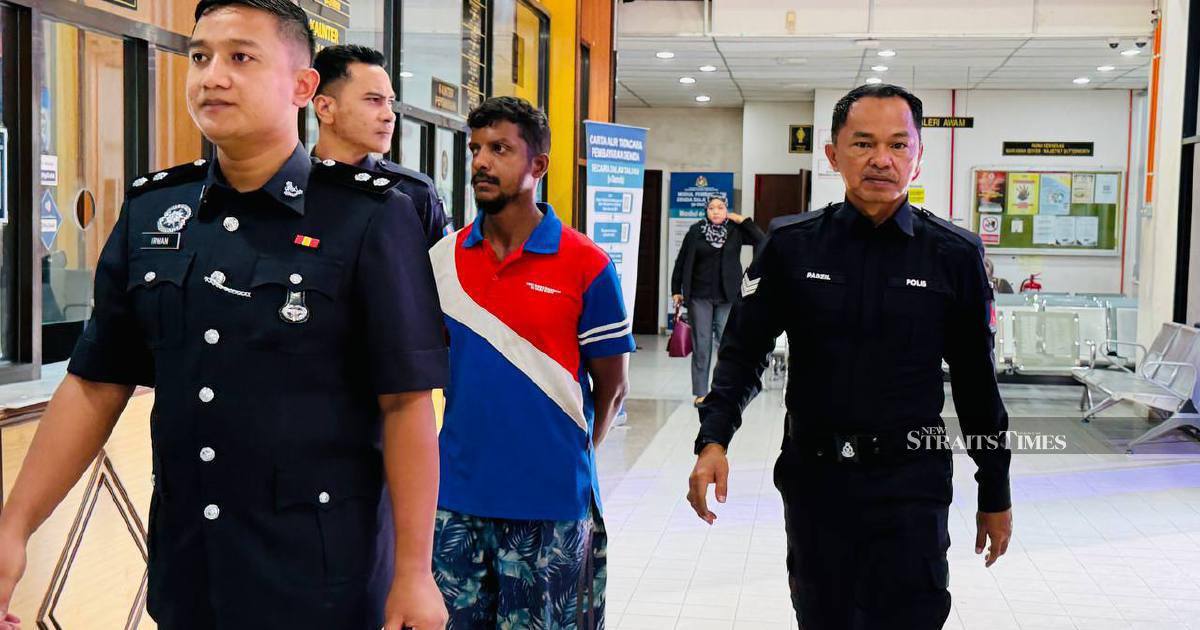
A Myanmar national appeared in Butterworth Sessions Court today to face charges of inflicting grievous hurt on a compatriot during an incident that occurred earlier in the week. The defendant, whose identity remains unclear pending verification of travel documents, entered a not guilty plea to the allegation.
The court's decision to withhold bail reflects ongoing complications surrounding the accused's immigration status and lack of proper identification credentials. Such procedural measures are routine in cases involving foreign nationals whose documentation cannot be immediately verified through standard channels. The presiding judge indicated that release would only be considered once the defendant produces valid identity papers or until his government provides consular confirmation of his status.
This incident highlights a persistent challenge within Peninsular Malaysia's multicultural urban centres, particularly in commercial hubs like Butterworth where migrant workers from Myanmar comprise a significant demographic. The frequency of inter-community disputes involving Myanmar nationals has prompted authorities to implement stricter documentation protocols during the bail determination process. Without clear identification, courts cannot effectively track defendants or ensure compliance with bail conditions.
The nature of the alleged assault—classified as causing grievous hurt under Malaysian law—suggests the injuries sustained by the victim exceeded the threshold of simple hurt. Grievous hurt charges carry more severe penalties than minor assault, potentially resulting in imprisonment of up to two years, fines exceeding RM5,000, or both, depending on aggravating circumstances and the court's assessment of evidence presented during trial.
Butterworth, situated in Seberang Perai and serving as the commercial gateway to Penang Island, regularly hosts migrant workers engaged in manufacturing, construction, and retail sectors. Tensions occasionally emerge from workplace disputes, accommodation sharing arrangements, or misunderstandings exacerbated by language barriers. The victim in this case, also identified as a Myanmar national, likely shares similar economic circumstances and social positioning as the accused.
The bail denial reflects judicial caution regarding foreign nationals with unverified backgrounds. Without concrete identification, courts cannot assess flight risks, verify employment records, confirm local addresses, or establish community ties that would ordinarily support bail applications. This procedural approach protects both the justice system's integrity and the complainant's interests by ensuring the defendant's availability for trial proceedings.
Myanmar's consular representation in Malaysia, though present through official channels, sometimes experiences delays in verifying citizen documentation, particularly for individuals possessing only informal travel permits or expired papers. Many Myanmar nationals working in Malaysia do so under temporary visiting passes that carry limited identification capacity, complicating judicial processes designed for documented residents.
The Sessions Court's authority in this matter allows for substantial discretion regarding bail conditions and timing. Should the defendant successfully produce satisfactory identification documentation, the court will reassess the bail application with consideration of the charge's severity, the accused's residential stability, employment status, and any prior criminal record that might be revealed through identification verification.
This case underscores the intersection between immigration enforcement and criminal justice administration in Malaysia. Authorities managing the court system must balance presumptions of innocence against practical concerns regarding accountability and trial continuity. Foreign nationals in Malaysia's criminal justice system occupy a particularly complex position, subject simultaneously to immigration regulations, criminal law provisions, and consular regulations of their home countries.
The upcoming identification verification process will determine the timeline for subsequent court proceedings. Should proper documents remain unavailable, the case may necessitate consular intervention or alternative judicial pathways. The ultimate resolution will depend partly on documentary evidence and partly on how effectively the defendant's government assists in authentication procedures.
For Malaysia's migrant worker communities, particularly those from Myanmar, this incident reinforces the critical importance of maintaining proper identification documentation. Beyond legal requirements for employment and residence, identification papers fundamentally influence court treatment during criminal proceedings, affecting bail availability and trial fairness. Workers without clear documentation face compounded disadvantages in the justice system, often experiencing extended remand periods while bureaucratic processes unfold.
The case will return to the Butterworth Sessions Court following completion of identification procedures. The trial phase, should it proceed, will examine evidence regarding the alleged assault, witness testimony from both the alleged victim and any other individuals present, and medical documentation substantiating the claimed injuries. The court's judgment will ultimately depend on whether prosecutors successfully establish the defendant's culpability beyond reasonable doubt.