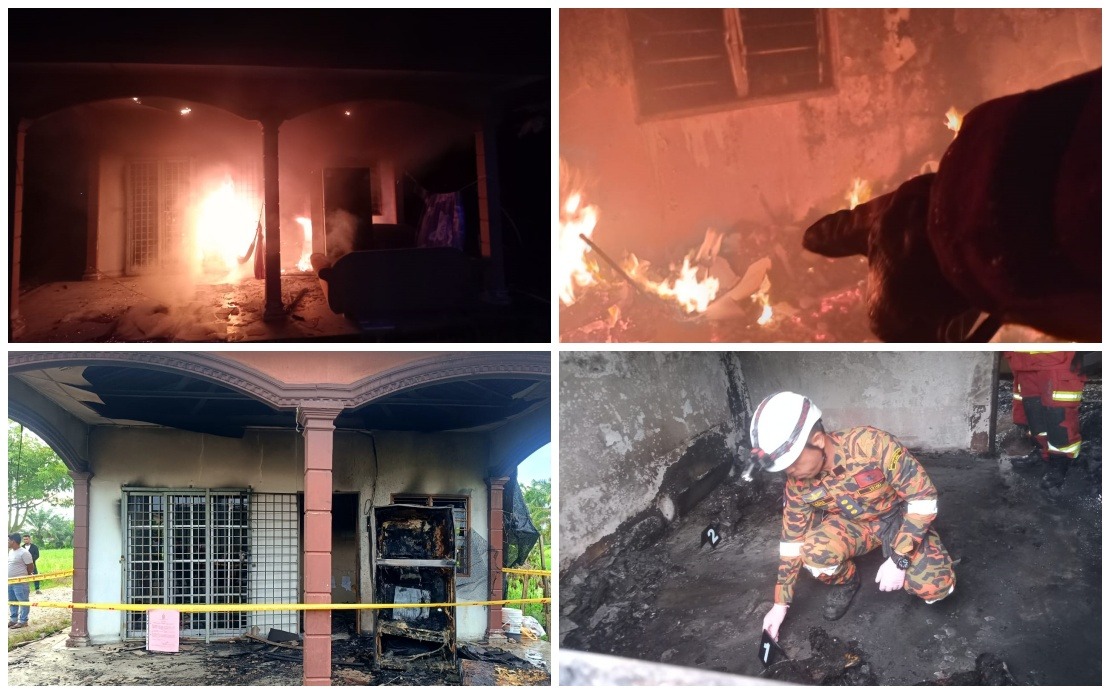
A tragic residential fire in Taman Serai Maju, Bagan Serai, claimed the lives of three members of a Myanmar refugee family in the early hours of Thursday morning, leaving the mother hospitalised with serious injuries. Authorities responded swiftly to reports of the blaze, but rescuers were unable to save the trapped occupants despite immediate intervention. The incident underscores ongoing safety concerns within overcrowded refugee housing in Malaysia's northern regions, where vulnerable populations often inhabit older, densely occupied residential structures.
Perak Fire and Rescue Department director Datuk Sayani Saidon identified the deceased as Mohd Yunus Nor Ali, aged 27, and his two young sons Muhammad Woheed Mohd Yunus, 6, and Mohamad Aheed Mohd Yunus, 3. The father's wife, Saniya Jahan Juma Abul Kasim, 24, sustained severe burns to her hands and feet but managed to escape the building. Both adults are documented Myanmar refugees residing in Malaysia, part of the broader population of displaced persons from the conflict-affected region who have sought refuge in the country.
Emergency services received the distress call through the MERS 999 system at 5.17 am, with the first fire brigade unit arriving at the scene thirteen minutes later. Upon arrival, firefighters discovered a modest single-storey residential structure measuring 20 feet by 40 feet already engulfed in flames, with approximately 70 per cent of the property consumed by the fire. The dwelling housed seven foreign nationals in total, indicating the density of occupation common in budget accommodation serving refugee communities throughout the region.
According to witness accounts provided by the surviving wife, her husband and two children remained trapped inside when she escaped the burning residence. The woman had managed to flee to safety but faced the horrifying realisation that her family members were still inside the building as flames spread rapidly through the structure. Her distress alerted neighbours and emergency responders to the severity of the situation and the probability of further casualties within the premises.
Rescuers initiated a comprehensive search and rescue operation employing the RECEO concept, a methodical approach utilising all available firefighting techniques and protocols. The team conducted thorough searches of the affected areas, with the primary focus on locating trapped occupants in the earliest stages of the operation. Tragically, all three male family members were discovered in the first room where the fire had originated, indicating they had been unable to escape the initial flames that ignited in that chamber.
Medical personnel from the Ministry of Health arrived at the scene and formally confirmed the deaths of all three victims after examination. Emergency responders immediately provided initial first aid treatment to the surviving wife, whose burn injuries necessitated professional medical intervention at a hospital facility. She was transported via Emergency Medical Rescue Services vehicle to receive ongoing specialist treatment for her injuries, which the fire service classified as moderate in severity.
Authorities brought the fire under complete control by 6.20 am, with full cessation of firefighting operations completed by 7.35 am, approximately two hours after the initial emergency call. The deceased victims were subsequently handed over to the Royal Malaysia Police for formal processing and further investigation in accordance with standard procedures following fatal fire incidents. Police will conduct inquiries to determine whether any suspicious circumstances surrounded the tragedy or whether the fire resulted from accidental causes.
Investigators from the Perak Fire and Rescue Department's forensic division have determined that flames originated in the first room of the residence, where all three victims were ultimately found. However, the precise trigger for the fire remains under active investigation, with forensic specialists examining physical evidence at the scene to establish whether the blaze resulted from electrical faults, cooking equipment malfunction, smoking materials, or other ignition sources. The extent of actual material losses is still being calculated by assessors.
This incident reflects broader vulnerabilities within Malaysia's refugee housing landscape, where families displaced by conflict often occupy older, sometimes inadequately maintained residential properties in low-income neighbourhoods. Fire safety standards, enforcement of building codes, and provision of functional smoke detectors and fire suppression equipment vary considerably across such dwellings. The tragedy raises questions about whether adequate support systems exist to ensure that displaced persons living in privately rented accommodation meet minimum safety thresholds, particularly regarding fire prevention and emergency evacuation procedures.
The loss of the father and his two young children represents a profound humanitarian tragedy for the refugee community, whose members have already endured displacement and trauma from conflict situations in Myanmar. The family had been attempting to rebuild their lives in Malaysia, but the devastating fire has destroyed their home and claimed irreplaceable family members. For the surviving mother, the physical injuries sustained in the fire compound the psychological trauma of losing her husband and sons in such sudden and violent circumstances.
Social welfare agencies and humanitarian organisations working with refugee populations will likely face increased pressure to examine housing conditions and establish improved safety protocols. The incident may prompt discussions among government agencies, including immigration authorities and housing officials, regarding the responsibilities of property owners and landlords who lease accommodation to foreign nationals and refugee communities. Improved coordination between fire safety inspectorates and agencies serving refugee populations could potentially prevent similar tragedies in the future by ensuring adequate hazard identification and mitigation.

