Myanmar's government is banking on its rich religious heritage and centuries-old monuments to engineer a tourism turnaround, with officials targeting a significant influx of regional visitors as the country attempts to demonstrate economic recovery following its contentious 2025 election. The strategic pivot represents one of the most tangible measures being taken to signal normalcy after years of isolation triggered by the 2021 military takeover that fractured the nation into civil conflict.
The ambition is to attract 1.8 million international visitors this year—a near-doubling of the 973,263 arrivals recorded in 2025—through a combination of relaxed entry requirements and targeted marketing towards neighbouring economies. Authorities recognise that visitors from China and Thailand will be instrumental to achieving these projections, given geographical proximity, existing transport links, and pre-coup travel patterns that established these nations as Myanmar's primary source markets. The calculation reflects both pragmatism and necessity; rebuilding broader international tourism would require addressing the security concerns that persist in many Western capitals, a challenge the government appears to view as medium-term rather than immediate.
Current momentum provides modest encouragement but falls considerably short of closing the gap. Through May of this year, Myanmar had received 448,205 visitors, representing a five per cent increase from the corresponding period in 2024, yet this trajectory suggests the government would achieve only around 1.1 million arrivals by year's end without significant acceleration in the second half. The shortfall underscores the profound damage inflicted by four years of instability; visitor numbers have collapsed to roughly one-fifth of the 4.7 million Myanmar attracted in 2015, when the country first opened its borders following decades of authoritarian rule. Thailand's experience—attracting approximately 33 million tourists annually—illustrates the vast potential that neighbouring countries possess, making Myanmar's contemporary challenge starkly visible.
Preliminary data reveals that Chinese nationals remain the dominant foreign visitor demographic, having increased arrivals by 12 per cent during the first five months of the year, while Thai arrivals grew seven per cent over the same period. South Korean visitors rank third among air arrivals, suggesting that East and Southeast Asian demand is responding earlier than Western interest. However, these figures mask a significant complication: the numbers exclude individuals trafficked into illegal online gambling compounds, a regional scourge that has prompted extensive crackdowns and the forced repatriation of thousands of Chinese nationals. This shadow economy has tarnished Myanmar's image among potential visitors and complicated messaging around the country's safety and governance.
Visa policy represents the government's primary lever for accelerating visitor growth. Myanmar has expanded its visa-on-arrival programme to citizens of China, India, Japan and South Korea, joining Russian and most Southeast Asian nationals who already enjoyed visa-free access prior to the coup. Officials at the Ministry of Hotels, Tourism and Culture have signalled that further liberalisation will depend on demand signals from specific markets, suggesting that the government remains cautious about opening its borders wholesale but retains flexibility to adjust policy should initial efforts succeed. This graduated approach reflects awareness that visa ease alone cannot overcome deeper concerns about security and stability in regions experiencing ongoing armed conflict.
The diplomatic dimension of Myanmar's tourism strategy has intensified substantially since Min Aung Hlaing assumed the presidency in April. The former military chief has undertaken state visits to China and India whilst actively pursuing normalisation with Southeast Asian neighbours, efforts that carry implications for cross-border tourism. Thailand, a critical economic and tourism partner, has begun re-engagement after years of fractious relations; Thai Foreign Minister Sihasak Phuangketkeow visited Myanmar in April, signalling willingness to restore bilateral cooperation. Simultaneously, influential Thai travel content creators such as Farose and Bas from Go Went Go have filmed travel content in Yangon, providing exposure to millions of viewers across the region after years in which Myanmar largely disappeared from regional travel consciousness.
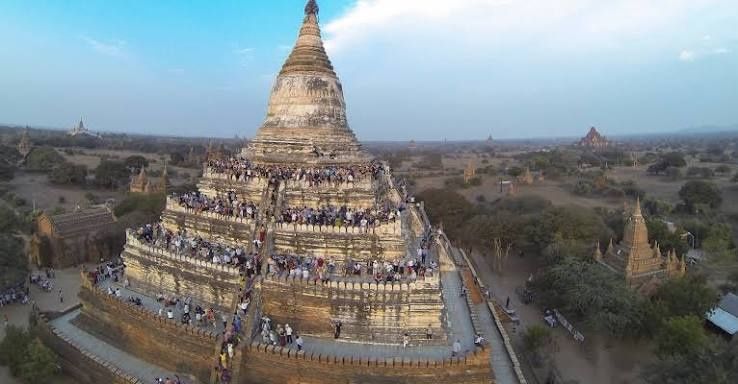
The tourism product itself remains genuinely compelling, anchored by religious and cultural monuments that have drawn pilgrims and travellers for centuries. Officials emphasise that Yangon, Mandalay, Bagan, Inle Lake and the Golden Rock Pagoda constitute the primary attractions, representing a diverse portfolio spanning urban heritage, rural landscapes and sacred sites. The ancient temples and colonial-era architecture that once positioned Myanmar as an emerging Asia-Pacific frontier destination retain their intrinsic appeal; the challenge now is convincing travellers that security conditions and infrastructure have stabilised sufficiently to permit comfortable visits. Tourism authorities characterise their approach as prioritising trust-building, a euphemism reflecting the substantial reputational damage the country has sustained.
Hotel occupancy data provides the most immediate barometer of sector recovery. Luxury properties in Yangon have recorded approximately 10 per cent occupancy increases since the election, though the composition of guests has shifted markedly. Where international leisure travellers once predominated, current guests comprise business visitors, religious pilgrimage groups and individuals exploring investment opportunities—a pattern consistent with the government's broader strategy of signalling to regional investors that Myanmar is reopening for business. General Manager May Myat Mon Win of Chatrium Hotel Royal Lake, who advises the Myanmar Tourism Federation, has flagged expectations of increased Japanese arrivals driven principally by commercial and investment motivations rather than traditional leisure tourism.
Western governments have maintained restrictive travel advisories that constrain tourism from developed economies. The United States State Department continues issuing a "Do Not Travel" warning citing armed conflict and civil unrest, a prudent stance given persistent violence in northeastern and eastern regions. Yet even this official discouragement has not entirely deterred visitors; American arrivals rose 17 per cent through May, suggesting that informal information sources and individual risk assessments sometimes override government warnings. Anecdotal reporting captures this phenomenon: Liam Martinez, a Texas-based traveller, described YouTube videos as his primary information source and expressed feeling entirely secure whilst travelling independently in Yangon, illustrating how personal experience and digital content can diverge substantially from mainstream media narratives regarding Myanmar's stability.
The tourism recovery initiative will ultimately test whether Myanmar can present a credible narrative of normalisation to external audiences. Success would provide visible economic dividends while furnishing the government with evidence that international relations are genuinely improving. However, the ambition of doubling visitor numbers requires not merely tactical adjustments to visa policy but sustained improvements in security, infrastructure and regional diplomatic standing. For Southeast Asian economies like Malaysia, Myanmar's tourism trajectory carries implications; competition for regional visitor flows remains intense, and any successful Myanmar recovery could redirect travel spending that might otherwise flow to more established destinations. Conversely, continued instability would reinforce Malaysia's position as the region's most stable tourism hub, underscoring how Myanmar's internal trajectory generates ripple effects throughout the region's travel and hospitality sectors.

