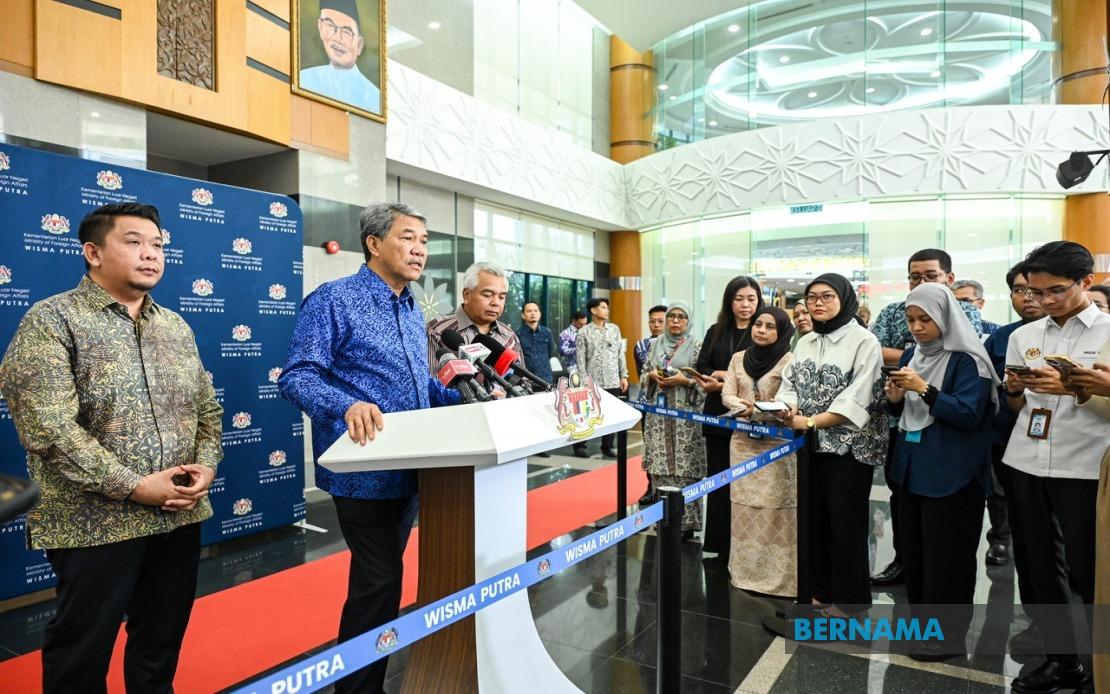
Myanmar's government has signalled a readiness to transport 5,000 of its displaced citizens back home via ship, according to Malaysian Foreign Minister Datuk Seri Mohamad Hasan, marking a potential diplomatic breakthrough in Southeast Asia's most pressing refugee crisis. The commitment emerged during recent talks between Mohamad and his Burmese counterpart Tin Maung Swe, though the two countries remain focused on reconciling humanitarian obligations with practical concerns about the safety of those involved in the repatriation effort.
During remarks made at the 59th ASEAN Day celebration in Putrajaya on Monday, Mohamad acknowledged that while Myanmar's willingness to accept returnees represents progress, the conditions under which they travel and resettle remain deeply problematic. The minister posed searching questions about whether maritime transport would genuinely protect vulnerable populations and what guarantees existed for their welfare upon arrival. These queries underscore the delicate balance Malaysia must maintain between facilitating returns and ensuring that refugees are not placed in harm's way by well-intentioned but potentially inadequate arrangements.
Malaysia has already completed the identification process for all 5,000 individuals targeted in this repatriation scheme, a foundational step that allows for more rapid processing once logistical and safety frameworks are solidified. Although officials have not yet announced a concrete timeline for operations to commence, Mohamad indicated that momentum should be maintained to move these cases forward. The identification phase, which typically requires extensive documentation and verification, has consumed considerable administrative resources across multiple Malaysian agencies coordinating the refugee response.
Crucially, Mohamad broadened the conversation beyond the Rohingya crisis, which has dominated global media coverage since the 2017 military crackdown. Myanmar's displacement problem encompasses numerous ethnic minorities fleeing persecution and conflict, including the Chin and Karen populations, each of whom faces distinct vulnerabilities and protection needs. This wider lens reflects the complex reality of Myanmar's internal strife, where religious, ethnic, and political tensions have created multiple, overlapping humanitarian emergencies that defy simple solutions or uniform responses.
ASEAN member states have collectively embraced responsibility for the Myanmar refugee question, recognising that the scale and nature of displacement transcends bilateral concerns and demands coordinated regional action. The bloc views the crisis not merely as Malaysia's burden but as a shared challenge requiring solidarity among all ten member nations. This consensus reflects ASEAN's commitment to addressing instability that, if left unresolved, could destabilise the entire region through secondary migration, economic strain, and the humanitarian costs of prolonged limbo for displaced populations.
At the heart of ASEAN's approach lies the Five-Point Consensus, a framework adopted by bloc leaders in 2021 and endorsed by Myanmar's then-leadership to establish dialogue channels, humanitarian access, and pathways toward political normalisation. Mohamad emphasised that this mechanism must remain the anchor for all efforts to resolve the Myanmar situation, providing both structure and legitimacy to regional diplomatic initiatives. He contended that any fundamental modifications to the consensus should return to ASEAN leaders for collective deliberation, reinforcing the principle that no single state can unilaterally alter the agreed blueprint without consensus.
The minister's insistence on preserving the Five-Point Consensus carries particular weight given Myanmar's current political trajectory and ASEAN's historically cautious stance toward the junta. The framework represents one of the few agreements still nominally accepted by Myanmar's military leadership, even as implementation has stalled on critical fronts. Protecting the consensus from erosion or abandonment becomes essential if ASEAN hopes to maintain any leverage in dialoguing with Naypyidaw and encouraging compliance with humanitarian and political objectives.
For Malaysia, hosting the world's second-largest refugee population has become both a moral and pragmatic challenge. The nation accommodates approximately 180,000 refugees, predominantly Rohingya, alongside growing numbers of Chin, Karen, and other ethnic minorities fleeing Myanmar. Processing repatriations safely while maintaining asylum standards and managing public sentiment requires sophisticated coordination between security, immigration, and humanitarian agencies. The proposed sea-transport operation, if executed, would represent a significant reduction in Malaysia's caseload and provide relief to overburdened reception and integration systems.
The safety concerns flagged by Mohamad reflect real risks embedded in large-scale maritime repatriation operations. Historical precedent demonstrates that ship-based movements of refugees, particularly when governance at destination points remains unstable or hostile toward returning minorities, can deteriorate rapidly. Ensuring adequate nutrition, medical care, and protection during transit, alongside guarantees that returnees will not face persecution or exploitation upon landing, demands meticulous planning and international oversight mechanisms that may be difficult to establish or enforce.
The current talks between Malaysia and Myanmar suggest that both governments recognise the urgent necessity of moving forward despite these complications. Protracted displacement erodes social cohesion in host communities, strains bilateral relations, and perpetuates the trauma experienced by refugees themselves. Myanmar's nominal acceptance of repatriation, therefore, may reflect pragmatic acknowledgment that sustaining indefinite hosting by neighbouring countries is neither sustainable nor politically tenable in the long term.
Yet success ultimately hinges on Myanmar's capacity and commitment to receive displaced populations without reverting to the exclusionary policies and violence that generated the original exodus. International scrutiny, ASEAN oversight, and robust verification mechanisms must accompany any repatriation process to minimise the risk of returnees facing renewed persecution. Malaysia's cautious but engaged posture—supporting the initiative while insisting on safety assurances—reflects the responsible balance required in a crisis where humanitarian imperatives and political realities often collide.
As ASEAN continues calibrating its response to Myanmar's instability, the proposed repatriation of 5,000 individuals via maritime transport offers both symbolic and practical progress. It signals that regional dialogue remains possible and that governments share commitment to reducing refugee populations. Nevertheless, translating willingness into safe, dignified returns demands sustained diplomatic effort, adequate resources, and uncompromising attention to the welfare and rights of the vulnerable populations involved.

