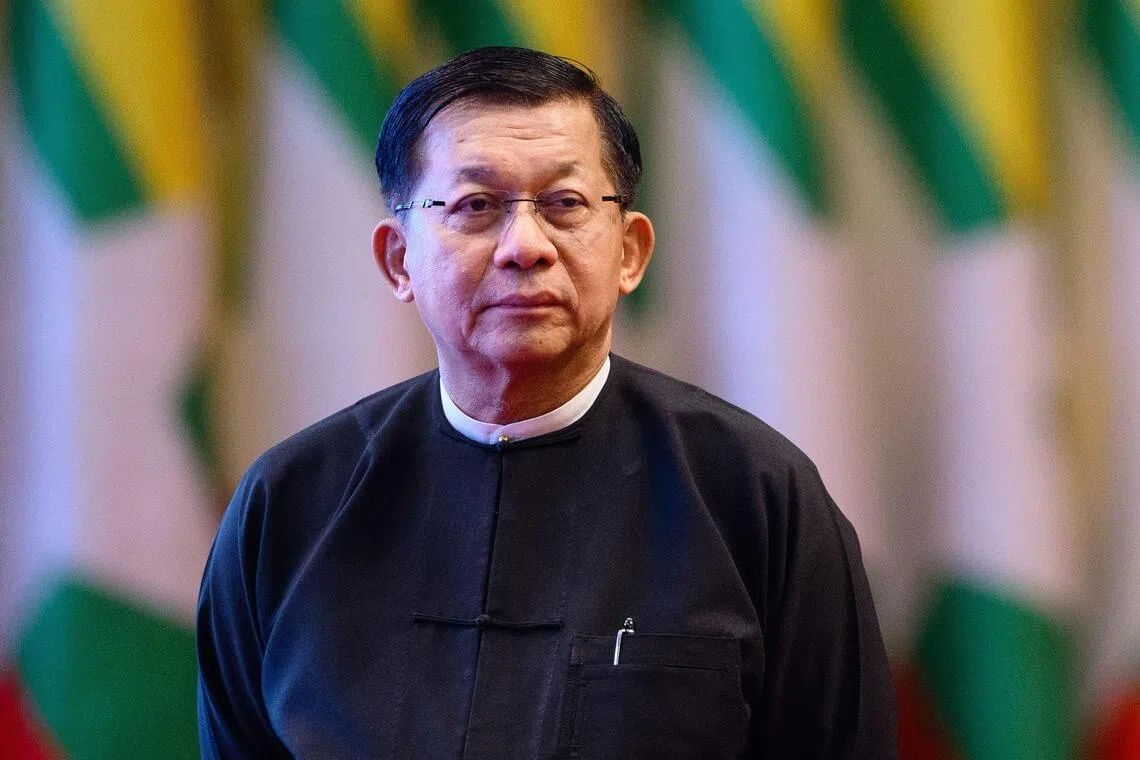
Myanmar's former military ruler Min Aung Hlaing arrived in Thailand on Thursday to undertake what marks his maiden official visit to Bangkok since transitioning from uniform to civilian presidential attire. The carefully choreographed trip underscores a calculated diplomatic strategy to restore Myanmar to the regional mainstream following years of international isolation triggered by the 2021 coup that upended the democratic government of Aung San Suu Kyi. The journey also signals Thailand's determination to anchor its volatile neighbour within Southeast Asia's institutional architecture, a goal that has become increasingly urgent given the security challenges radiating from Myanmar's prolonged internal conflict.
The scale of Myanmar's humanitarian catastrophe remains sobering context for this diplomatic engagement. Since Min Aung Hlaing orchestrated the military takeover that removed Suu Kyi from power, the country has descended into widespread armed conflict between government forces and numerous armed opposition groups. The toll has been devastating, with credible estimates suggesting more than 100,000 casualties across all parties to the conflict. The preceding years of democratic governance now feel like a distant memory to Myanmar's fractured population, many of whom remain internally displaced or have fled to neighbouring countries.
Min Aung Hlaing's elevation to the presidency in April represented a significant symbolic recalibration for the military establishment. Rather than ruling through an overtly military framework, the junta organised elections that international observers and Western governments condemned as fundamentally illegitimate. Democracy watchdogs characterised the process as a transparent attempt to manufacture civilian veneer for continued autocratic control, a distinction without meaningful difference for those living under military domination. Nevertheless, the shift allowed Myanmar's leadership to rebrand itself as adhering to formal democratic procedures, however hollow that claim might be.
Thailand has emerged as the principal architect of Myanmar's potential rehabilitation within Asean, a role that reflects both geographic proximity and Bangkok's strategic interests. The Association of Southeast Asian Nations has maintained a largely isolationist posture toward Myanmar's junta leadership, barring senior officials from high-level regional gatherings since the putsch. However, Thailand's diplomatic initiatives suggest a gradual thawing of this collective stance. Last month, Myanmar's foreign minister participated in an informal gathering of regional counterparts hosted in Thailand, marking a subtle but consequential breach in the united front against the junta.
Min Aung Hlaing has undertaken an aggressive personal diplomatic campaign to rebuild Myanmar's international standing, moving methodically through strategically important capitals. Visits to India, China—identified as a key strategic ally—and Laos demonstrated his determination to cultivate relationships with both global and regional powers. The Thailand visit represents the next logical step in this rehabilitation roadmap, positioning the military leader as a statesman willing to engage with the very institutions that previously marginalised him. Each journey functions as propaganda value, creating a narrative of normalisation that obscures the reality of military rule and ongoing violence.
However, the diplomatic overtures mask deeper contradictions in Myanmar's regional positioning. Independent analyst David Mathieson characterised the regime's campaign for Asean acceptance as fundamentally driven by status considerations for Min Aung Hlaing personally, rather than by genuine commitment to regional stability mechanisms. Most significantly, Myanmar's leadership has refused to embrace Asean's so-called five-point consensus, a framework designed to facilitate dialogue between the military government and all armed opposition factions as a pathway to ending hostilities. This selective engagement with regional norms—accepting diplomatic rehabilitation while rejecting substantive peace processes—reflects what analysts describe as a zero-sum calculation that prioritises military control over genuine conflict resolution.
Thailand's willingness to host and honour Min Aung Hlaing reflects its own pressing security imperatives along the shared border with Myanmar. Armed conflict between government forces and insurgent groups has repeatedly spilled across Thai territory, creating humanitarian challenges and destabilising borderland communities. Thailand currently hosts millions of Myanmar refugees, an ongoing burden that Bangkok hopes might be alleviated through diplomatic pressure toward stability. Beyond traditional security concerns, Thai officials have become increasingly alarmed by the proliferation of cyberscam networks and drug trafficking operations based in Myanmar's ungoverned borderlands, criminal enterprises that directly threaten Thai citizens and regional security.
These practical considerations prompted Thailand's Foreign Minister Sihasak Phuangketkeow to signal that combating transnational cybercrime would feature prominently during official discussions with Min Aung Hlaing. The minister suggested that both Myanmar and Cambodia bore responsibility for facilitating scam operations and required greater commitment to enforcement. Significantly, the Thai government also noted with apparent approval the permitted meeting between detained former leader Suu Kyi and an International Committee of the Red Cross representative, characterising such gestures as positive steps toward peace even if they represent mere theatrical concessions to international humanitarian pressure.
The formal schedule for Min Aung Hlaing's Bangkok sojourn reflects Thailand's intent to accord him full ceremonial recognition as a legitimate head of state. Plans encompassed an honour guard reception at Government House, a bilateral meeting with Prime Minister Anutin Charnvirakul, participation in a business forum, and a state dinner. Thai officials indicated that the governments would sign a memorandum of understanding concerning labour cooperation, a mechanism designed to normalise bilateral relations across multiple domains and suggest substantive engagement rather than diplomatic theatre.
The international community's response to Thailand's diplomatic embrace of Min Aung Hlaing reveals sharp divisions over how to engage with Myanmar's junta-controlled system. Numerous Western governments have imposed targeted sanctions against the military leader, while the International Criminal Court has moved to indict him for crimes against humanity related to military operations against Myanmar's Rohingya population and broader post-coup violence. Human rights organisations have condemned Thailand's willingness to provide diplomatic legitimacy to an individual they characterise as responsible for systematic atrocities and crimes warranting accountability rather than recognition.
Campaign group Justice For Myanmar articulated this perspective unambiguously, asserting that Min Aung Hlaing merited prosecution and accountability for documented crimes rather than the false legitimacy conferred through official state visits and ceremonial pageantry. The organisation's statement reflects a fundamental disagreement about whether diplomatic engagement with Myanmar's military leadership serves regional stability or merely provides international respectability to a government that remains fundamentally authoritarian and resistant to genuine democratic restoration or accountability mechanisms.
The Bangkok visit ultimately reflects competing regional calculations about Myanmar's future trajectory. For Thailand and other Asean members prioritising stability and border management, cautious re-engagement with Myanmar's military government offers practical benefits, even if those benefits remain modest and contingent. For critics emphasising human rights and accountability, such diplomatic normalisation represents a capitulation to military power that abandons Myanmar's democratic constituencies and legitimises continued repression. Whether this diplomatic opening genuinely facilitates Myanmar's transition toward regional cooperation and eventual political transformation, or merely allows the military to consolidate control while escaping meaningful international pressure, remains the defining question for Southeast Asian policy toward its most troubled neighbour.

