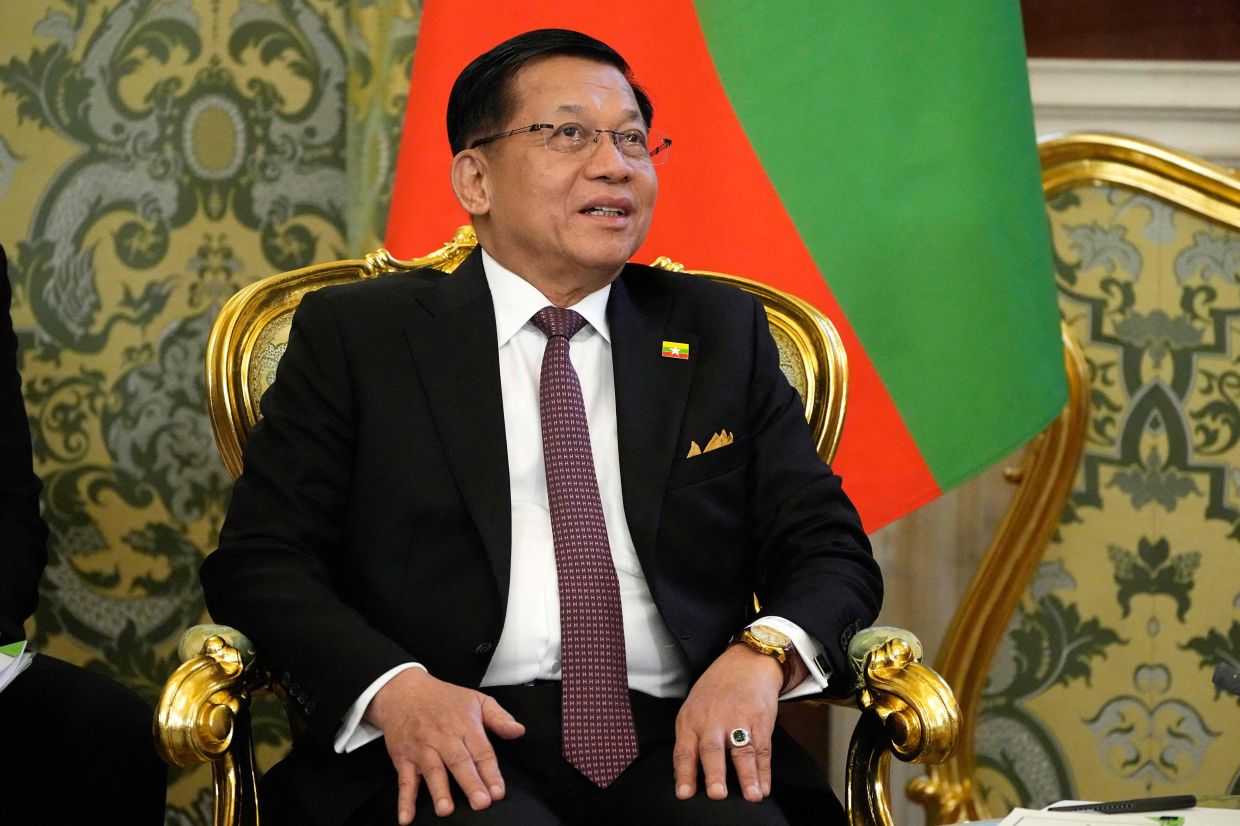
Myanmar leader Min Aung Hlaing is set to visit Cambodia in early September in what officials describe as an effort to deepen bilateral cooperation, marking the latest chapter in an increasingly busy diplomatic calendar that has drawn sharp international scrutiny. The visit, confirmed by the Cambodian Senate with officials including Minister of the Royal Palace Kuy Sophal and Chin Ketna inspecting venues for the reception, comes amid a growing pattern of regional travel by the Myanmar military leader that observers view as a calculated strategy to normalise his political standing on the world stage.
Spokesperson for the Senate president Chea Thyrith characterised the impending visit as fundamentally about nurturing ties between Phnom Penh and Naypyidaw. According to his remarks, the bilateral engagement serves mutual interests and reflects a commitment to sustained cooperation between two neighbouring nations. This framing emphasises the developmental and pragmatic dimensions of the relationship rather than acknowledging the controversial context surrounding Min Aung Hlaing's presidency.
The Myanmar leader's international travel itinerary has become distinctly ambitious since April, when he secured the presidency through a process widely viewed as lacking democratic legitimacy. India, China, Laos, Thailand and Russia have all been destinations on his recent diplomatic circuit, with Cambodia representing a sixth significant stop. This intensified outreach suggests a deliberate effort to accumulate de facto recognition from regional partners, effectively circumventing international isolation that has characterised Myanmar's position since the February 2021 military coup that deposed democratically elected leader Aung San Suu Kyi.
The trajectory of Min Aung Hlaing's presidency rests on contested foundations. His April election emerged from a military-drafted constitution and a political system observers characterise as fundamentally undemocratic. This electoral victory lacks the endorsement of major democratic nations and human rights organisations, which view it as a mechanism to perpetuate military rule rather than a genuine democratic exercise. Consequently, each foreign visit carries implicit messaging—that despite international reservations, Min Aung Hlaing commands sufficient regional acceptance to warrant state-level diplomatic engagement.
Human rights monitoring organisations have documented extensive abuses under military rule, extending far beyond the initial coup. Thousands of political activists, democracy advocates, and dissidents languish in detention facilities, facing charges that critics characterise as politically motivated. The military apparatus has wielded security legislation expansively to suppress dissent, creating an environment where independent journalism, peaceful assembly and political organisation remain severely constrained. These documented violations form the substantive foundation for international criticism directed at Min Aung Hlaing's initiatives.
ASEAN's response to Myanmar's crisis underscores the regional complexity. The bloc has maintained a formal exclusion of Myanmar from summit-level participation, reflecting collective concern about the coup and subsequent developments. However, this consensus masks divergent bilateral relationships among member states, with some countries maintaining robust diplomatic and economic engagement with the Myanmar military regime despite ASEAN's collective position. Cambodia's readiness to host Min Aung Hlaing exemplifies this tension between bloc-level consensus and individual member state diplomacy.
Kin Phea, president of the International Relations Institute of Cambodia, offered nuanced analysis suggesting that the visit represents reciprocal interest in strengthening Cambodia-Myanmar relations. He referenced Cambodia's own efforts during its 2022 ASEAN chairmanship to mediate Myanmar's internal crisis and facilitate regional dialogue. From this perspective, engagement with Min Aung Hlaing reflects diplomatic continuity and Cambodia's self-appointed role as a constructive voice within the regional architecture. Phea also acknowledged that such high-level visits serve Min Aung Hlaing's broader objective of consolidating international acceptance of his leadership credentials.
Yet Phea's analysis contained an important caveat regarding ASEAN's institutional mechanisms. He emphasised that any substantive shift in Myanmar's standing within ASEAN—including restoration of summit participation—ultimately depends upon implementation of the five-point consensus framework established following the coup. This framework specifies conditions Myanmar must satisfy, including cessation of violence, dialogue with opposition parties, and movement toward democratic transition. Individual bilateral visits, regardless of their political symbolism, cannot unilaterally override this collective ASEAN requirement.
The Cambodia visit thus occupies an ambiguous middle ground within Myanmar's broader rehabilitation strategy. It provides Min Aung Hlaing with the diplomatic visibility and ceremonial recognition that lends presidential legitimacy, yet it operates within strict limits imposed by ASEAN's institutional framework. Phnom Penh's willingness to accommodate the visit reflects bilateral interests and Cambodia's foreign policy orientation, but does not represent a breakthrough in Myanmar's international isolation or a circumvention of ASEAN's collective position.
For Malaysia and other ASEAN members, the Cambodia visit illustrates ongoing tensions within the regional bloc regarding Myanmar policy. The commitment to ASEAN's five-point consensus represents a collective position, yet member states exercise considerable discretion in bilateral engagement. This dynamic suggests that Myanmar's path toward rehabilitation within ASEAN structures will ultimately depend less on accumulated bilateral visits and more on demonstrable movement toward the consensus framework's substantive requirements—a threshold that remains substantially unmet despite Min Aung Hlaing's expanding diplomatic calendar.

