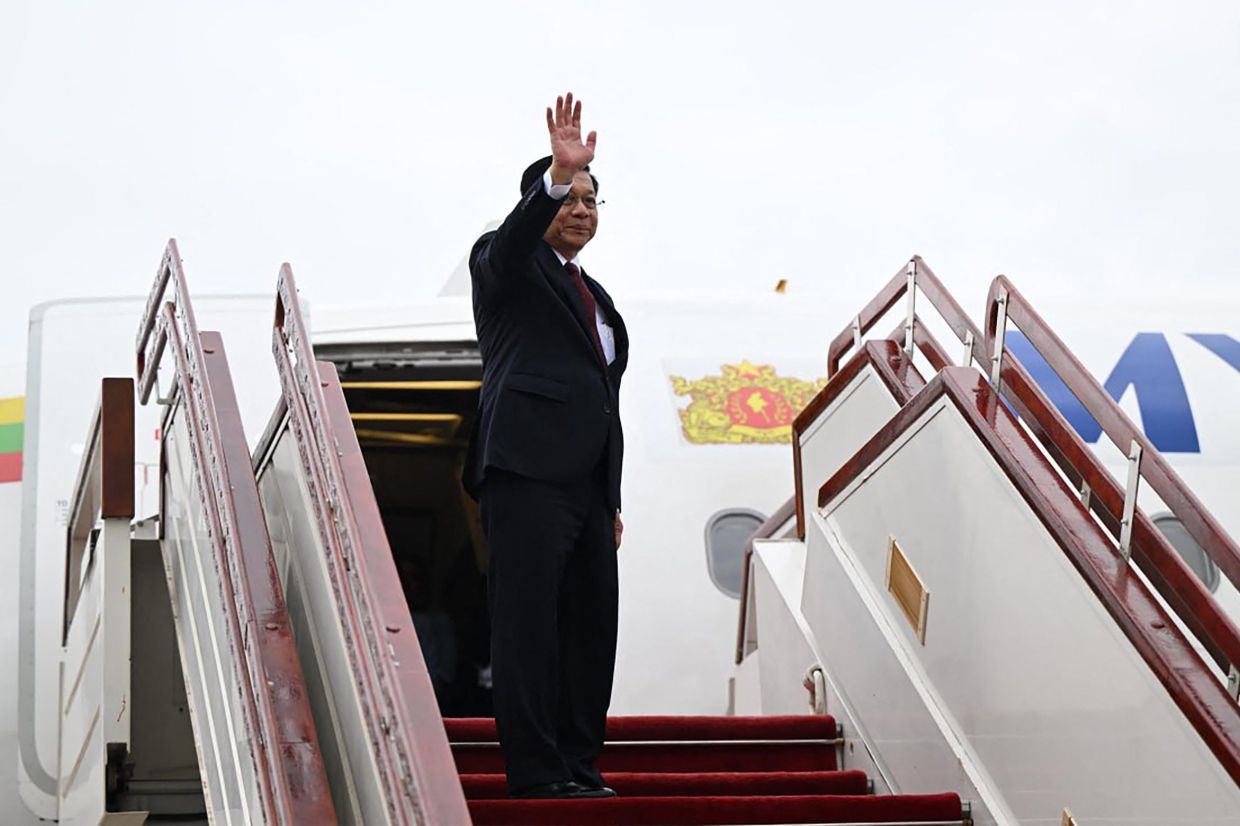
Myanmar's military-backed leader Min Aung Hlaing has embarked on a high-profile visit to Russia, touching down in Moscow on Monday to meet with President Vladimir Putin and other senior officials. The journey represents the first time the former junta chief has travelled to the Russian capital since assuming the presidency in April, a role he secured through elections that international observers and Western governments have roundly dismissed as lacking legitimacy.
Russia's strategic importance to Myanmar cannot be overstated, particularly in the aftermath of the February 2021 military coup that unseated democratically elected civilian leader Aung San Suu Kyi. While most Western nations and regional partners imposed sanctions or distanced themselves from Naypyidaw, Moscow remained one of the few capitals willing to maintain diplomatic engagement and provide material support. This alignment has proven crucial for a Myanmar regime facing unprecedented international condemnation and grappling with the consequences of its own actions.
The human toll of the ensuing conflict has been catastrophic. Armed resistance to military rule has evolved into a full-fledged civil war, with credible estimates suggesting the violence has claimed more than 100,000 lives across Myanmar's fractious landscape. Displaced populations, economic collapse, and widespread humanitarian suffering have created a complex crisis that extends far beyond Naypyidaw's borders, affecting neighbouring countries and straining regional stability.
Ministry officials framed the visit as an opportunity to deepen bilateral relations that stretch back decades. A statement from the Myanmar presidency emphasised plans to "further consolidate the longstanding friendly and close relations between Myanmar and Russia and to enhance strategic cooperation", with particular focus on security arrangements and economic collaboration. These twin pillars—military cooperation and economic ties—reflect the practical foundation upon which the two nations have built their partnership.
Militarily, the relationship has tangible ramifications on the ground. Myanmar's armed forces operate Russian-made jet aircraft that have been deployed extensively against various rebel factions and opposition forces. International human rights monitors and conflict analysts have documented allegations that these aircraft have been used to conduct strikes against civilian populations, with some organisations characterising the attacks as potential war crimes. The February military cooperation accord signed between Moscow and Naypyidaw, which commits both nations to five years of enhanced defence collaboration, signals that such military support is likely to expand despite international scrutiny.
The specifics of the military pact have remained deliberately opaque. Neither government has released detailed information about procurement arrangements, joint training programmes, or the scope of future arms transfers. This opacity likely reflects both nations' awareness that transparency could invite further Western sanctions and international pressure. For Myanmar, securing advanced military capabilities without public scrutiny offers a means to strengthen its domestic position while maintaining plausible deniability about the extent of its foreign military dependencies.
Min Aung Hlaing's delegation includes other high-ranking officials, underscoring the importance Myanmar attaches to the mission. The visit agenda encompasses meetings with Russia's Prime Minister, the Speaker of the State Duma—Russia's lower house of parliament—and participation in a bilateral economic forum. These engagements signal an intent to pursue opportunities across multiple domains beyond straightforward military assistance.
The broader diplomatic context reveals a deliberate strategy by Myanmar's leadership to rehabilitate its international standing and escape the pariah status that has haunted it since the coup. Since assuming formal office in April, Min Aung Hlaing has undertaken several international trips, visiting China, India, and neighbouring Thailand. Each journey appears carefully calibrated to cultivate partnerships with major regional powers and demonstrate that Myanmar remains engaged in regional affairs despite widespread international isolation. The sequencing of these visits—often prioritising Asian partners who maintain pragmatic relations with the junta—reflects a shrewd calculation about where Myanmar can find diplomatic space and material support.
For Malaysia and other Southeast Asian nations, Myanmar's deepening Moscow connection carries several implications. Firstly, it signals that despite its isolation from Western-led institutions and sanctions regimes, Myanmar under military rule can still access resources and support from major powers willing to operate outside the Western consensus. This dynamic complicates regional diplomacy and forces ASEAN nations to navigate between their stated commitment to democratic principles and their interest in maintaining engagement with a strategically significant neighbour. Secondly, Myanmar's reliance on Russian military hardware and support potentially entangles Southeast Asia in broader geopolitical competitions between Russia and the West, with unpredictable consequences for regional stability.
The civil war within Myanmar has already spilled across borders, creating refugee pressures on Thailand and threatening to destabilise other neighbouring states. Any consolidation of military capabilities through enhanced Russian support could prolong the conflict or intensify its ferocity, with cascading effects throughout Southeast Asia. Regional powers must therefore regard Myanmar's Moscow tilt not merely as a bilateral arrangement but as a development with implications for broader Southeast Asian security architecture.
Meanwhile, the economic components of the Russia-Myanmar relationship remain underdeveloped compared to the military dimensions. Myanmar's economy has contracted severely since 2021, and its currency has depreciated dramatically. Russian sanctions and its own economic difficulties limit Moscow's capacity to provide substantial investment or market access. Nevertheless, both nations appear committed to exploring trade opportunities and potential cooperation in sectors like energy and infrastructure development.

