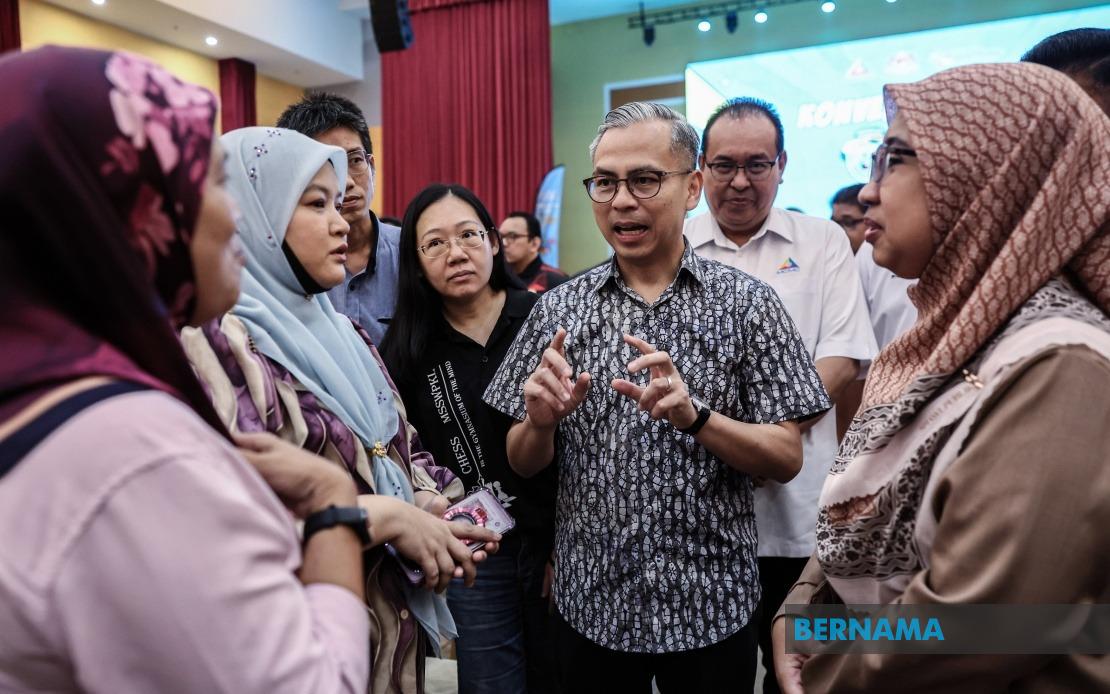
The Malaysian government's MyKhas allocation represents funding directed at constituency residents rather than individual Members of Parliament, according to Communications Minister Datuk Seri Fahmi Fadzil. Speaking at a press conference in Kuala Lumpur on August 8, the PKR Information Chief reiterated that the fund operates under the Prime Minister's direct administration and serves the welfare needs of people within specific parliamentary constituencies.
Fahmi's remarks underscore Prime Minister Datuk Seri Anwar Ibrahim's position that government allocations fundamentally belong to the people, not to elected officials as personal privileges. This distinction carries significant implications for how public resources are distributed and represents an attempt to reshape perceptions about the relationship between politicians and constituency funds. The clarification suggests an effort to depoliticise resource allocation and emphasise public benefit rather than political patronage.
The MyKhas mechanism has been formally embedded within Malaysia's budgetary and planning frameworks as a special provision under the Prime Minister's office. Fahmi explained that the allocation's disbursement authority rests entirely with the Prime Minister's administration rather than with individual MPs who represent those constituencies. This centralised control mechanism differs from traditional models where elected representatives might exercise significant discretion over local allocations.
Even ministers cannot personally access MyKhas funds, Fahmi stressed, emphasising the universal application of this principle across government. He noted that his own use of the allocation is similarly restricted, with funds directed exclusively toward residents and voters within his constituency. This prohibition on personal or ministerial use underscores the government's framing of MyKhas as public welfare infrastructure rather than political resource.
The Prime Minister's office determines how MyKhas funds flow to constituencies and which projects or assistance receive priority. Rather than MPs making independent decisions about fund deployment, the centralised approach ensures alignment with broader government priorities and reduces potential for constituency-level political advantage. This structure reflects governance principles emphasising accountability and uniform standards across different parliamentary seats.
For constituencies governed by opposition parties, the government has established a pathway through the Implementation Coordination Unit operating under the Prime Minister's Department. This arrangement allows residents in opposition-held seats to access MyKhas support through formal application processes, though the mechanism contrasts with how resources reach government-aligned constituencies. The framework raises questions about whether centralised administration ensures equitable distribution or creates administrative friction that affects opposition areas differently.
Anwar emphasised yesterday that parliamentary constituency allocations serve infrastructure and welfare purposes across multiple sectors including education, religious institutions, and municipal services. Schools, religious schools, mosques, and drainage repair works represent typical applications where MyKhas funds address tangible community needs. This sector diversity suggests the allocation targets foundational services affecting quality of life rather than narrowly defined political priorities.
The government's messaging around MyKhas reflects broader governance philosophy positioning itself as steward of public resources accountable to residents rather than to elected representatives. By restricting MP discretion and centralising fund administration, the approach theoretically reduces opportunities for political favouritism or misallocation. However, this restructuring also concentrates power within the Prime Minister's office and potentially creates bureaucratic layers affecting funding velocity to communities.
For Malaysian constituencies, the MyKhas framework represents a significant shift in how parliamentary allocations function. Rather than viewing funds as MP entitlements to be deployed according to local political considerations, the system treats resources as government-administered welfare instruments. This distinction matters for how communities perceive their elected representatives' roles and how local priorities receive funding consideration.
The timing of these clarifications suggests ongoing debate about appropriate use of constituency allocations and perhaps concerns about political misuse of public resources. Fahmi's repeated emphasis that even ministers cannot personally benefit from MyKhas indicates the government prioritises defending the allocation's integrity and public purpose. Whether constituencies experience faster or slower resource deployment under centralised administration remains to be seen.
Regionally, Malaysia's approach to constituency allocation offers a case study in resource distribution mechanisms. Other Southeast Asian democracies employ varying models ranging from MP-controlled funds to centralised government systems. Malaysia's evolution toward Prime Minister administration reflects governance choices about accountability and efficiency, with implications for how local representatives interface with public resource allocation.
For Malaysian voters, understanding MyKhas mechanics matters for assessing how effectively their needs translate into government action. Whether centralised administration delivers resources more equitably than decentralised systems will likely influence future debates about optimal governance structures. The allocation's success ultimately depends on implementation efficiency and whether residents experience meaningful improvements in their constituencies' infrastructure and services.

