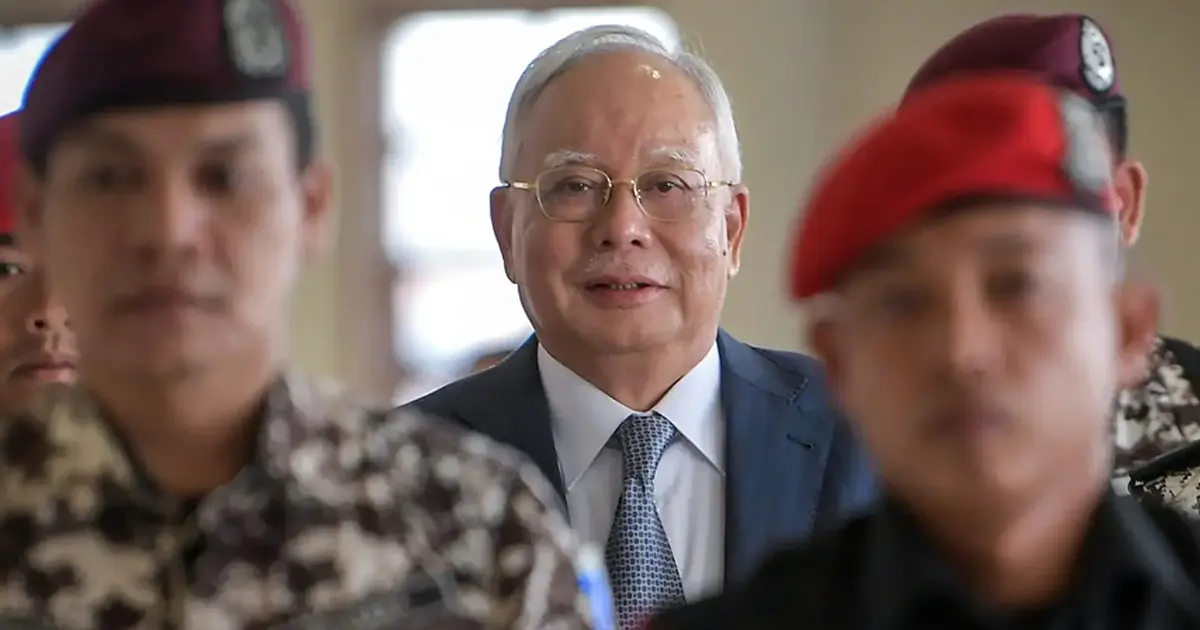
Former Prime Minister Najib Razak has secured the right to attend an upcoming Court of Appeal hearing where the Malaysian Bar Council will contest a decision made by the board overseeing royal pardons. The appellate court granted his request through an ex parte application, allowing him to be represented in what promises to be a significant legal proceeding with implications for presidential clemency powers in Malaysia.
The hearing represents a pivotal moment in a lengthy dispute centring on the scope and authority of the pardons board, an institution historically shrouded in constitutional complexity. At stake is whether the board's decision stands scrutiny from the nation's highest court, with the Bar Council mounting what amounts to a fundamental challenge to how such clemency determinations are made and whether they remain subject to judicial review.
Najib's involvement in these proceedings stems from his direct interest in the outcome. The former premier has maintained that he should be afforded an opportunity to defend his position and ensure his voice is heard throughout the legal process. His participation underscores how personalised this dispute has become, transcending abstract constitutional questions to involve one of Malaysia's most prominent political figures of the past two decades.
The Malaysian Bar's challenge reflects broader professional concerns about institutional accountability and the limits of executive power. The legal community has consistently argued that even instruments of royal prerogative require some form of judicial oversight to prevent potential abuses and ensure decisions conform to constitutional principles. This philosophical divide between advocates of broad executive discretion and proponents of judicial review animates much of the legal argument.
Such clemency disputes carry enormous weight in the Malaysian constitutional framework. The Yang di-Pertuan Agong's powers of pardon, while rooted in centuries of monarchical tradition, operate within a modern democratic system theoretically bound by constitutional constraints. The Bar Council's position essentially contends that these constraints remain meaningful and enforceable through the courts, whereas opponents worry that permitting judicial intrusion into clemency decisions fundamentally diminishes royal prerogative.
The ex parte application mechanism used to secure Najib's right to attend demonstrates how legal procedure shapes substantive outcomes. By filing without the Bar's presence, Najib's legal team successfully persuaded the Court of Appeal that his interests warranted inclusion in proceedings that directly affect him. This procedural victory now ensures he will have formal standing to present arguments, cross-examine witnesses if applicable, and influence how the court frames its decision.
Regional observers note that Malaysian constitutional law increasingly grapples with tension between traditional monarchy-centred governance and modern democratic expectations. Similar disputes in neighbouring jurisdictions have produced varied outcomes, ranging from strong judicial deference to executive powers to more interventionist courts. Malaysia's approach to clemency challenges will inevitably influence how other Southeast Asian nations balance comparable constitutional questions.
The timing of the hearing carries political resonance. With Malaysian politics in continuous flux and public interest in Najib's legal situation remaining intense, the proceedings will attract significant media and public attention. How the Court of Appeal navigates the competing claims will send powerful signals about judicial willingness to scrutinise decisions touching upon the monarch and the bounds of constitutional authority.
Legal analysts anticipate the hearing will explore fundamental questions about whether clemency decisions require reasoned justification, whether applicants possess procedural rights during review processes, and whether courts may examine the factual or legal foundations underlying such determinations. These issues transcend Najib's particular circumstances to affect how clemency mechanisms function across the entire Malaysian legal system.
The Bar Council's sustained engagement with this matter reflects the legal profession's institutional role as custodian of constitutional principles. By mounting this challenge, Malaysia's bar association has signalled that even matters traditionally cloaked in executive discretion remain subject to the rule of law and judicial oversight where constitutional boundaries are crossed. This represents a significant assertion of judicial power in an area historically dominated by political and executive considerations.
From a Southeast Asian perspective, Malaysia's approach to clemency law and judicial review remains instructive. As democracies throughout the region grapple with balancing respect for monarchical institutions against demands for accountability and transparency, Malaysia's jurisprudence increasingly influences regional thinking. The Court of Appeal's ruling in this case will illuminate how Malaysian courts navigate these tensions.
Najib's permission to attend also highlights evolving standards around procedural fairness and natural justice. Whether individuals subject to significant governmental decisions affecting their liberty possess rights to participate meaningfully in legal proceedings determines the legitimacy of those decisions. The appellate court's decision implicitly endorsed Najib's claim that fairness demands his presence when courts examine matters fundamentally concerning his interests.
As the hearing approaches, both sides prepare comprehensive arguments on constitutional interpretation, institutional roles, and the proper scope of judicial review. The Court of Appeal's eventual decision will clarify whether Malaysian courts will actively police the exercise of clemency power or maintain traditional hands-off postures. Whatever the outcome, the proceeding demonstrates how even historically sacrosanct powers now face scrutiny through modern legal frameworks emphasising transparency, accountability, and the rule of law.

