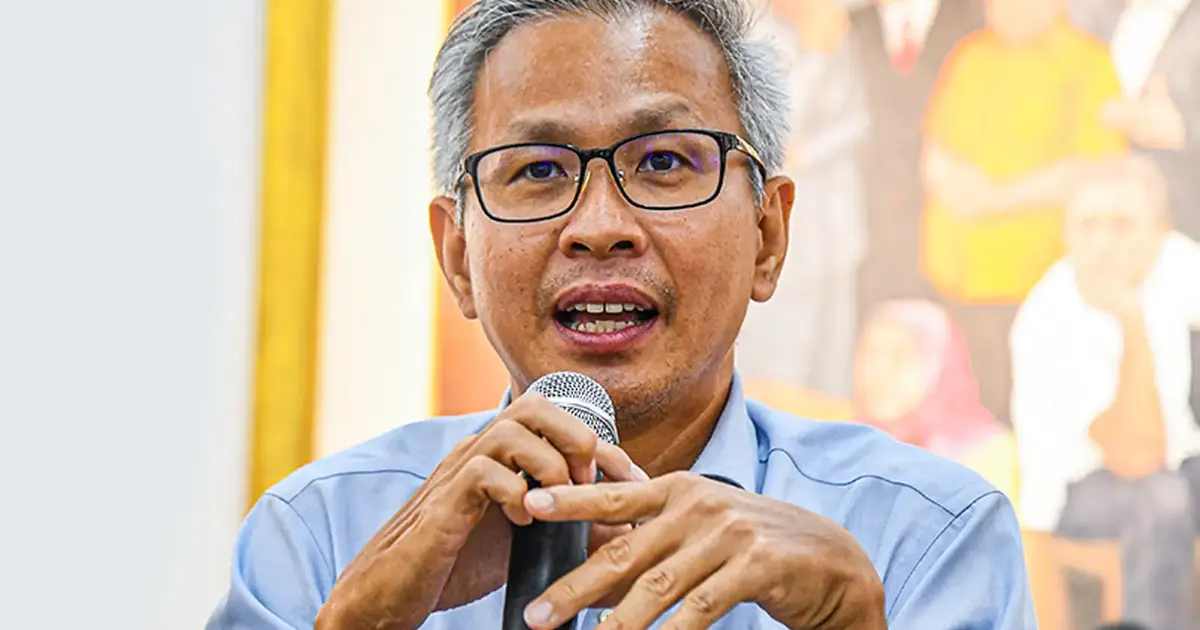
In a strategic legal manoeuvre during the 1MDB civil proceedings, Najib Razak's lead counsel Muhammad Shafee Abdullah has lodged formal objections to considerable sections of Tony Pua's witness statement, arguing they should be struck from the court record as inadmissible. The move reflects the defendant's approach to dismantling the prosecution's evidentiary foundation, targeting statements from the Petaling Jaya MP and prominent critic of the troubled state investment fund.
Shafee's challenge encompasses multiple grounds, suggesting the defence strategy extends beyond attacking witness credibility to questioning the legal admissibility of specific testimony categories. Such objections typically target hearsay evidence, speculative assertions, or statements that violate the rules of evidence applicable in Malaysian courts. The breadth of the objection indicates fundamental disagreements about what factual material should be permitted during the trial's evidence phase.
Tony Pua, who has long scrutinised 1MDB's finances and transactions both as a parliamentarian and through civil society engagement, submitted a detailed witness statement that presumably draws connections between various financial flows and allegations against Najib. As a non-executive witness with extensive knowledge of the fund's controversial history, his testimony carries significance in establishing the narrative of misappropriation that underpins the civil case.
The legal sparring over witness admissibility reflects the complexity of 1MDB litigation, which has already generated multiple trials across different jurisdictions. This particular civil action seeks to recover assets allegedly misused, distinguishing it from the criminal proceedings that previously resulted in Najib's conviction on money laundering charges—a conviction later overturned by the Federal Court in 2023, though this civil action remains distinct and ongoing.
Malaysian courts operate under strict evidence rules that prohibit certain categories of testimony, including statements based exclusively on information provided by others rather than personal knowledge, opinions that invade expert domains without proper qualification, and assertions designed to prejudice rather than illuminate. Shafee's objections likely concentrate on these established legal boundaries, pushing the court to maintain evidential rigour throughout proceedings.
The admissibility dispute holds particular significance given the 1MDB scandal's prominence in Malaysian public consciousness and its cascading effects on the nation's reputation internationally. The case touches fundamental questions about accountability, the integrity of state institutions, and whether civil remedies can effectively recover funds when criminal convictions have been overturned. Each evidentiary ruling thus carries implications beyond the immediate courtroom.
Pua's involvement stems from his documented work investigating 1MDB since the fund's inception, publishing analyses that questioned expenditure patterns and asset acquisitions. His parliamentary interventions and cross-border financial tracing efforts established him as a credible voice on the scandal's mechanics. However, this very background may generate defence contentions that portions of his statement present analysed conclusions rather than direct observations, potentially rendering them inadmissible under Malaysian evidence law.
The ruling judge will ultimately determine which sections of Pua's statement survive Shafee's challenge, a decision requiring careful application of evidence principles to testimony that often blends factual observation with financial analysis. Courts must balance the defendant's right to challenge speculative or prejudicial material against the legitimate interests of establishing how financial flows actually occurred during the fund's troubled tenure.
For Malaysian observers following the case, the admissibility rulings offer insight into how courts navigate the intersection of technical evidence rules and high-profile financial cases. The outcome influences not only Najib's immediate legal position but also broader expectations about witness testimony standards in complex commercial disputes involving public institutions and alleged misconduct.
Shafee's objection represents routine adversarial practice in litigation, yet its success or failure shapes the evidentiary landscape available to both parties. If substantial portions of Pua's statement are struck, the prosecution loses particular analytical perspectives on 1MDB's operations. Conversely, allowing the testimony to proceed strengthens the narrative connecting alleged actions to alleged beneficiaries.
The 1MDB civil trial exemplifies how Malaysia's legal system processes legacy issues from the previous administration, testing whether courts can definitively resolve financial claims when criminal cases have encountered procedural obstacles. Each evidentiary ruling incrementally determines whether comprehensive accountability remains achievable through civil remedies when criminal conviction pathways have narrowed.
The case continues to draw regional and international attention as observers assess whether Malaysia's courts can effectively recover assets and establish accountability for the fund's management. The admissibility dispute over Pua's evidence forms one crucial battleground in determining whether the civil process can substantively address the scandal's outstanding questions.

