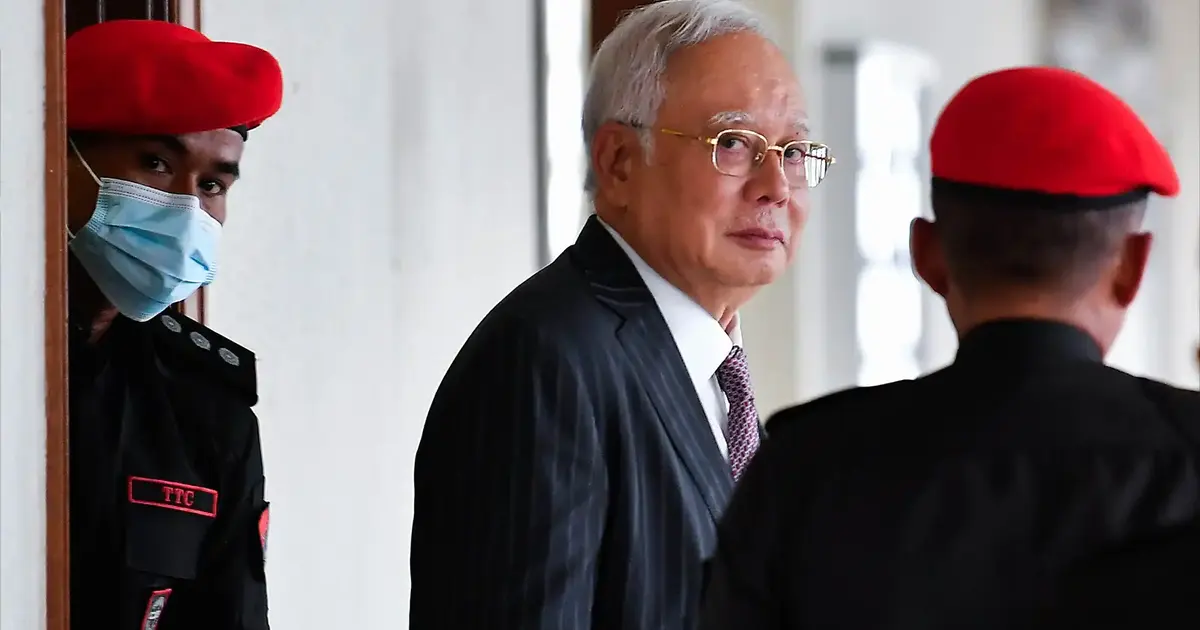
Former Prime Minister Najib Razak's defence team is mounting a substantial challenge to the credibility of the lead investigator into the 1MDB scandal, contending that the timing of the probe's commencement raises serious questions about impartiality and the motivation behind key investigative decisions. Senior counsel Shafee Abdullah highlighted a critical temporal gap in court proceedings, establishing that Kroll Advisory Ltd's investigations director Richard Templeman initiated his examination of the contentious US$620 million fund movement a full two months after 1MDB commenced legal action directly targeting the former premier.
This tactical argument represents a broader strategy by Najib's legal representatives to undermine the foundation of evidence presented against their client by questioning the investigative process itself. Rather than solely disputing the substance of allegations related to the massive fund transfer, the defence is challenging whether the investigator could have conducted an impartial examination given the circumstances surrounding the probe's launch. The suggestion implicit in this line of questioning is that the investigation may have been compromised by institutional bias or predetermination against Najib following 1MDB's decision to pursue legal remedies.
The 1MDB scandal has become one of Malaysia's most significant financial and political crises, involving the misappropriation of billions of ringgit from the state investment fund. The disputed US$620 million movement represents a particularly critical transaction in establishing the trajectory of embezzled funds and tracing their ultimate destinations. Understanding who authorised these transfers and to whom they ultimately flowed remains central to prosecuting senior officials alleged to have orchestrated the fraud. For Malaysian observers, the credibility of investigators becomes paramount when assessing whether justice can be properly served through the legal system.
The timing argument advanced by Shafee Abdullah introduces a procedural dimension that could significantly influence how judges evaluate the reliability of investigative findings. If the defence can successfully demonstrate that investigative parameters were established with a preconceived conclusion regarding Najib's culpability, this might cast doubt upon the methodology employed and conclusions reached. However, the counter-argument would hold that timing alone does not necessarily indicate bias, and that commencing an investigation after a legal action is filed represents normal sequence rather than evidence of impropriety.
Kroll Advisory has operated as a respected independent investigation firm globally, lending weight to their findings when presented in international commercial disputes and legal proceedings. Their engagement by 1MDB to trace the movement of funds reflects the complexity involved in reconstructing complex financial transactions across multiple jurisdictions and banking systems. The investigator's track record and professional qualifications would ordinarily lend substantial credibility to their conclusions, yet the defence strategy acknowledges that even reputable investigators can operate within institutional frameworks that might unconsciously influence their analysis.
The challenge to Richard Templeman's impartiality underscores deeper questions about how Malaysia's legal system evaluates expert evidence in politically significant cases. When investigations touch upon former political leaders and high-stakes corruption allegations, the perception of fairness becomes nearly as important as demonstrable bias. Public confidence in outcomes depends substantially upon stakeholders believing that investigators operated without predetermined conclusions. Najib's legal team appears to recognise this vulnerability and is exploiting it to suggest that the investigation's foundation rested upon compromised premises.
For Southeast Asian and international observers, this procedural challenge illustrates the complexities facing jurisdictions attempting to prosecute sophisticated financial crimes involving former leaders. The interplay between legal rigor, investigative methodology, and political context creates genuine complications in achieving outcomes that satisfy both accountability and due process concerns. Malaysia's handling of the 1MDB investigation has already drawn intense scrutiny from international transparency advocates and human rights organisations monitoring the rule of law.
The argument regarding investigative timing connects to broader patterns in the 1MDB case, where defence strategies have repeatedly emphasised procedural irregularities, questionable evidence gathering, and investigator credibility. This approach reflects sophisticated legal tactics deployed when substantive defences appear limited. Rather than disputing whether funds moved or where they ultimately travelled, the defence focuses upon whether proper procedures established reliable foundations for such conclusions. In complex financial crime cases spanning multiple continents, such methodological challenges carry legitimate weight.
The US$620 million transaction under examination represents merely one component within the estimated billions misappropriated from 1MDB during its operational period. Tracing these funds through complex corporate structures, shell companies, and international banking channels required investigative expertise spanning multiple countries and regulatory frameworks. Any weaknesses in establishing clear chains of custody for documentary evidence or gaps in investigative methodology could potentially undermine prosecutorial capacity to prove criminal intent and direct responsibility beyond reasonable doubt.
Shafee Abdullah's intervention demonstrates that Najib's legal team remains actively engaged in contesting the investigative framework underlying charges rather than accepting established facts as settled. The court's receptiveness to these procedural arguments will substantially shape how the case proceeds. Malaysian legal observers note that successfully challenging investigator impartiality or methodology could require retesting key evidence or obtaining additional corroborating documentation, potentially extending these proceedings substantially. For a nation seeking to restore institutional credibility following the 1MDB crisis, the need for robust, procedurally sound prosecutions becomes increasingly apparent.

