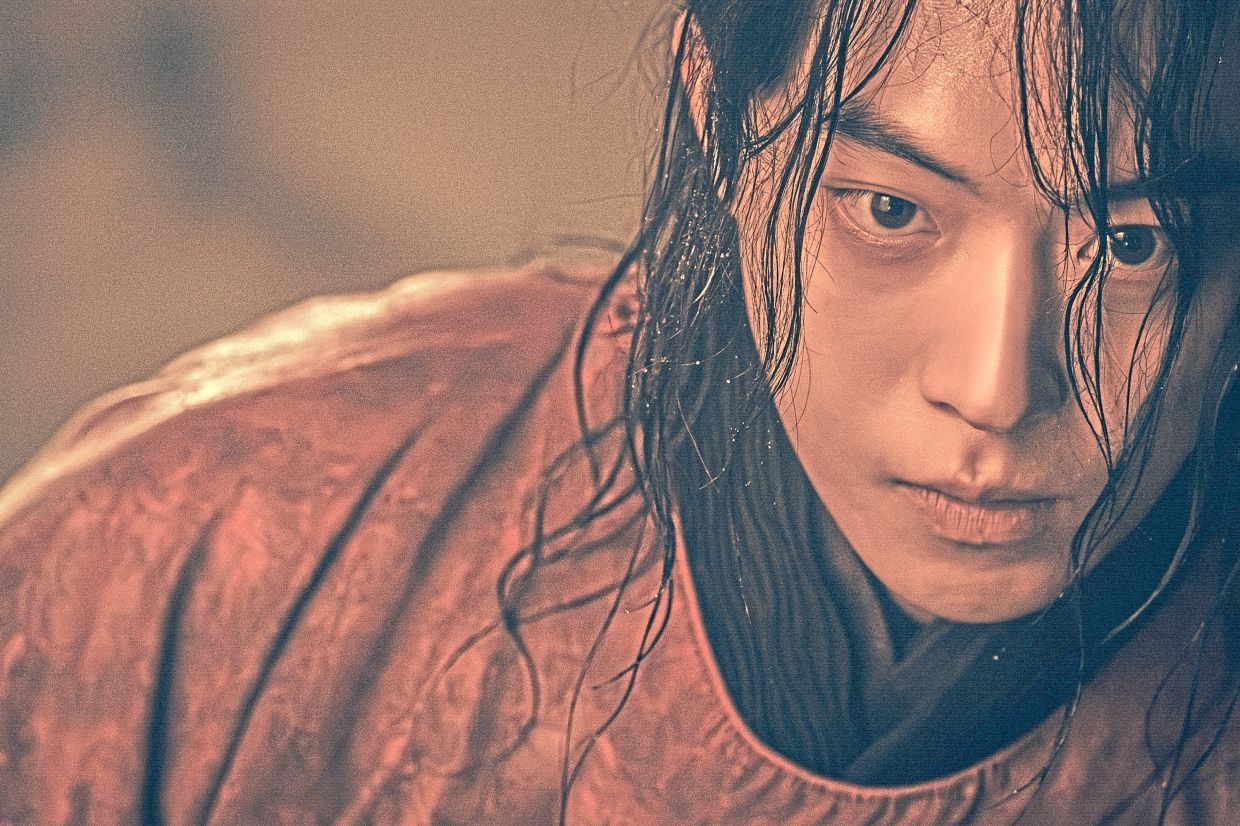
Netflix's summer programming includes a period supernatural drama that marks a significant professional milestone for Nam Joo-hyuk, whose acting career had stalled following school bullying allegations in 2022 and his mandatory military service completed in September 2024. The East Palace casts Nam as Gu-cheon, a figure capable of moving between the mortal and spiritual worlds, positioning him as the central character navigating a curse that grips the royal palace. His casting represents the first major screen appearance since fulfilling his two-year military obligations, making the series a crucial moment in his efforts to rebuild his career momentum in a competitive industry.
The production pairs Nam with actress Roh Yoon-seo, who takes on the role of a mysterious palace maid whose true nature gradually unfolds throughout the narrative. Their characters become instrumental when the reigning King, interpreted by seasoned performer Cho Seung-woo, enlists their help to confront a supernatural affliction plaguing the royal grounds. Cho brings substantial industry credibility to the production, having anchored acclaimed series including Stranger and The King's Doctor, lending the ensemble considerable weight as it tackles both human drama and otherworldly conflict.
Director Choi Jung-kyu built The East Palace on a foundation deeply rooted in Korea's spiritual traditions and historical culture. Rather than simply superimposing Korean aesthetic elements onto a conventional drama framework, Choi sought to allow these components to emerge organically from the period setting itself. In remarks at a recent press conference, the director articulated his vision for maintaining consistent narrative momentum while authentically representing shamanistic motifs and folklore drawn from Korea's rich cultural heritage. This approach reflects a conscious effort to move beyond surface-level cultural references toward genuine integration of traditional elements.
The visual presentation received equal attention during production, with the creative team prioritising the architectural magnificence of classical Korean palaces and intricate costume design. The supernatural narrative demanded substantial investment in visual effects work, creating practical challenges for performers who frequently acted opposite characters and creatures that existed only in post-production stages. Director Choi acknowledged this difficulty, emphasising that the post-production department undertook meticulous work to ensure the folklore elements appeared seamless and convincing to international audiences unfamiliar with these traditions. The collaborative effort between on-set performers and the effects team required precise execution to translate the supernatural storytelling effectively.
Choi described his production philosophy as one fundamentally committed to preserving distinctly Korean visual language. Since the narrative draws substantially from the nation's traditional cultural repository, the director believed audiences would discover considerable appeal in these aesthetically and thematically authentic elements. The extensive post-production labour reflected this commitment, with the team working methodically to clarify the story's supernatural dimensions while maintaining visual coherence throughout the series' runtime. Rather than diluting Korean elements for broader accessibility, the production trusted that authentic cultural representation would resonate with diverse viewers.
Cho Seung-woo, addressing the production's thematic underpinnings, highlighted a recurring visual metaphor that anchors the narrative's psychological tension. Throughout the series, a pond surfaces repeatedly as both physical location and symbolic element, appearing tranquil on its surface while concealing tremendous underlying conflict and accumulated stories beneath the water. Cho suggested that viewers attuned to this visual language would develop a richer understanding of the drama's layered storytelling. The metaphor operates on multiple registers, suggesting how the palace itself harbours secrets and supernatural disturbances hidden beneath ceremonial routine and apparent stability.
For Nam Joo-hyuk personally, The East Palace represents far more than a standard career project. The series marks his first significant professional undertaking following the completion of military service in late 2024, arriving approximately two years after the school bullying allegations that surfaced publicly in June 2022. Though Nam consistently denied these accusations as baseless, the claims substantially disrupted his professional trajectory during that period. In 2024, legal proceedings concluded when two of the primary sources spreading these allegations were found guilty of criminal defamation for circulating false information, providing partial vindication for the actor.
Returning to the spotlight carries considerable emotional weight for Nam, who has approached the production with visible conscientiousness. During the press conference, he articulated the responsibility he felt both as the leading performer and as a member of the production team, expressing determination not to become a liability for colleagues. Nam revealed that he received the script while serving in the military, a period he characterised as offering substantial time for imaginative consideration. The script resonated sufficiently during his service that he became eager to accept the challenge upon completing his enlistment, suggesting his commitment to this particular project transcended typical professional obligations.
The East Palace arrives during a period of significant interest in Korean period dramas and supernatural storytelling internationally. Netflix's investment in the production reflects the platform's continued confidence in Korean content's global appeal, particularly when combining historical settings with contemporary narrative techniques. The series positioning as a summer release indicates Netflix's estimation of its commercial potential and audience draw. For Malaysian and Southeast Asian viewers, the drama offers access to Korean cultural traditions and folklore that remain relatively unfamiliar outside Korea, potentially expanding appreciation for the region's spiritual and historical heritage.
The production's success will carry implications extending beyond Nam Joo-hyuk's individual career rehabilitation. A well-received series could signal to the Korean entertainment industry that public figures facing resolved allegations can successfully rebuild professional credibility through substantial work. Conversely, any audience reluctance would indicate lingering industry or audience hesitation about engaging with controversial figures, regardless of legal exoneration. The drama thus functions as a cultural indicator regarding forgiveness, redemption, and the sustainability of careers following public scandal in contemporary Korean entertainment.
For international subscribers, The East Palace provides an entry point into Korean supernatural storytelling traditions grounded in genuine cultural scholarship rather than superficial exoticism. Director Choi's emphasis on organic integration of folklore elements and visual effects teams' commitment to authenticity suggests a production that respects its source material while crafting commercially compelling entertainment. As Nam Joo-hyuk navigates this critical professional moment, the series becomes a vessel for broader conversations about Korean culture, entertainment industry resilience, and the changing landscape of global streaming drama.

