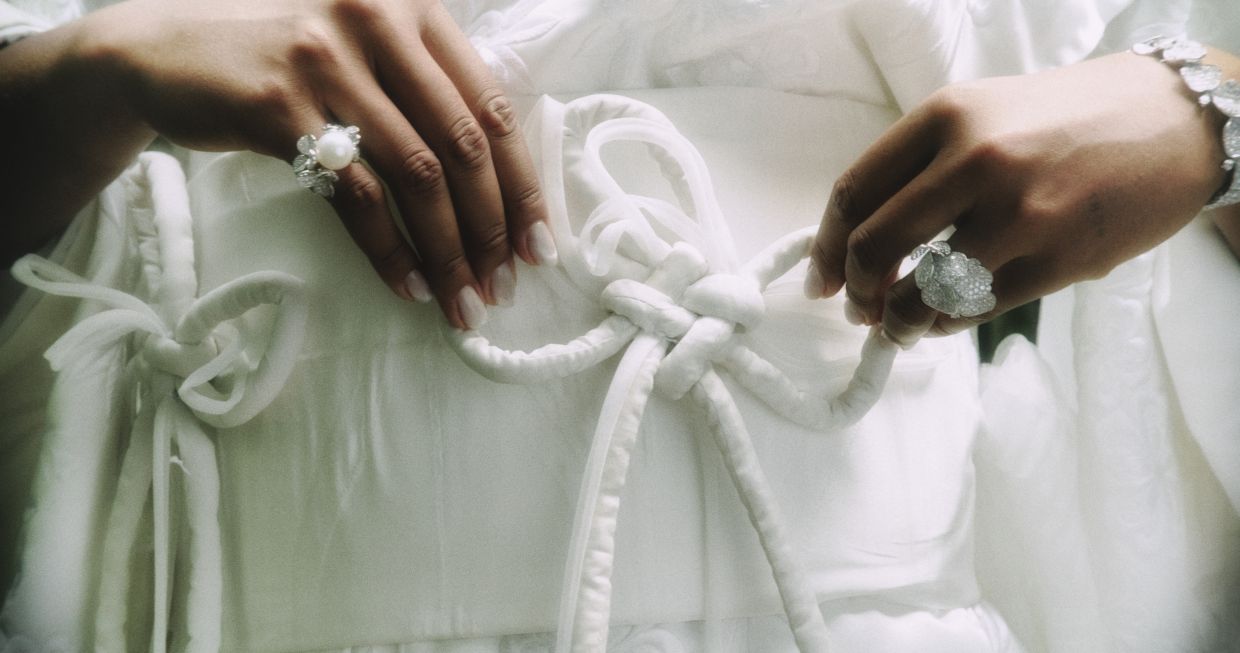
Naomi Osaka has quietly redefined what it means to walk onto a Grand Slam court, turning tunnel appearances into carefully choreographed moments of cultural expression and fashion innovation. The 14th-seeded player and former world number one demonstrated this approach once again at Wimbledon on June 29, when she arrived in an all-white creation titled "Evolving Ceremony" by Hana Yagi, a Tokyo-based Japanese designer working to establish her independent label. Despite battling a foot injury that cast uncertainty over her participation until the last moment, Osaka delivered a statement piece that extended far beyond typical tournament attire.
The gown itself represents a sophisticated layering of historical and contemporary design philosophies. Drawing inspiration from the kimono and the junihitoe, a ceremonial 12-layer dress worn by noblewomen during Japan's Heian period between 794 and 1185, Yagi constructed the ensemble from seven distinct textiles salvaged from vintage kimonos, traditional shiromuku wedding dress fabric, and a deconstructed wedding gown. This approach transforms what could have been a nostalgic nod into a statement about material responsibility. Paired beneath was a custom Nike performance dress incorporating Japanese kirigami aesthetics through floral appliques and micro-pleated details, complemented by jewellery from Mikimoto, the legendary pearl house. The aesthetic choices reveal a deliberate strategy: Osaka uses her tournament appearances to celebrate her Japanese identity while maintaining the athletic functionality required at the world's most prestigious sporting venues.
This latest appearance represents the culmination of a fashion arc that began earlier in the year at the Australian Open. There, Osaka emerged in a jellyfish-inspired Robert Wun gown paired with a butterfly hat, both symbolising transformation and her journey as a young mother. The formal outer layer came away as she prepared to compete. She continued this pattern at the French Open, wearing a black corset and ballgown skirt by Kevin Germanier, designed as homage to the Eiffel Tower and constructed from upcycled Nike materials. These three tournament looks, viewed collectively, reveal an intentional philosophy operating across multiple dimensions: environmental sustainability, support for emerging independent designers, and personal brand storytelling through wearable art.
The strategic behind-the-scenes thinking reveals how complex these moments truly are. Osaka's stylist, Marty Harper, describes the vision as amplifying "new kids on the block"—emerging talent rather than established fashion powerhouses. Yagi, still in her 20s, founded her design company in Tokyo following a runner-up finish at the International Talent Support competition in Italy during 2019. Supporting designers at this career stage carries significant professional weight, as visibility at a Grand Slam can fundamentally alter a creator's trajectory. For Osaka, this choice positions her as something more than an athlete wearing expensive clothes; she becomes a curator actively shaping the fashion industry's future.
The practical engineering underlying these creations deserves recognition. Tournament requirements demand custom couture visible from the furthest stadium seats, yet the same garment must be removable in under one minute—essentially the time other players need to unzip warm-up jackets. Harper notes they have precisely three minutes to dress Osaka before she takes the court. Yagi solved this constraint through ingenious construction, making nine segments of the Wimbledon dress completely detachable using Velcro. This technical solution allows segments to be removed sequentially and recombined in different configurations as the tournament progresses. Additionally, Yagi engineered an adjustable train measuring nearly ten feet, adjustable depending on which court Osaka occupies—a consideration born from Wimbledon's logistics, where outer courts sit far enough from the players' lounge that extended fabric could sustain damage during the walk.
The choreography reflects Yagi's conceptual approach to the work. She articulated that "one of the key concepts was that the look would evolve as Naomi progresses," suggesting that the ensemble operates as visual narrative architecture rather than static costume. This philosophical orientation—where fashion becomes inseparable from athletic performance and personal growth—distinguishes Osaka's approach from peers who treat tournament wear as secondary to competition itself. The ensemble functions simultaneously as art object, functional athletic garment, and cultural statement.
For Malaysian and Southeast Asian audiences, Osaka's approach carries particular resonance. The region has historically occupied a complex position within global fashion hierarchies, often cast as consumer market rather than creative origin. Yagi's prominence on tennis's most visible stage—backed by Osaka's platform—signals shifting dynamics where Tokyo-based independent designers command international attention and resources. This visibility has material consequences: Yagi's work gains international recognition, Japanese textile craftsmanship reaches wider audiences, and younger Southeast Asian designers observe a proven pathway for supporting emerging talent through sports sponsorship rather than traditional fashion institution gatekeeping.
Osaka's fashion strategy also illuminates evolving athlete branding in the twenty-first century. Where previous generations of tennis stars—including Serena Williams and contemporary figures like Jannik Sinner—have used tournament appearances to express personality or ambassador status, Osaka has weaponized fashion specifically for consciousness-raising. Each appearance balances multiple objectives: environmental education through visible upcycling, cultural representation, emerging designer support, and personal narrative development. The tunnel walk has transformed from functional necessity into the tournament's opening act, where attention metrics are won or lost before tennis even begins.
The sustainability dimension warrants deeper examination given climate discussions currently dominating global conversations. Osaka's consistent selection of upcycled vintage materials and independent designers represents a deliberate rejection of fast-fashion consumption patterns endemic to professional sports. By visibly celebrating textile restoration and historical garment repurposing, she normalizes sustainability as a luxury concept rather than a compromise—a positioning with influence extending far beyond fashion enthusiasts. When the world's leading athletic women choose garments built from salvaged kimonos over newly manufactured designer pieces, they reshape industry expectations and consumer expectations simultaneously.
The technical and artistic sophistication underlying Osaka's tunnel appearances reveals depth often overlooked in casual coverage. The collaboration between athlete, stylist, and designer creates bespoke solutions where fashion, function, and meaning converge. Velcro closures enabling rapid transitions, adjustable trains accounting for court geography, detachable segments permitting mid-tournament reconfiguration—these details reflect the same precision Osaka applies to her tennis. They suggest that preparing for tournament competition has expanded beyond court preparation into broader ceremonial and aesthetic dimensions.
Osaka's influence operates most powerfully through accumulated effect rather than individual moments. Whether she advances in tournament play becomes secondary to having captured cultural attention through sartorial sophistication. This positioning represents fundamental shift in how elite athletes leverage their platform, moving beyond product endorsement into active participation in creative industries. For designers, athletes, and audiences across Southeast Asia, Osaka's approach demonstrates that competitive sport provides fertile ground for artistic expression, cultural representation, and industry disruption—provided the athlete, stylist, and designer share unified vision and sufficient creative courage.

