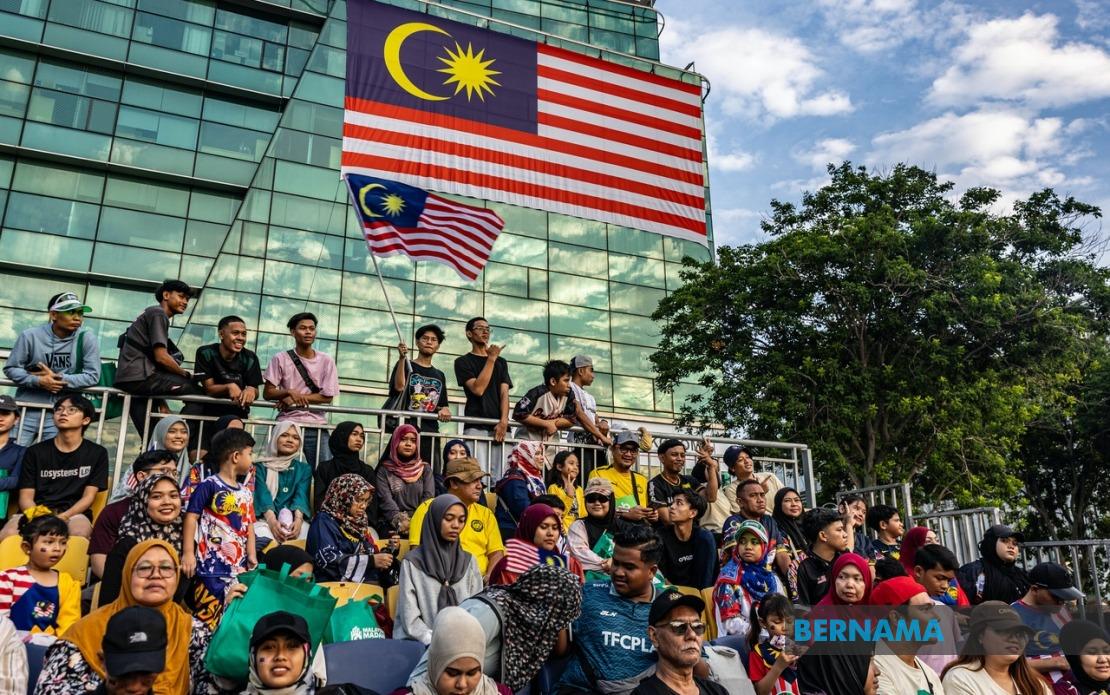
The 69th National Day celebration held in Putrajaya on August 31 drew significantly larger crowds than anticipated, with more than 100,000 attendees surpassing the organizers' initial projection of 80,000 participants. Communications Minister Datuk Seri Fahmi Fadzil, who chairs the 2026 National Day and Malaysia Day Main Committee, attributed the successful turnout to meticulous planning, cooperative weather conditions, and enthusiastic participation from Malaysians across the nation. The minister expressed gratitude for the diverse representation, noting that attendees travelled from various regions including Sandakan, Johor Bahru, and Jeli to participate in the celebrations.
The seamless execution of the event reflected extensive coordination among multiple government entities and specialized agencies. The Department of Environment, Malaysian Meteorological Department, and National Disaster Management Agency collaborated to monitor atmospheric conditions and ensure public safety throughout the day. These agencies maintained readiness for cloud seeding operations if weather patterns shifted, demonstrating the comprehensive infrastructure supporting such large-scale national events. The absence of any significant incidents underscored the effectiveness of security arrangements and crowd management protocols implemented by participating agencies.
Beyond the central parade ceremony, organizers provided extensive supplementary activities that enriched the overall celebration experience. Attendees enjoyed exhibitions of national defence capabilities displayed at Anjung Floria, participated in the Riuh Merdeka festivities at Monumen Alaf Baru, and accessed numerous food vendors offering dining options. These complementary attractions enabled families to spend extended time at the venue, transforming the celebration into a broader community gathering rather than a single ceremonial event. The availability of recreational activities across multiple zones demonstrated organizers' intent to maximize public engagement and create lasting memories for participants.
The parade itself showcased Malaysia's institutional and cultural diversity through impressive scale and composition. Seventy-six contingents participated alongside twenty-two marching bands and eleven decorated vehicles, collectively mobilizing 10,819 personnel representing government ministries, military and uniformed services, government-linked companies, educational institutions, and civil society organizations. This broad cross-sectional representation visually embodied the national principle of unity in diversity, with participants spanning various sectors and demographic backgrounds demonstrating collective commitment to national pride.
Notable departures from previous celebrations included the first-time participation of the Royal Johor Military Force, reinforcing the role of state-level security apparatus in national observances. The inclusion of a Southeast Asian Games 2027 contingent reflected Malaysia's upcoming hosting responsibilities and positioned the celebration within a regional context. Meanwhile, the Orange Economy Sustainability cluster contingent signalled government prioritization of environmental consciousness and economic innovation within national development narratives. These introductions indicated evolving emphasis on connecting traditional national pride with contemporary policy priorities around regional cooperation and sustainable development.
Cultural performance constituted a centerpiece of the celebration, demonstrating Malaysia's artistic heritage and contemporary creative capacity. The "Gema Inovasi MADANI" percussion segment unified traditional instruments including Rebana Inovasi and Kompang Inovasi with modern compositional approaches, employing 150 percussionists and 1,500 human graphic performers. This synthesis of tradition and innovation communicated the government's Malaysia MADANI framework philosophy of progressing while maintaining cultural continuity. The performance's scale and coordination requirements reflected substantial investment in cultural programming alongside military and civic elements.
The celebration's thematic foundation, "Malaysia MADANI: Kesejahteraan Dinikmati," articulated government commitment to building an inclusive, prosperous nation transcending demographic divisions. This theme embedded the celebration within the broader Malaysia MADANI policy agenda, using the National Day platform to reinforce messaging around development benefiting all Malaysians regardless of ethnic, religious, or socioeconomic background. By anchoring the celebration to specific policy narratives, organizers transformed August 31 into a communication opportunity beyond ceremonial commemoration.
The closing performance, "Rentak MADANI, Paluan Tradisi," mobilized 2,350 participants in a final affirmation of national cohesion through artistic expression. This substantial finale, combined with Royal Malaysian Air Force demonstrations featuring fighter jets, transport aircraft, and helicopters, created powerful visual and emotional culminations emphasizing national strength and technological capability. The aerial display particularly resonated with audiences by showcasing military prowess and technological advancement as dimensions of national pride.
For Malaysian policymakers and regional observers, the event's success carries implications beyond ceremonial achievement. Large-scale public gatherings generate valuable data regarding crowd management capacity, inter-agency coordination effectiveness, and public appetite for state-sanctioned nationalism. The smooth execution without security incidents validated security protocols and demonstrated public compliance with safety directives. The notably high turnout suggests sustained public engagement with national observances despite contemporary social fragmentation and competing entertainment options.
The celebration also reflected Putrajaya's evolution as a ceremonial capital capable of hosting massive public events. Infrastructure investments enabling 100,000-person attendance capacity position the federal administrative center as a genuine public gathering space rather than exclusively an administrative precinct. This accessibility may influence future decisions regarding venue selection for major national events and public-facing government activities.
Minister Fahmi's emphasis on public attendance from geographically dispersed locations—specifically naming Sandakan and Johor Bahru—suggests intentional promotion encouraging nationwide participation. This geographic diversity in actual attendance validates efforts to make National Day celebrations genuinely national rather than concentrated in urban centres. The willingness of citizens to travel considerable distances for participation indicates the occasion maintains significant meaning within Malaysian identity construction despite modernization and globalization.
Looking forward, the 2026 celebration establishes benchmarks for subsequent National Day events. The 100,000-person threshold, now achieved and exceeded, likely becomes the baseline expectation for organizers. Successful integration of new elements including the Royal Johor Military Force and SEA Games contingents suggests future celebrations will similarly evolve to reflect contemporary institutional arrangements and regional positioning. The Malaysia MADANI thematic framework appears positioned as the overarching national narrative for the medium term, with National Day celebrations serving as primary platforms for reinforcing and communicating this agenda to the Malaysian public.

