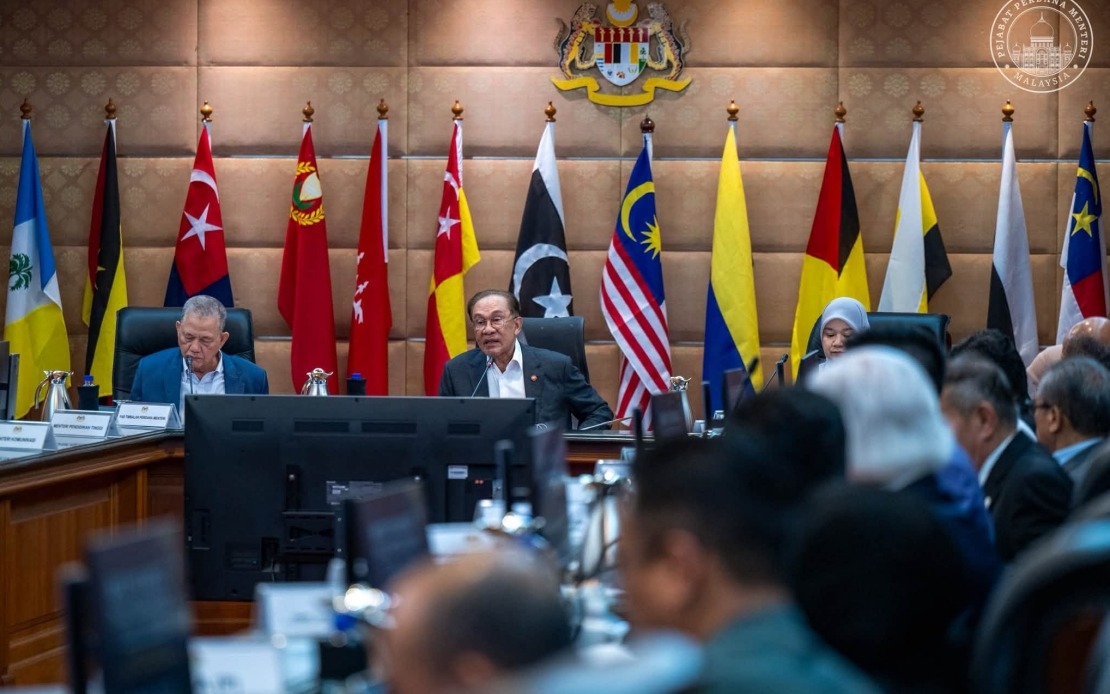
Prime Minister Datuk Seri Anwar Ibrahim has officially launched the National Education Council, positioning it as the institutional anchor for overhauling Malaysia's education system to meet contemporary challenges while safeguarding the nation's foundational values. The council's establishment marks a significant policy shift aimed at ensuring the country's educational offerings remain responsive to evolving workforce demands and global competitiveness standards.
Addressing the council's inaugural meeting on June 30, 2026, Anwar outlined an ambitious agenda that bridges modernisation with tradition. The council will oversee comprehensive reforms touching every aspect of education delivery, from curriculum content redesign to pedagogical approaches, with particular emphasis on enhancing educational quality at the grassroots district level where implementation challenges are most acute.
A cornerstone of the council's mandate involves fortifying English language proficiency among Malaysian students, treating it as an essential second language skill for participating in the global economy and accessing international knowledge resources. This priority reflects recognition that English competency directly impacts Malaysia's positioning in international trade, technology transfer, and cultural exchange, particularly in Southeast Asia where the language serves as a common commercial and diplomatic medium.
Crucially, the council's approach deliberately resists a false dichotomy between modernisation and cultural preservation. Rather than treating English language strengthening as conflicting with national priorities, the framework explicitly commits to maintaining the primacy of Bahasa Malaysia as the national language while simultaneously advancing proficiency in international communication. The broader educational philosophy incorporates moral and ethical development alongside academic excellence, grounding reforms within the Malaysia MADANI vision that emphasises inclusive prosperity and societal wellbeing.
The council's initial discussions centred on three interlocking strategic pillars. First, elevating educational quality at district level acknowledges that systemic transformation succeeds only when quality teaching and learning reach students in all communities regardless of geographic or socioeconomic circumstances. This decentralised focus represents a departure from centralised-only approaches, recognising that local implementation capacity and community engagement determine reform outcomes.
Second, empowering the Bumiputera education agenda addresses persistent disparities in educational access and outcomes among indigenous populations and Malays. This component signals commitment to ensuring educational reforms generate equitable benefits rather than widening existing achievement gaps, embedding social cohesion objectives within the broader education modernisation framework.
Third, constructing a robust STEM talent pipeline directly addresses Malaysia's transition toward high-value manufacturing, digital economy expansion, and technology-driven industries. The council recognises that insufficient domestic supply of science and engineering-skilled graduates constrains industrial upgrading and innovation capacity, necessitating systematic talent cultivation from primary education through tertiary levels.
Anwar's characterisation of education reform as requiring objective evaluation and expert input reflects institutional maturity in policy development. Rather than pursuing ideologically-driven change, the framework emphasises evidence-based decision-making informed by diverse stakeholder perspectives including educators, researchers, parents, employers, and community representatives. This consultative approach potentially builds broader consensus around contentious educational changes that might otherwise face resistance.
The Prime Minister explicitly cautioned against institutional complacency, arguing that satisfaction with existing systems inhibits necessary innovation. This framing positions resistance to reform as impediment to national development and intergenerational progress. For Malaysian policymakers and educators, the message signals that incremental adjustments prove insufficient; the council's mandate contemplates more fundamental restructuring of how educational content, teaching methods, and institutional practices operate.
The council's establishment arrives amid global educational transformation driven by artificial intelligence, remote learning capabilities, and shifting labour market demands. Malaysia's experience with pandemic-disrupted schooling likely informed recognition that educational systems require flexibility and resilience built into their architecture. The council's comprehensive scope suggests reforms will extend beyond curriculum to encompassing pedagogical methods, assessment approaches, and teacher professional development.
For Malaysia's regional standing, education modernisation carries strategic significance. As ASEAN nations compete for foreign direct investment and technology transfer partnerships, educational quality differentiates economies. Countries perceived as producing globally-competitive workforces attract knowledge-intensive industries, while those with outdated systems face relegation to low-value activities. The council's focus on STEM talent and English proficiency directly addresses these competitive dynamics.
Implementing the council's agenda faces practical challenges. Malaysia's diverse education landscape includes federal schools, state-sponsored institutions, private providers, and religious schools, each operating under different governance frameworks and facing distinct resource constraints. Achieving coordinated reform across this fragmented ecosystem requires sustained political will and substantial resource allocation beyond the council's convening authority.
The council's success will ultimately depend on translating strategic intent into classroom reality. Between policy formulation and student learning outcomes lies implementation capacity, teacher readiness, resource availability, and community acceptance. The coming months will reveal whether the National Education Council functions as transformative institutional mechanism or becomes another layer of bureaucratic machinery producing lengthy reports without catalysing meaningful change.

