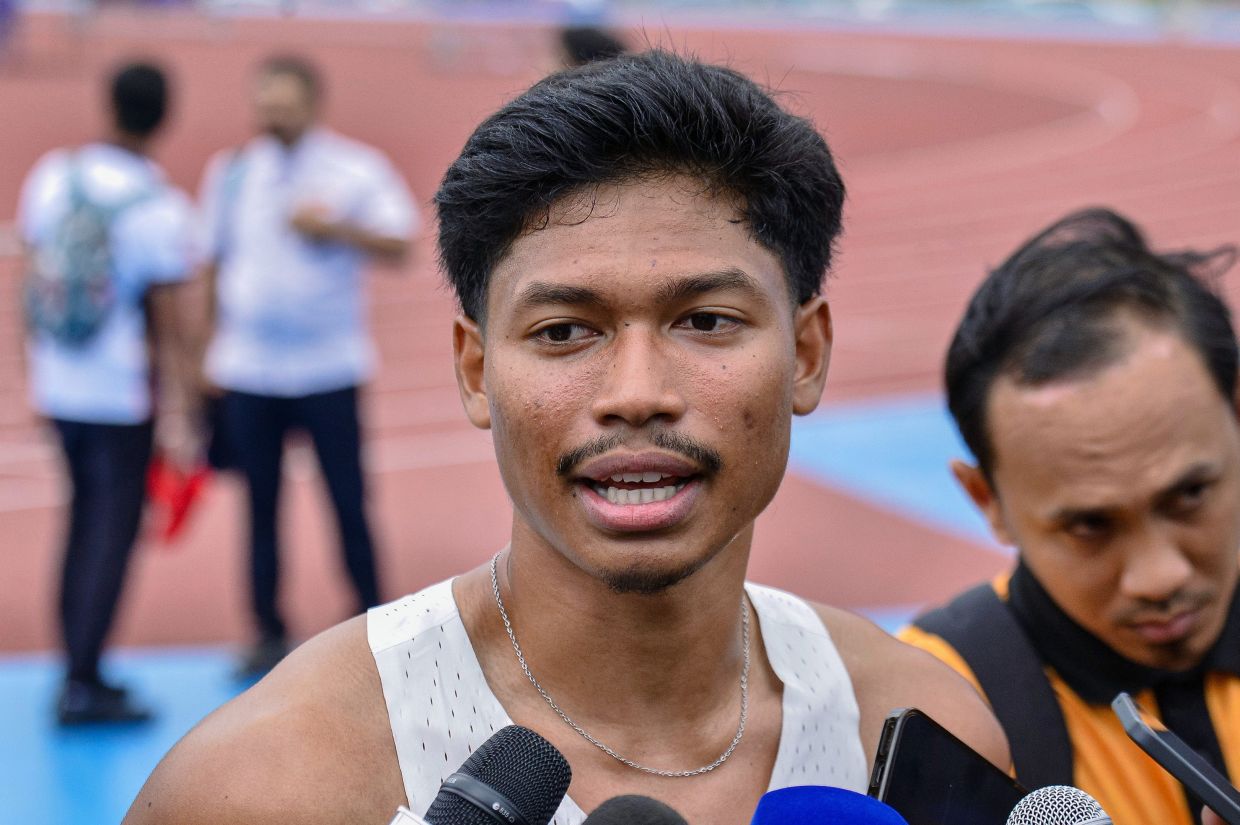
National sprinter Mohd Azeem Fahmi has set his sights on academic advancement at home, enrolling in a master's programme at Universiti Malaya after completing his undergraduate studies abroad. The decision marks a significant return for the 21-year-old athlete, who spent the past two years in the United States honing both his athletic and academic skills before transitioning back to pursue postgraduate education in Malaysia.
Azeem's shift to UM follows the completion of his studies at Auburn University in Alabama, where he focused on exercise physiology and kinesiology while training under coach Ken Harnden. The dual commitment to education and elite-level athletics reflects a growing trend among Malaysian sports professionals who recognise the importance of qualifications that extend beyond competitive careers. His return to Malaysia represents a vote of confidence in the nation's higher education system and a commitment to contributing his expertise domestically.
The transition received formal endorsement when the athlete visited UM's campus in Petaling Jaya, where he met with senior university leadership. Vice-chancellor Prof Datuk Seri Dr Noor Azuan Abu Osman personally received Azeem, signalling institutional commitment to supporting the athlete's academic journey. The vice-chancellor's office confirmed that the university intends to provide comprehensive support mechanisms to facilitate Azeem's pursuit of his master's degree while maintaining his athletic commitments.
Several faculty representatives participated in the courtesy meeting, underscoring UM's seriousness about the arrangement. The dean of the Faculty of Sports and Exercise Sciences, Associate Prof Dr Zulkarnain Jaafar, and Sports Centre director Afizal Abu Othman were present, indicating that Azeem's programme will benefit from specialist expertise across both academic and athletic dimensions. This collaborative approach suggests that the university has crafted a tailored pathway designed to accommodate elite athletes pursuing concurrent academic and competitive objectives.
UM's selection as Azeem's postgraduate destination continues a long-established pattern of attracting Malaysia's finest athletes. The institution boasts an impressive roster of alumni who have represented the country at the highest levels of international sport. Among them are diving champions Datuk Pandelela Rinong, whose Olympic medals brought national acclaim, alongside compatriots Ooi Tze Liang and Bryan Nickson Lomas, who similarly excelled in aquatic disciplines. This heritage of athletic achievement creates an environment where sports professionals can advance their studies within a community that understands the demands of elite competition.
The badminton world has also benefited from UM's academic programme, with former national women's doubles representative Vivian Hoo graduating from the university with a Bachelor of Sports Science degree in 2019. Her successful completion of formal education whilst maintaining an international sporting career demonstrates the feasibility of balancing rigorous academic requirements with professional athletic obligations. Azeem joins a tradition of athletes who view educational credentials as integral to their personal and professional development.
Azeem's credentials as an athlete remain compelling. His recent performance at the Malaysian Open, held at Universiti Putra Malaysia's Serdang campus last week, demonstrated that his competitive form remains sharp upon his return home. The sprinter claimed victory in the men's 100-metre sprint, one of track and field's marquee events, whilst also anchoring the 4x100-metre relay team to gold. His relay teammates—Danish Iftikhar Mohd Roslee, Pengiran Aidil Auf Hajam, and Mohd Armin Zahryl—benefited from his anchor leg contribution, showcasing his continued ability to perform under pressure in high-profile competitions.
For Malaysia's athletics development trajectory, Azeem's decision carries broader implications. The return of internationally trained athletes to pursue advanced qualifications domestically strengthens the domestic knowledge base and creates pathways for knowledge transfer. His experience at Auburn, where he trained under renowned American coaches and studied specialised disciplines, positions him as a potential resource for future generations of sprinters seeking to bridge the gap between world-class coaching and formal academic understanding of human performance.
The strategic importance of hosting such talent cannot be understated within the Southeast Asian sporting context. Regional nations compete intensely for Olympic medals and continental titles, with coaching quality and athlete development infrastructure representing critical differentiators. When accomplished athletes invest in formal postgraduate study within Malaysia's universities, they simultaneously contribute to institutional research capacity whilst maintaining engagement with the domestic sporting ecosystem. This reciprocal relationship strengthens both the athlete's intellectual framework and the university's practical expertise.
Azeem's journey also reflects evolving expectations within Malaysian athletics. Gone are the days when competitive excellence and academic qualification were viewed as competing priorities. Modern elite athletes increasingly recognise that careers require intellectual foundations—whether in coaching, sports management, biomechanics, or sports science. The pursuit of a master's degree signals maturity and foresight, positioning individuals for leadership roles within athletics administration or related fields beyond their active competitive years.
Looking forward, the success of Azeem's masters programme at UM could influence how other national athletes approach their own educational planning. Should he demonstrate effective time management and academic achievement whilst maintaining international competitiveness, the model becomes replicable for younger sprinters and field athletes seeking similar arrangements. Universities across Southeast Asia watch closely as institutions like UM develop athlete-friendly postgraduate frameworks, recognising that such initiatives enhance both institutional prestige and national sporting competitiveness.
The convergence of Azeem's international experience and UM's supportive institutional environment creates favourable conditions for meaningful contribution to Malaysian athletics. His trajectory—from competitive success in America to advanced study in Malaysia—encapsulates the modern athlete's reality, where global experience and local commitment are not mutually exclusive. As Azeem embarks on his master's degree, he carries with him not only Auburn's training protocols but also a responsibility to inspire younger athletes that educational advancement and sporting achievement progress together.

