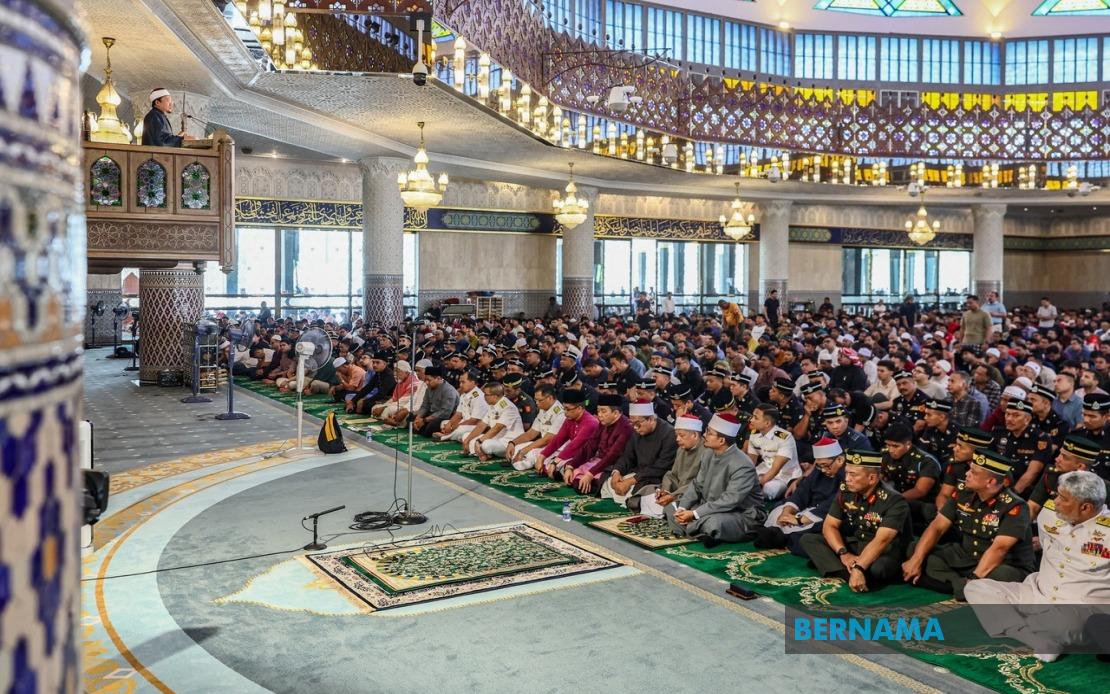
A nation's resilience cannot rest solely on military hardware or advanced technology, but must be anchored in the moral fibre of its citizens and those who govern them. This was the core message delivered by the Grand Imam of Masjid Negara Datuk Dr Amru Alhaz Adnan during Friday prayers on July 31, as Malaysia observed Warriors' Day, the annual commemoration of its security forces.
Speaking before an assembly that included Malaysia's highest-ranking military officials, Dr Amru Alhaz challenged conventional notions of national defence, arguing that protecting a country extends far beyond its borders and military installations. Instead, he contended, defence occurs continuously through the daily discharge of civic responsibilities by ordinary Malaysians. This conceptual shift positions every citizen as an active participant in safeguarding the nation, rather than reserving that role for uniformed personnel alone.
The Grand Imam articulated a vision of national strength built on layered integrity across society. A truly strong nation, he explained, emerges when its citizens conduct themselves honestly, its leaders demonstrate trustworthiness, civil servants maintain ethical standards, businesses refrain from fraudulent practices, parents nurture their children with responsibility, and Muslims individually honour their commitments to Allah. This multifaceted framework suggests that corruption, dishonesty, or negligence at any social level weakens the collective defence posture.
The sermon's timing held particular significance, coinciding with the attendance of Malaysia's four top military commanders: Chief of Defence Forces Gen Tan Sri Malek Razak Sulaiman, Chief of Army Gen Tan Sri Azhan Md Othman, Chief of Navy Adm Tan Sri Dr Zulhelmy Ithnain, and Chief of Air Force Gen Tan Sri Muhamad Norazlan Aris. Their presence underscored official endorsement of the message that military leadership itself depends on moral integrity rather than operational capability alone.
Warriors' Day, observed annually on July 31, serves a dual purpose in Malaysia's national calendar. While it commemorates the sacrifices and service of the armed forces, it simultaneously encourages broader public reflection on societal responsibility in maintaining national peace and stability. The day represents a moment when military achievement and civilian duty converge, reminding Malaysians of their interconnected roles in national preservation.
Dr Amru Alhaz specifically urged Malaysian Muslims to honour the nation's military heroes by exemplifying integrity in their own lives and rejecting corruption in all its forms. This call resonates particularly in Malaysia's contemporary context, where anti-corruption efforts remain prominent on the national agenda and public trust in institutions has been subject to periodic testing. By linking personal ethical conduct to honouring fallen soldiers, the Grand Imam framed integrity as an act of patriotic duty rather than merely administrative compliance.
The emphasis on discipline and unity in the sermon addresses long-standing concerns about social cohesion in Malaysia's multicultural society. By positioning integrity and discipline as collective values transcending religious and ethnic boundaries, the message attempted to forge common ground among disparate communities around a shared national interest. This approach acknowledges that Malaysia's strength depends on internal harmony as much as external military preparedness.
For Malaysian readers and policymakers, the sermon's framing offers important implications. It suggests that national security policy cannot be divorced from governance quality, civil service standards, and public ethics. Countries investing heavily in defence budgets while tolerating widespread corruption or institutional weakness may paradoxically weaken their overall resilience. Conversely, societies demonstrating high levels of public trust and ethical conduct create conditions for genuine national stability.
The Grand Imam's message also speaks to evolving security challenges facing Southeast Asia, where non-traditional threats—including economic instability, social fragmentation, and institutional erosion—often pose challenges comparable to conventional military threats. By reframing defence through an integrity lens, the sermon acknowledges that Malaysia's future security depends as much on the decisions of traders, teachers, parents, and civil servants as on military strategy.
In the broader regional context, Malaysia's experience with navigating multicultural nation-building while maintaining security offers lessons relevant to neighbours facing similar challenges. The integration of military commemoration with public calls for institutional integrity reflects a sophisticated understanding that national defence cannot be militarised alone but requires sustained civilian commitment to ethical governance and social responsibility.
The sermon ultimately positioned Warriors' Day not merely as a ceremonial occasion for honouring fallen soldiers, but as an annual reminder of the bargain between security forces and civilian society: professional military protection in exchange for public integrity and institutional trustworthiness. This reciprocal relationship, the Grand Imam suggested, represents Malaysia's truest strength.

