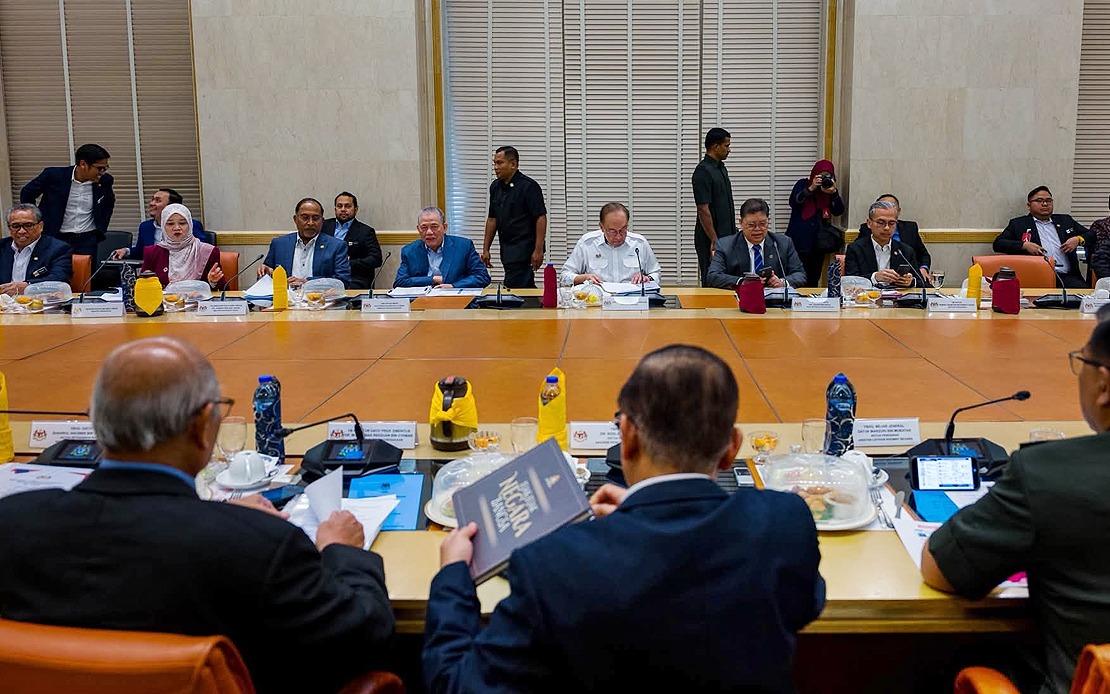
Prime Minister Datuk Seri Anwar Ibrahim has stressed that developing and reinforcing nationhood values across Malaysian society remains fundamental to the nation's progress and international standing. Speaking at a Dewan Kenegaraan Board of Governance Meeting, which he presided over in his capacity as Chair, Anwar highlighted how the deliberate cultivation of these values directly correlates with producing citizens characterised by robust personal identity, unwavering integrity and principled conduct. His remarks signal a deliberate policy focus on character-building as a strategic component of national development rather than simply an abstract cultural pursuit.
The Prime Minister's emphasis on fostering patriotism through values-based education reflects a broader recognition within government circles that national cohesion and progress depend on citizens internalising a shared commitment to the Malaysian project. Rather than relying solely on legislative or administrative mechanisms, this approach privileges the softer power of cultural and civic formation, assuming that individuals who genuinely internalise nationhood values will naturally gravitate toward constructive participation in nation-building efforts. For a diverse, multi-ethnic democracy like Malaysia navigating complex social and economic challenges, such alignment between individual values and national objectives carries particular significance.
Central to this initiative is the National Service Training Programme, or PLKN, which Anwar noted has demonstrated encouraging progress and garnered positive responses from both trainees and their families. The programme functions as an experiential platform where young Malaysians undergo intensive exposure to discipline, teamwork and national consciousness within a structured military-style framework. By bringing together citizens from varied ethnic, religious and socioeconomic backgrounds, PLKN theoretically creates spaces where shared national identity can supersede parochial loyalties. Anwar's call for continued strengthening of the programme suggests government confidence in its role as an instrument for forging resilience and collective identity among the younger generation.
The Prime Minister also addressed the establishment and function of the Nationhood Fellows, a body designed to convene prominent figures and respected statesmen representing diverse ideological and professional backgrounds. This initiative appears designed to insulate nation-building discourse from partisan political contestation by enlisting respected elder statespeople and cross-sector leaders to contribute perspectives on reinforcing national unity and purpose. By framing nation-building as a project transcending party politics and inviting contributions from figures of various persuasions, the government seeks to lend legitimacy and breadth to its nationhood agenda. For Malaysian readers, this signals an attempt to position national values development as a non-partisan endeavour essential to all Malaysians regardless of political affiliation.
The timing of Anwar's remarks carries contextual weight. Malaysia has experienced periodic episodes of communal tension, political polarisation and concerns about social fragmentation along ethnic and religious lines. Persistent debates over the constitutional status of Islam, the position of the Malay-Muslim majority and the rights of non-Muslim minorities continue to surface in public discourse. In this environment, deliberate efforts to articulate and propagate unifying nationhood values serve as a counterbalance to centrifugal forces. By emphasising shared commitment to national identity, integrity and noble principles, government messaging attempts to position these values as transcending the specific ethnic or religious identity claims that sometimes dominate Malaysian political conversation.
From a Southeast Asian perspective, Malaysia's focus on values-based nation-building reflects trends evident across the region. Countries including Indonesia, Singapore and Thailand have similarly invested in national consciousness programmes targeting youth and employing military or quasi-military structures to inculcate patriotic sentiment. Singapore's mandatory conscription and Indonesia's PKK civic education programme represent comparable attempts to forge national unity through structured institutional mechanisms. Malaysia's PLKN programme thus situates itself within a regional pattern of state-led efforts to manage diversity and construct cohesive national communities.
The emphasis on character formation and integrity among citizens also addresses practical governance concerns. Nations characterised by widespread corruption, erosion of institutional trust and ethical compromise face substantial development constraints. By prioritising the cultivation of integrity as a core nationhood value, Anwar's initiative signals recognition that sustainable progress depends not merely on policy reforms or institutional redesign but fundamentally on the ethical conduct of citizens and officials alike. This framing positions moral regeneration as prerequisite to effective governance and economic advancement.
However, critics might observe that values promotion through government-sponsored mechanisms raises complex questions about authenticity and voluntary adoption versus state-mandated conformity. The distinction between genuine internalisation of shared values and compliant performance of officially-endorsed sentiment represents a perennial challenge for such programmes. Additionally, clarity regarding which specific values constitute "nationhood values" remains important; appeals to national unity can sometimes obscure substantive disagreements about what Malaysia fundamentally represents or should become.
Moving forward, the success of initiatives like PLKN and the Nationhood Fellows programme will depend substantially on their perceived credibility and capacity to generate genuine national conversation rather than appearing as top-down exercises in state messaging. For Malaysia to navigate its contemporary challenges—encompassing ethnic and religious diversity, economic inequality and regional competition—the cultivation of binding national values remains strategically important. Whether these efforts successfully forge sustainable national consensus or merely produce surface-level compliance remains an open question, with implications extending well beyond Malaysia to broader Southeast Asian patterns of nation-building.

