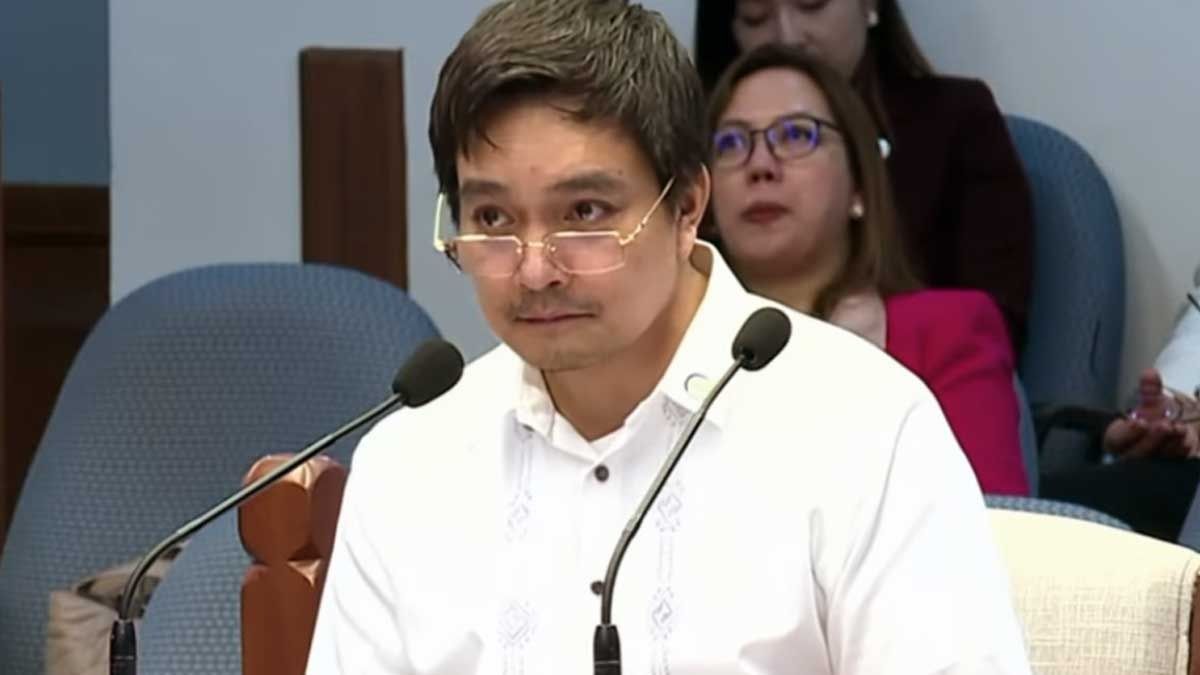
The National Bureau of Investigation's Regional Director Jeremy Lotoc presented a crucial distinction during cross-examination in Vice President Sara Duterte's impeachment proceedings on Tuesday, acknowledging that while he possessed no direct personal testimony proving Duterte hired an assassin, the investigative materials collected by his team pointed toward that conclusion. His statement underscored a central tension in the case: the difference between circumstantial evidence and eyewitness confirmation, a distinction that defence counsel has repeatedly exploited to challenge the prosecution's narrative.
Lotoc, who oversaw the NBI Crime Division's investigation into Duterte's controversial remarks, defended the agency's assessment during questioning by defence lawyer Mark Vinluan. When pressed directly about whether he had witnessed or heard Duterte personally negotiate with someone to eliminate President Ferdinand Marcos Jr., First Lady Liza Araneta-Marcos, and former House Speaker Martin Romualdez, Lotoc maintained his position that the gathered evidence supported their investigative conclusion, even if it did not constitute firsthand proof. This hedged testimony proved contentious, setting the stage for intense parliamentary debate about evidentiary standards in impeachment proceedings.
The remarks in question originated from an online media briefing held by Duterte on November 23, 2024, wherein she made statements interpreted by prosecutors as threats against the sitting president and other officials. These utterances subsequently became the foundation of the fourth article of impeachment filed against her, concentrating the trial's focus on whether her words represented genuine intent to commission violence or hyperbolic political rhetoric. The distinction matters profoundly for Philippine constitutional law, as impeachment requires clear demonstration of high crimes and misdemeanours rather than mere offensive speech.
During the proceedings, tensions between counsel erupted when defence and prosecution representatives engaged in aggressive rhetorical manoeuvres that prompted intervention from the trial's presiding officer, Senator Francis "Chiz" Escudero. When Vinluan attempted to draw Lotoc into confirming allegations of corruption that Duterte had levelled against certain congressmen in the same video, the exchange devolved into semantic disputation about whether acknowledging the existence of utterances constituted validation of their factual accuracy. Escudero eventually halted the escalating exchanges, reminding both legal teams they were engaged in formal impeachment proceedings rather than academic debate, and directing Lotoc to furnish concise, unambiguous responses.
The question of Duterte's capability to execute her alleged threats became another pivotal examination point. When Senate President Sherwin Gatchalian asked what evidence demonstrated her capacity to carry out the purported assassination plot, Lotoc initially cited her office as Vice President. Gatchalian swiftly countered this reasoning, noting that holding high constitutional position alone does not necessarily establish capacity or intent to commit murder. This exchange revealed a critical investigative gap: prosecutors must demonstrate not merely motive and opportunity but also concrete means of implementing such a scheme.
Lotoc subsequently referenced the International Criminal Court investigation into former President Rodrigo Duterte's tenure, specifically allegations of extrajudicial killings connected to the drug war. The NBI official argued that Duterte's familial relationship to a leader currently facing ICC proceedings for such killings suggested she possessed relevant knowledge, experience, or networks that would facilitate commissioning assassinations. This characterisation—that her father's alleged involvement in extrajudicial operations somehow transferred capability to the daughter—represents inferential reasoning that defence counsel vigorously contests as speculative rather than evidentiary.
For Malaysian observers, the Duterte impeachment trial presents instructive parallels regarding constitutional accountability mechanisms and the evidentiary burdens placed upon legislative bodies when removing sitting officials. Unlike Malaysia's parliamentary system, where a Prime Minister derives authority from legislative confidence, the Philippine presidency operates independently, and removal requires two-thirds supermajority conviction in the Senate. This structural difference fundamentally shapes how allegations are evaluated and what standard of proof applies, yet both systems grapple with distinguishing between genuine constitutional violations and politically motivated prosecutions.
The proceedings also highlight enduring questions about the relationship between investigative agencies and legislative bodies in accountability processes. The NBI's role as investigator creates inevitable friction with defence counsel, who seek to distinguish between agency conclusions and courtroom-admissible evidence. Lotoc's testimony exemplifies this dynamic: his professional assessment that evidence "points to" Duterte's involvement differs meaningfully from testimony that would survive rigorous cross-examination in criminal proceedings, yet impeachment trials operate under different evidentiary frameworks.
Regional implications extend beyond constitutional jurisprudence to encompass executive stability in Southeast Asia. The Duterte impeachment represents one of the region's most significant challenges to high-level executive authority in recent years, occurring amid ongoing tensions between sitting President Marcos and the Duterte political apparatus. Should the Senate ultimately convict and remove Duterte, precedent would shift dramatically regarding what constitutes impeachable conduct, potentially emboldening similar efforts against sitting officials across the region's democracies.
The trial's continuation underscores the Philippines' commitment to formal accountability mechanisms despite their obvious partisan dimensions. Unlike some regional counterparts that rely on extra-constitutional means of addressing executive misconduct, the Philippine system channels such disputes through impeachment, however contentious the process becomes. Lotoc's hedged testimony, while perhaps frustrating to partisans on both sides, reflects the genuine difficulty of translating investigative conclusions into the evidentiary certainty typically required for constitutional removal of sitting officials.
As the proceedings unfold, the outcome likely hinges less on Lotoc's credibility or the NBI's investigative competence than on whether Senate voting patterns reflect constitutional judgment or factional positioning. The trial's slow progress and intense procedural disputes suggest that even with substantial investigative material, establishing grounds for conviction sufficient to remove a sitting vice president from office remains extraordinarily challenging within the Philippine constitutional framework.

