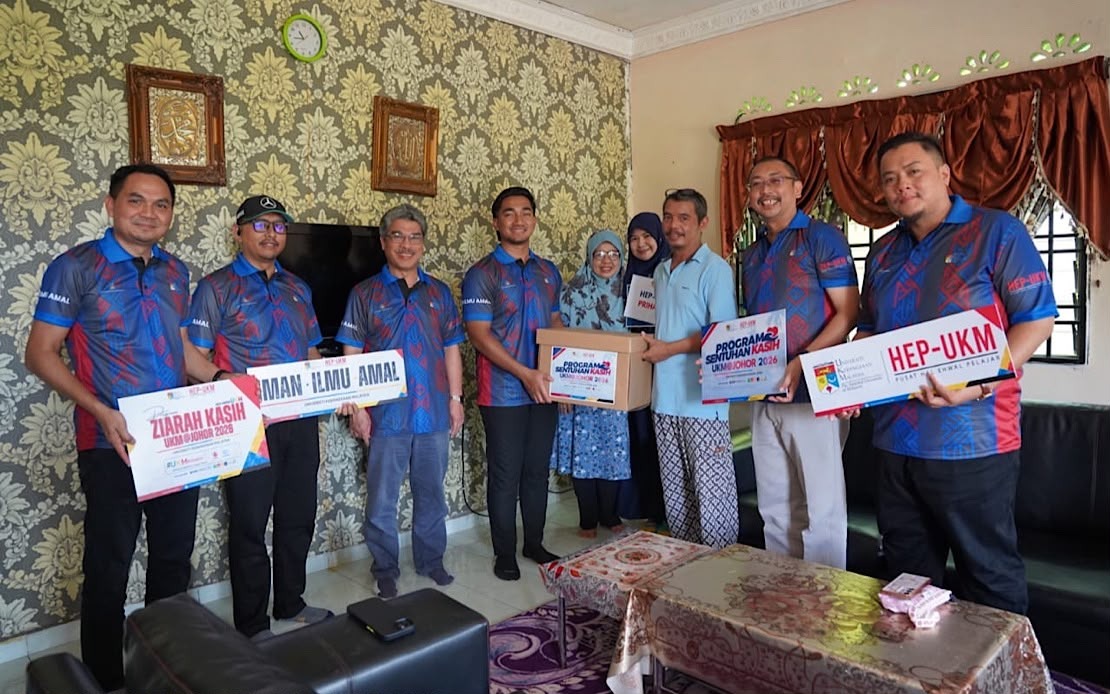
Universiti Kebangsaan Malaysia (UKM) has deepened its engagement with communities beyond its gates through the Sentuhan Kasih UKM@Johor programme, which drew nearly 1,000 local residents across four distinct neighbourhoods in the southern state. The initiative, coordinated by the university's Student Affairs Centre (HEP-UKM), brought together 78 student volunteers and community members over a weekend, operating under the theme "Dari Kampus ke Komuniti, Menyebar Kasih dan Bakti" (From Campus to Community, Spreading Love and Service). The scale of participation underscores growing recognition among Malaysian tertiary institutions that meaningful social impact requires sustained, direct engagement with the populations they serve.
The programme unfolded simultaneously across four locations: Kota Masai and Taman Jaringan in Pasir Gudang, Kampung Baru Sri Aman in the same district, and another site in Skudai. This geographic spread reflects a deliberate strategy to reach diverse community clusters within Johor, each with distinct demographic and socioeconomic profiles. By distributing activities across multiple venues rather than concentrating them in a single location, UKM maximised accessibility for residents who might otherwise face transportation barriers or scheduling conflicts. The breadth of coverage also signals an institutional commitment to systemic community development rather than one-off charitable gestures.
Activities encompassed a diverse portfolio designed to address both immediate community needs and longer-term welfare concerns. Gotong-royong programmes, a traditional Malaysian concept of mutual self-help, formed the backbone of practical engagement, allowing students and residents to work collaboratively on neighbourhood improvement projects. "Ziarah kasih" visits—compassionate home visits—extended the university's reach into private domestic spaces, acknowledging that meaningful support sometimes requires entering households rather than merely hosting public events. Mental health screening services tackled an increasingly pressing but often stigmatised health issue, whilst sports activities provided recreational opportunities and fostered informal social bonding. This multifaceted approach recognises that community wellbeing cannot be addressed through a single intervention.
The programme benefited from high-level official endorsement when Higher Education Minister Datuk Seri Dr Zambry Abd Kadir attended the activities, underlining government support for university-community partnerships. Such ministerial presence carries symbolic weight, signalling that tertiary education's social mission extends beyond conventional academic pursuits. However, the real indicator of success lay not in administrative attendance but in the volume and quality of student participation and community response despite local constraints. According to Herman Ismadi Ismail, leader of the Kota Delima Zone Community, approximately 80 per cent of area residents work in the industrial sector and maintain demanding weekend schedules. Despite these occupational pressures, community turnout remained robust and cooperation enthusiastic, suggesting that residents recognised genuine value in the university's presence and offerings.
Associate Professor Dr Darfizzi Derawi, HEP-UKM director and programme chairman, articulated a philosophical position increasingly evident among Malaysian educational leaders: universities function inadequately when confined to their campuses. He emphasised that authentic learning transcends classroom boundaries, with community engagement providing irreplaceable developmental opportunities. Students gain practical experience in adaptation, communication and soft skills—competencies increasingly demanded by employers but difficult to cultivate through conventional academic instruction. This pedagogical dimension transforms community outreach from a charitable obligation into a mutually beneficial exchange where residents receive tangible assistance whilst students acquire experiential learning that enhances their professional readiness.
The initiative extended beyond the main weekend programme to include targeted support for students' own families. UKM conducted welfare visits to seven households of university students in the Tiram and Puteri Wangsa areas, demonstrating that institutional care for student welfare encompasses family circumstances. This approach acknowledges that academic performance and emotional wellbeing are inextricably linked to home environments and family stability. By extending support systems to students' households, UKM addresses root causes of academic difficulty rather than merely treating symptoms visible on campus.
UKM Vice-Chancellor Prof Datuk Dr Sufian Jusoh contextualised the programme within the university's broader developmental mission. He articulated a vision of holistic graduate development encompassing not merely academic excellence but also character formation, social consciousness and personal resilience. This positioning reflects evolving expectations that Malaysian universities contribute to human development beyond disciplinary knowledge transmission. The emphasis on values—compassion, togetherness, social responsibility—signals that graduate outcomes should include ethical orientation and civic engagement. Jusoh's framing of community programmes as long-term investment in student welfare rather than supplementary charity reframes institutional priorities, suggesting that student success and community wellbeing are interdependent rather than competing institutional concerns.
The programme's expansion trajectory indicates institutional ambitions beyond isolated state initiatives. Darfizzi indicated that Sentuhan Kasih would scale periodically to other states, suggesting UKM envisions a nationwide community engagement network. This expansionary intent reflects confidence in the model's effectiveness and suggests recognition that Malaysian higher education's social relevance increasingly depends on demonstrated community responsiveness. For a research-intensive university, maintaining grassroots community connections prevents institutional drift towards narrow academic insularity.
For Malaysian readers and Southeast Asian observers, UKM's Sentuhan Kasih initiative illuminates broader patterns in how tertiary institutions navigate their evolving social roles. As Malaysian society grows increasingly complex and inequality concerns mount, universities face mounting pressure to demonstrate relevance beyond producing graduates for professional labour markets. The Johor programme suggests one institutional pathway: embedding community engagement throughout student development whilst creating structured mechanisms through which universities contribute directly to neighbourhood welfare. Whether such initiatives can achieve scale without diluting quality, and whether they can influence institutional culture beyond isolated programmes, remain open questions. Nevertheless, the Sentuhan Kasih model offers a template for other Malaysian universities contemplating deeper community integration.

