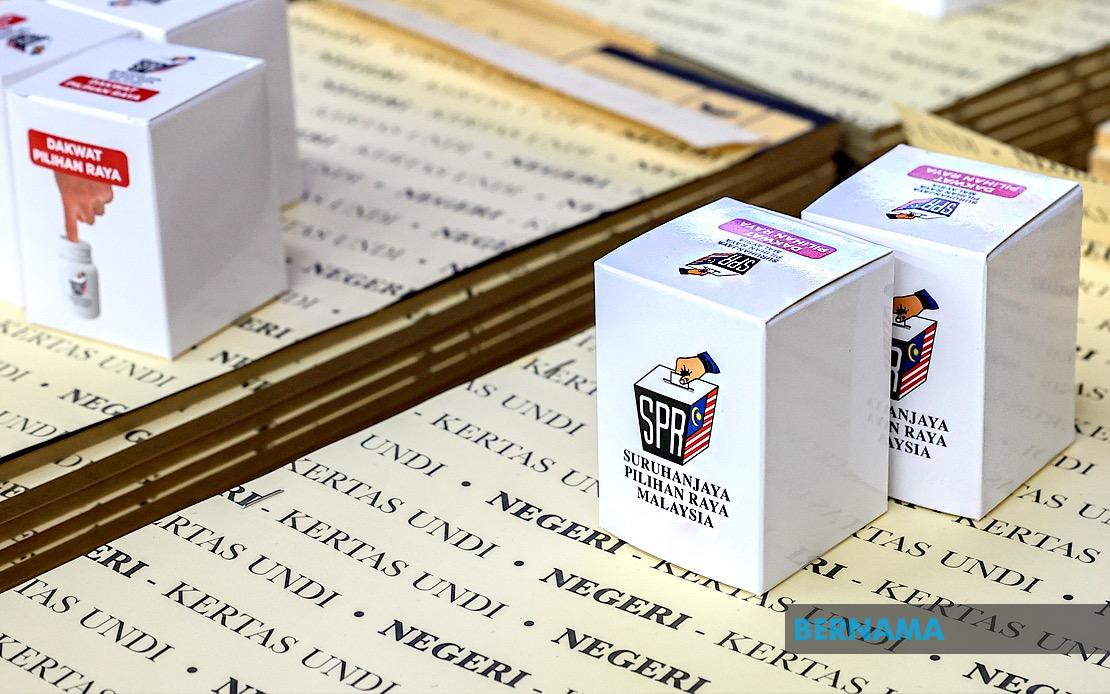
The Johor state election process enters its final stretch tomorrow with the commencement of early voting, when nearly 25,000 security force members and their families will cast their ballots across the state. This significant administrative exercise underscores the practical challenges of organising elections when large portions of the electorate cannot vote on standard polling day due to operational commitments. The security personnel involved—military members, police officers, and their spouses—represent a distinct demographic within the broader Johor electorate, and their early participation ensures that these essential workers can fulfil both civic and professional duties without conflict.
The early voting arrangement distributes these 24,751 registered voters between two categories: 12,041 individuals connected to military units and their families, and 12,710 from police departments and their families. This split reflects the geographical and operational spread of security forces across Johor, necessitating a coordinated logistics operation. For police personnel specifically, the framework distinguishes between those voting in person at centres and those exercising postal voting rights, a distinction that accommodates different operational schedules and posting locations. Among the 12,710 police-affiliated voters, 12,067 are expected to participate through physical polling, while the remaining 643 will lodge their votes through the postal system, demonstrating the nuanced arrangements required to maximise participation.
Facilitating this process demands substantial resource deployment. The election authorities have established 53 dedicated polling centres for police-affiliated voters and 11 for military personnel, totalling 64 venues statewide. All centres will open simultaneously at 8 am, creating a coordinated national effort that reflects the scale of preparation required. The police service alone has allocated 3,565 personnel to manage early voting operations, comprising 647 officers, 2,806 rank-and-file constables, and 112 civilian administrative staff. This substantial deployment reveals the complexity of election management, as security forces must simultaneously perform their regular duties whilst facilitating the voting process for their own members.
The responsibilities undertaken by deployed personnel extend beyond simple ballot supervision. Officers will manage security checkpoints, escort ballot boxes to secure locations, direct traffic around polling centres, conduct preventive patrols against criminal activity, staff operations rooms monitoring the exercise, observe designated strategic locations, and enforce law across affected areas. This layered approach addresses multiple concerns: preventing disruption, safeguarding electoral integrity, maintaining public order, and ensuring the safety of voters and officials. The assignment demonstrates how elections, whilst fundamentally civilian exercises, require police and military cooperation to function smoothly in practice.
Polling centre operations incorporate flexibility regarding closure times, recognising that voter turnout varies significantly by location. Centres will stagger their closures between noon and 6 pm based on geographical factors and registered voter numbers at each venue. Several smaller centres, including Buloh Kasap Police Station in Segamat, Tenang Police Station in Labis, and Bandar Penawar Police Station, each accommodating between six and 28 voters, will conclude voting by midday. This arrangement prevents inefficient staffing of largely empty centres while ensuring adequate time for busier locations to process all registered participants.
The polling centres with largest concentrations of early voters reveal geographic concentrations of security personnel. The Federal Reserve Unit Hall No. 2 at the Johor Police Headquarters constitutes the highest-capacity police centre, allocated 1,338 voters for the Stulang state constituency, whilst the KEMAS Preschool facility at the 6th General Operations Force Battalion in Bakri follows with 927 voters for Bukit Naning. These numbers suggest concentrated deployments of personnel at state headquarters and battalion commands, typical of security force organisational structures. Such concentration creates logistical focal points requiring particular attention to queuing management and operational efficiency.
Weather considerations add another layer to election planning in Malaysia's tropical environment. The Malaysian Meteorological Department has issued forecasts predicting morning rainfall affecting the districts of Batu Pahat, Muar, Pontian, and Tangkak, whilst other regions should experience fair conditions. Whilst rain alone rarely prevents voting, it can complicate logistics, affect voter comfort, and potentially impact turnout at outdoor or exposed polling areas. Election planners typically account for such meteorological factors through scheduling and facility preparation.
The early voting tomorrow precedes the principal election scheduled for Saturday, July 11, when the broader Johor electorate will determine the state government. This official polling day will see 172 candidates contesting across 56 state assembly constituencies. The concentration of candidates reflects competitive political conditions in Johor, Malaysia's southernmost peninsula state, which historically represents a contested battleground between major political coalitions. The early voting for security personnel represents merely the opening phase of an election that will involve hundreds of thousands of voters across diverse constituencies and demographic groups.
From a regional perspective, Johor's state election carries implications extending beyond the state itself. As Malaysia's most populous peninsula state and a major economic centre linking Malaysia to Singapore, Johor's political direction influences broader national dynamics. The state historically serves as a bellwether for electoral trends affecting federal politics, making the choices of its electorate significant for observers across Malaysia and Southeast Asia. The comprehensive preparations evident in early voting arrangements reflect authorities' commitment to conducting a credible election that maintains institutional legitimacy. The coordination between police, military, and election commission demonstrates the institutional capacity required for successful electoral management in a developing democratic context, offering relevant lessons for other states conducting periodic elections.

