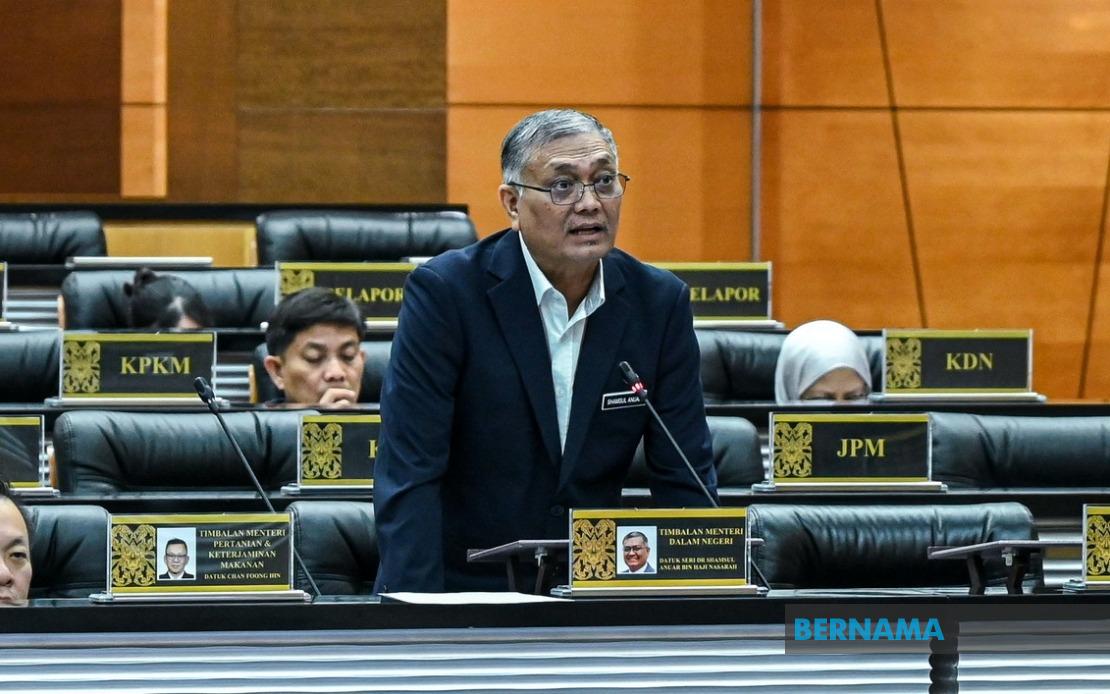
The Home Ministry has revealed a substantial backlog of unresolved citizenship matters in Sabah, with 3,640 applications still awaiting final determination as of May 31 this year. Among these, only 10 have successfully progressed to certification, pointing to a significant processing challenge within the immigration bureaucracy. Deputy Home Minister Datuk Seri Dr Shamsul Anuar Nasarah disclosed these figures during parliamentary questioning, highlighting what remains one of the most pressing administrative issues affecting statelessness and identity documentation in East Malaysia.
For late birth registrations specifically—a category that touches thousands of Sabahans who lack official proof of their arrival—the ministry reported considerably better progress. Among 3,270 applications submitted through this pathway, approximately 2,659 have received approval, while 611 cases continue under review. The distinction between these two processing streams underscores how the immigration system manages different categories of applicants and the varying complexities each presents to administrative decision-makers.
Recognising the urgency of the situation, the Home Ministry has embarked on a modernisation effort aimed at dismantling the procedural obstacles that have historically slowed citizenship determinations. The introduction of standardised operating procedures for applications under Article 15A, Article 15(2) and Article 19(1) of the Federal Constitution now stipulates a maximum processing window of one year from submission of complete documentation. This represents a concrete commitment to timeline certainty, though sceptics may note that even one year remains considerable for applicants whose legal status remains in limbo.
Expanding accessibility has formed another pillar of the ministry's reform strategy. Late birth registration applications, previously concentrated at select locations, can now be lodged at any National Registration Department office throughout Malaysia. This decentralisation particularly benefits rural and interior communities across Sabah where proximity to urban registration centres previously created practical barriers to application submission. The ministry has also incorporated these services into the Menyemai Kasih Rakyat programme, which extends government services into disadvantaged areas.
The Sabah Special Committee on Citizenship Status is scheduled to convene by late July or early August to deliberate on 1,018 pending applications. This institutional mechanism, operating at the state level, represents an important parallel track for resolution and suggests that Kuala Lumpur recognises the necessity of localised decision-making authority. Delegating late birth registration authority to Sabah-based NRD offices marks a significant operational shift, transferring decision-making power away from federal headquarters to personnel more familiar with local circumstances and genealogical patterns.
Accounting practices within the system itself have created apparent discrepancies that warrant clarification. The Deputy Home Minister explained that applications classified as 'approved' by the NRD represent only those where citizenship certificates have been physically issued and delivered to recipients. Applications that have received ministerial approval but remain awaiting certificate production continue to appear in the system as unresolved. This definitional distinction means the actual progress on applications may exceed headline figures, though it simultaneously reveals bottlenecks in the documentation production phase itself.
Underlying the accumulation of pending cases lie several structural impediments that the ministry has identified but not fully eliminated. Many applicants lack awareness of mandatory registration deadlines, creating retrospective complications decades after a person's birth. Family dysfunction, economic hardship and the absence of supporting documentation from hospitals or parents compound difficulties. These root causes—social and economic rather than merely bureaucratic—suggest that expanded procedures alone cannot resolve all cases without concurrent interventions addressing why families fail to complete timely registration.
Collaborative frameworks involving the NRD, state authorities, community intermediaries, healthcare institutions, educational establishments, welfare organisations and civil society groups now form the infrastructure through which the ministry pursues identification of undocumented individuals. This multi-stakeholder approach acknowledges that statelessness and documentation gaps cannot be addressed through immigration apparatus alone, requiring coordination across health, education and social service domains. Hospitals and schools, in particular, occupy strategic positions to identify children without official status and facilitate remedial registration.
For Malaysian and Southeast Asian contexts more broadly, Sabah's citizenship challenge illuminates a phenomenon extending beyond Malaysia's borders—the persistence of people existing outside formal citizenship frameworks despite residing in their countries of birth. Sabah's geographic position as a gateway state with porous borders and its historical experience of irregular migration have created conditions where documentation deficits accumulate across generations. The technical improvements undertaken by Kuala Lumpur offer a partial template for other Southeast Asian nations grappling with similar statelessness challenges, though they also reveal how significant institutional inertia persists even when political will for reform exists.
The Deputy Home Minister's responses to parliamentary questioning, including supplementary inquiries from Sandakan MP Vivian Wong Shir Yee, reflect growing public and legislative attention to citizenship processing. This scrutiny has arguably accelerated the ministry's reform timeline, pushing system modernisation beyond what bureaucratic routine might otherwise have achieved. Nevertheless, the volume of pending applications and the lengthy processing periods suggest that political priority and resource allocation remain insufficient to fully address demand within the modernised timeframe.

