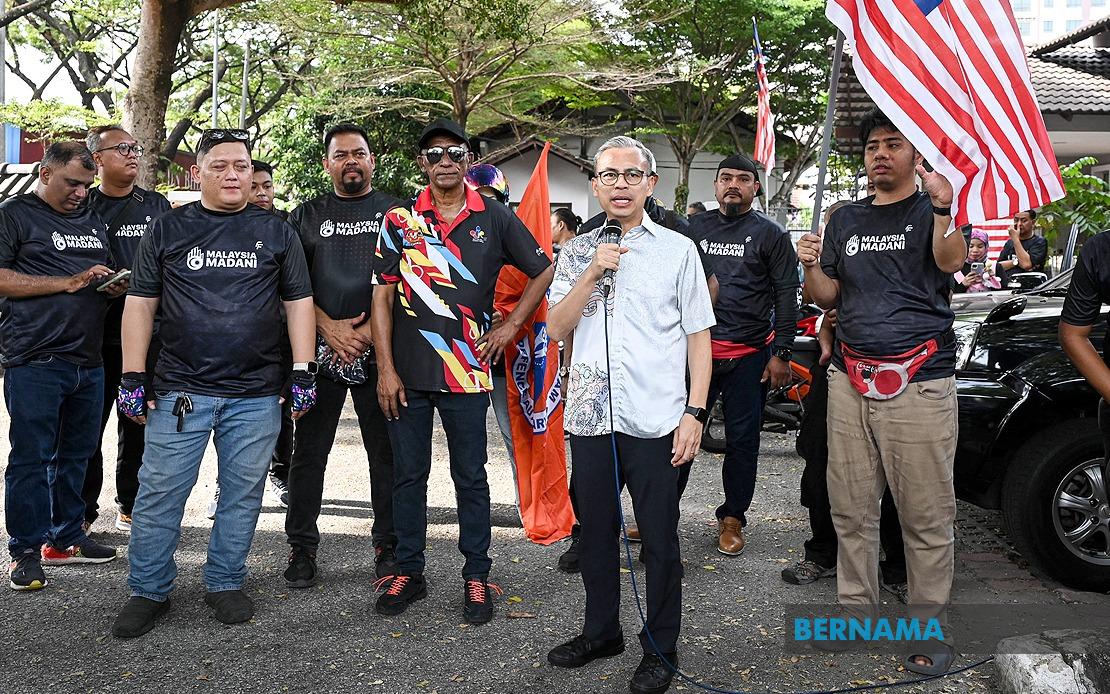
Nearly 300 motorcycle enthusiasts assembled in Lembah Pantai on the eve of Malaysia's Merdeka celebrations, riding together in a symbolic show of national pride and community cohesion. The Lembah Pantai Kembara Merdeka Convoy drew participants from across the federal territory constituency for an event that organizers framed as both a festive celebration and a statement about the multicultural fabric binding Malaysian society together.
Communications Minister Datuk Seri Fahmi Fadzil, who represents Lembah Pantai in parliament, positioned the convoy as an intentional effort to build bridges across ethnic and religious divides within his constituency. His remarks emphasized that Malaysia's strength derives from the ability of citizens from varied cultural backgrounds to work and live together harmoniously. The minister highlighted that residents of Lembah Pantai, a constituency known for its diverse population, exemplify this principle through their everyday interactions and friendships. By organizing the convoy, Fahmi sought to make this underlying social reality visible and celebratory rather than merely implicit.
The convoy's routing demonstrated careful planning to ensure representation across different neighborhoods within Lembah Pantai. The procession commenced at Taman Seri Sentosa before proceeding through five designated stops, including Kampung Pasir, IWK Eco Park, and Vista Angkasa in Kampung Kerinchi, concluding at Bangsar LRT station. This multi-stop approach allowed the event to reach various pockets of the constituency and maximize community participation beyond those able to ride for the entire route.
At each stopping point, organizers implemented a symbolic element designed to deepen the patriotic message. Participants distributed Jalur Gemilang flags to representatives of resident associations and community leaders, framing the gesture as a method of disseminating the spirit of nationalism throughout Lembah Pantai's neighborhoods. This decentralized distribution model meant that the celebration would extend beyond those directly attending the convoy, with community representatives taking the flags back to their respective areas.
Fahmi's public remarks during the event stressed continuity rather than treating the convoy as a one-off occasion. He expressed hope that the bonds of friendship and unity demonstrated on the day would persist through future community programming. The minister specifically called for residents to remain engaged with ongoing initiatives, ranging from community assistance projects to future Merdeka celebrations and other locally-organized activities. This framing positioned the convoy within a broader vision of sustained community engagement throughout the year.
The choice of motorcycles as the vehicle for this celebration carried its own symbolic weight. Motorcycling communities in Malaysia often transcend conventional social boundaries, bringing together individuals from different economic backgrounds, professions, and ethnicities around a shared passion. By leveraging this community's existing cohesion, organizers tapped into a constituency already practiced in cross-cultural collaboration and shared purpose.
The timing of the event, immediately before Merdeka Day on August 31, aligned the convoy with the national commemorative period when Malaysian identity and patriotism receive heightened public attention. However, the event's emphasis on local community building suggested that Fahmi and organizers understood Merdeka celebrations as opportunities to reinforce the practical, everyday unity that makes national independence meaningful at the grassroots level.
For Malaysian political observers, the convoy reflects a broader trend of senior government figures investing in hyper-local community engagement during festive periods. Rather than confining Merdeka observances to official ceremonies or large-scale public events, the Lembah Pantai initiative demonstrates an attempt to embed national celebrations within neighborhood-level activities. This approach potentially strengthens the connection between abstract notions of national unity and the lived experiences of residents in specific constituencies.
The event also underscores the Communications Ministry's apparent interest in channeling national messaging through local community organizations and grassroots activations. By working through resident representative councils and community groups, the ministry leveraged existing local structures rather than imposing top-down celebrations. This methodology may prove more effective at generating authentic community participation than centralized approaches to patriotic programming.
For Lembah Pantai residents, the convoy served multiple functions simultaneously: a festive Merdeka eve activity, a demonstration of parliamentary representation, and a visible affirmation of the constituency's multicultural character. The event's success in drawing nearly 300 participants suggests receptiveness to activities that celebrate Malaysian identity through familiar, locally-rooted formats rather than formal government ceremonies.
Looking forward, the success of the Lembah Pantai Kembara Merdeka Convoy may influence how other parliamentary constituencies approach national celebrations and community engagement. The model of using themed convoys or processions to activate existing community interest groups while promoting patriotic messaging offers a replicable template for other areas seeking to deepen local participation in national observances.
The convoy also arrives amid broader conversations in Malaysia about how to meaningfully affirm national unity in an increasingly pluralistic society. Rather than assuming unity occurs automatically or requires no reinforcement, the event reflects recognition that deliberate, well-designed community activities can strengthen the social bonds undergirding national cohesion. By bringing neighbors together around Merdeka celebrations, organizers invested in practical demonstrations of the unity that Malaysian independence was intended to secure.

