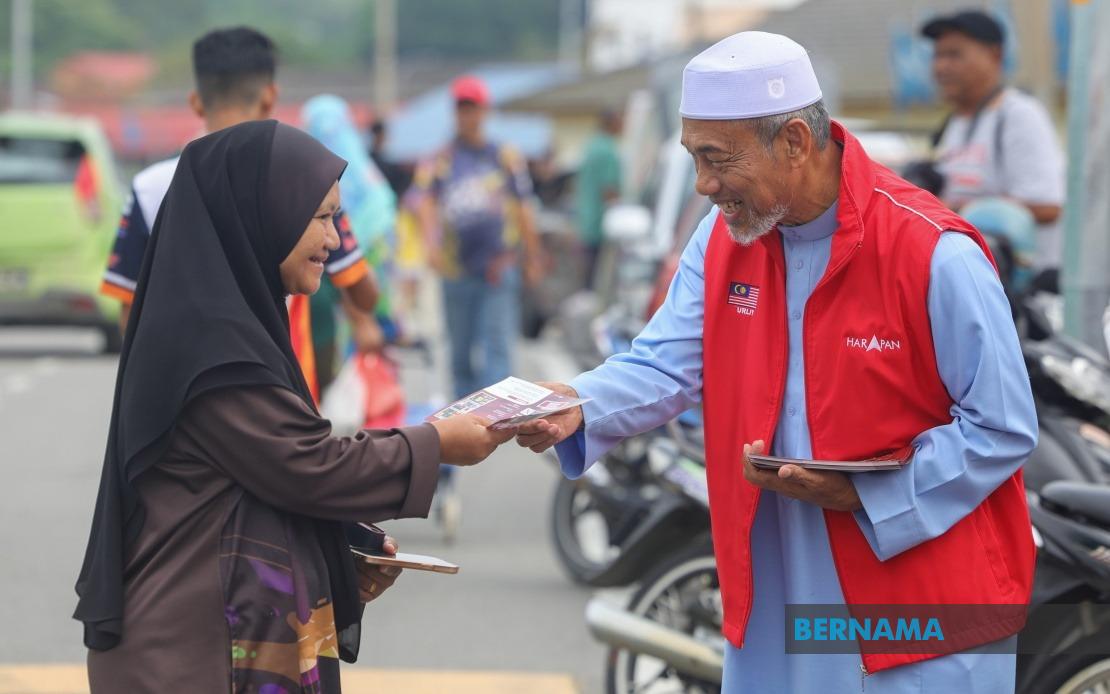
The 16th Negeri Sembilan State Election campaign has entered its second day with candidates across the political spectrum deploying intensive ground strategies to connect with voters. Political contenders are now executing packed daily schedules—some fitting nine separate campaign activities into a single day—as they seek to make their mark with the state's 889,490 registered voters ahead of the August 1 polling date. With 12 campaigning days remaining, the competition between Pakatan Harapan and Barisan Nasional is intensifying across constituencies, reflecting the high stakes involved in maintaining or shifting control of Malaysia's pivotal central state.
Menteri Besar Datuk Seri Aminuddin Harun, contesting the Linggi seat under the PKR banner as Negeri Sembilan's Pakatan Harapan chairman, exemplifies the relentless pace of modern Malaysian electoral engagement. His opening campaign day began with ritual observance at Masjid Jamek Pasir Panjang, followed by breakfast sessions with residents and sequential walkabouts across multiple residential areas including Pasir Panjang town, Taman Setia, Taman Kekatong, and several kampung settlements. Aminuddin's approach reflects a calculated strategy to layer symbolic gestures—prayers that underscore community values—with direct voter interaction, whilst maintaining his position as Port Dickson Member of Parliament. His messaging centered on translating personal encounters into administrative action, positioning constituent feedback as a driver for future development priorities across the broader state landscape.
The Pakatan Harapan campaign apparatus has mobilized prominently in urban centers and established residential zones. DAP secretary-general Anthony Loke, defending the Chennah seat, initiated his campaign through a high-visibility walkabout at Seremban Central Market, a traditional gathering point for working-class voters and small traders. His evening state election dinner programme signals the coalition's strategy of blending daytime grassroots visibility with evening social events that facilitate deeper conversations with community leaders and organizational representatives. Similarly, Kamarul Ariffin Wafa, PH's Seri Menanti candidate, has structured an ambitious eight-programme daily schedule encompassing market visits, town center engagements, and what local campaign literature describes as interactive community sessions. These efforts suggest a coalition focused on translating electoral momentum from recent national developments into state-level gains.
The grassroots campaign methodology employed across multiple constituencies demonstrates how Malaysian electoral politics has evolved toward direct constituent engagement. Yaacob Mahmood, PH's Serting candidate, has adopted what campaign advisors term an "informal programme" strategy, positioning breakfast meetings and business premise visits as opportunities for authentic community dialogue. This framing contrasts with past election cycles dominated by formal town halls and staged announcements, instead emphasizing the candidate's accessibility and willingness to engage voters on their own terms and in familiar settings. The Felda Raja Alias 3 settlement and Bandar Seri Jempol commercial areas represent distinct demographic groups—rural development scheme residents and urban entrepreneurs respectively—suggesting targeted outreach rather than undifferentiated mass campaigning.
Barisan Nasional's campaign structure reveals a parallel intensity, though with distinct organizational emphasis. Incumbent Rantau assemblyman Datuk Seri Mohamad Hasan, known colloquially as "Tok Mat" and serving as BN deputy chairman, centered his campaign activities around the Barisan Nasional Polling District Centre in Mambau. This institutional anchoring contrasts with the coalition movement approach favored by some Pakatan Harapan candidates, suggesting BN's reliance on existing party infrastructure and established supporter networks. The selection of Taman Kelab Tuanku as a campaign location indicates deliberate targeting of organized community groups and long-standing party supporters, a traditional BN strength in Negeri Sembilan's established residential areas.
Negeri Sembilan UMNO's campaign coordination through Datuk Seri Jalaluddin Alias reflects the coalition's effort to mobilize traditional constituencies through culturally resonant programming. The Pertang youth sepak takraw tournament combined sports patronage with youth engagement, whilst simultaneous Orang Asli community visits in Kampung Utara Putra addressed indigenous voters often responsive to incumbent government attention and development rhetoric. This dual-track approach across different demographic communities typifies BN's historical strength in managing diverse electoral constituencies through tailored messaging and targeted community investment signaling. The sequential timing of these engagements within a single campaign day suggests coordinated messaging frameworks operating across multiple voter segments simultaneously.
The electoral timeline itself shapes campaign intensity and strategy allocation. The Negeri Sembilan State Legislative Assembly's dissolution on June 5 established August 1 as polling day with early voting on July 28. This compressed campaign period—shorter than some federal election windows—concentrates candidate activity and media attention into a narrower timeframe, elevating the stakes of daily messaging and ground presence. Early voting provisions for military personnel and police officers (totaling over 22,000 eligible voters) create distinct sub-campaigns targeting these constituencies, requiring candidates to adjust schedules around military installation access and police administrative timelines. The electorate composition of 867,151 ordinary voters alongside uniformed personnel voters introduces complexity into campaign targeting and messaging prioritization.
The 889,490 registered voters eligible to participate represent approximately 55 percent of Negeri Sembilan's population, indicating both the state's economic development trajectory and demographic composition. These voters distribute across state constituencies ranging from urban Seremban districts to rural constituencies like Serting, where plantation and smallholder agricultural communities predominate. The geographical and economic diversity demands differentiated campaign messaging—urban candidates emphasizing infrastructure and services, rural candidates focusing on agricultural support and smallholder development, and all candidates addressing the cost-of-living challenges affecting both constituencies. The intensive daily schedules described across multiple candidates suggest recognition that modern Malaysian electoral competition requires presence across multiple community settings rather than reliance on mass media or centralized campaign events.
The implications of these campaign strategies for Malaysian electoral politics extend beyond Negeri Sembilan's immediate competition. The state represents a critical testing ground for coalition performance and messaging resonance in post-2018 Malaysian politics. Pakatan Harapan's governance of Negeri Sembilan since 2018 faces evaluation based on tangible development outcomes and constituent satisfaction, making ground-level candidate credibility and direct voter engagement crucial to electoral retention. Barisan Nasional's comeback effort across Malaysian states similarly hinges on demonstrating renewed commitment to constituent service and responsive governance. The intensive grassroots campaigning across both coalitions suggests recognition that electoral competition at the state level increasingly pivots on constituent perception of candidate accessibility and responsiveness rather than purely on national political narratives or coalition brand identity.
Looking forward toward August 1, sustained campaign momentum appears likely as candidates and their support networks maintain these elevated activity levels throughout the remaining campaign period. The schedules described—particularly candidates fitting nine daily programmes into their calendars—establish benchmarks against which voter evaluation of candidate commitment and work ethic occurs. Malaysian voters increasingly expect personal candidate interaction and direct engagement before casting ballots, making these grassroots strategies not optional additions to campaign architecture but rather central to electoral viability. The Negeri Sembilan election outcome will likely reflect not merely national political currents but the granular effectiveness of ground-level campaign execution across multiple constituencies simultaneously.

