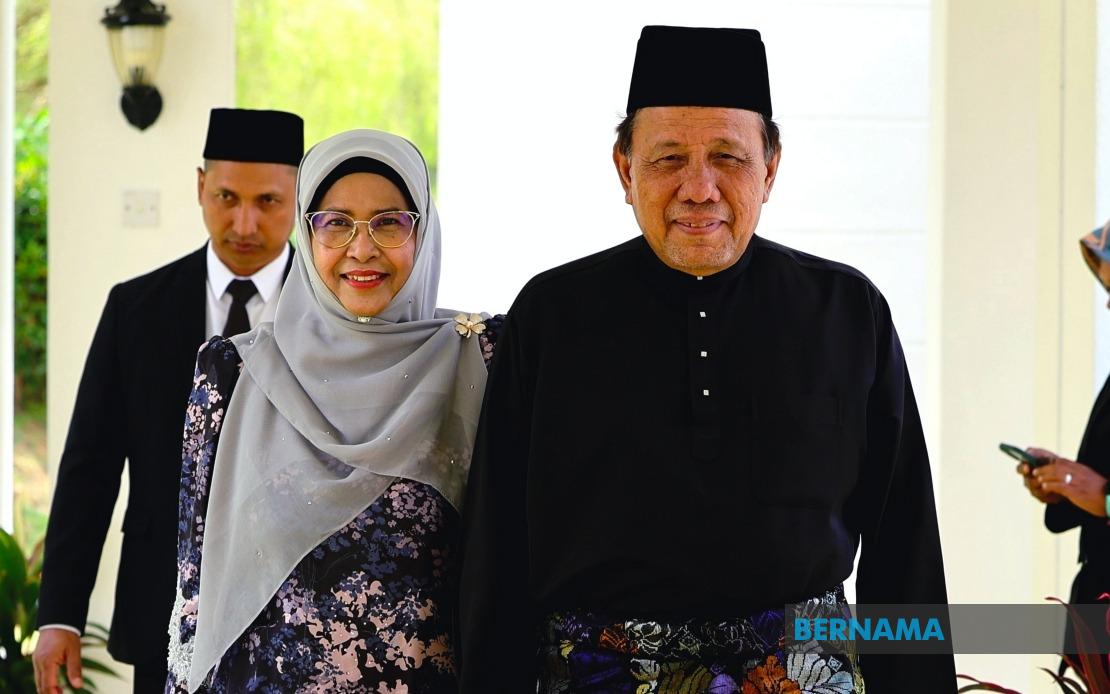
Negeri Sembilan has been granted an additional public holiday on August 3 as the newly installed Menteri Besar Datuk Ismail Lasim marks his first official decision in office. The announcement, made during his inaugural press conference at Kuala Pilah following his swearing-in ceremony before Yang Dipertuan Besar Tuanku Muhriz Tuanku Munawir, represents both a gesture of gratitude and a practical measure to allow residents and poll workers to recover from the rigours of the recently concluded state election.
Ismail, 67, framed the decision as a token of appreciation extended to all segments of Negeri Sembilan society who participated in or supported the peaceful conduct of the 16th state election, which concluded on August 2. The Menteri Besar emphasised that the declaration carried the explicit approval of Tuanku Muhriz, underscoring the constitutional significance of the decision and the collaborative nature of governance in the state. He expressed gratitude to the Yang Dipertuan Besar not only for consenting to the occasional holiday but also for granting his appointment to the highest executive position in the state.
The timing of the announcement reflects the exhaustion evident across the state in the aftermath of election day. Ismail acknowledged that many citizens and officials remained fatigued from the electoral process and required respite. By designating August 3 as a public holiday, the state government provided immediate relief while demonstrating responsiveness to the conditions on the ground. This approach differs from the typical pattern of election-related celebrations, which often occur weeks later; instead, it capitalises on the momentum of victory and the need for rest to reinforce goodwill.
The electoral results that precipitated Ismail's appointment reflected a decisive outcome for the governing coalitions. Barisan Nasional claimed 18 of the State Legislative Assembly's seats, while coalition partner Perikatan Nasional secured seven seats, yielding a combined total that exceeds the two-thirds supermajority threshold. This substantial mandate gives the new state government considerable legislative flexibility and reduces the likelihood of political instability in the near term. The 36-seat contest, contested by 103 candidates, produced clear winners but also demonstrated the continuing relevance of opposition forces within Negeri Sembilan's political ecosystem.
For Malaysian observers, the Negeri Sembilan election carries broader implications for the stability of coalition politics at the state level. The Barisan Nasional-Perikatan Nasional partnership represents a relatively recent experiment in Malaysian federalism, and the decisive result suggests that voters have embraced this arrangement. The magnitude of the two-thirds majority offers protection against the defections and horse-trading that have destabilised other state administrations in recent years. Ismail's ability to move swiftly on the public holiday decision demonstrates that the new government possesses both the mandate and the internal cohesion necessary to govern effectively.
The role of Tuanku Muhriz in this process merits attention within Malaysia's constitutional framework. The Yang Dipertuan Besar's consent for both Ismail's appointment and the public holiday declaration illustrates the continuing importance of the constitutional monarchy in state-level governance. While the royal sanction for the Menteri Besar's appointment follows established procedure, the granting of the additional holiday represents a more discretionary exercise of royal authority. This interaction underscores that state governance in Malaysia remains a collaborative enterprise between elected representatives and the institution of the monarchy, with clear lines of deference and mutual respect.
The broader context of the Negeri Sembilan election also reflects Malaysia's ongoing transition in state politics. The state has witnessed competitive elections and changes in administration over recent years, indicating that electoral competition remains robust. However, the decisive margin achieved by the BN-PN alliance in this instance suggests that many Negeri Sembilan voters have made a deliberate choice for continuity and coalition stability. This preference aligns with patterns observed in other recent Malaysian state elections, where voters have signalled demand for coherent governance rather than fragmented administrations.
For the business community and residents of Negeri Sembilan, the immediate impact of the public holiday is straightforward: August 3 will function as a day of rest with attendant effects on commerce and services. However, the decision also carries symbolic weight. By prioritising rest and acknowledgment of citizen participation, the Ismail administration positioned itself as attuned to public sentiment and responsive to election-related fatigue. This early positioning may influence public perception of the new government as it settles into its five-year tenure. First impressions in electoral politics often prove durable, and the public holiday announcement projects an image of a government that values both efficiency and inclusivity.
The swearing-in ceremony at Istana Besar Seri Menanti marked the formal transition of executive authority in Negeri Sembilan. As Ismail took his oath before the Yang Dipertuan Besar, he became responsible for implementing the mandate granted by voters across the state's 36 constituencies. The immediate issuance of the public holiday announcement suggests that the new administration plans to move quickly on legislative and administrative priorities. The tone set during the first press conference—emphasising gratitude, constitutional propriety, and attention to public welfare—may serve as a template for the administration's broader approach to governance.
For Southeast Asia observers monitoring Malaysian federalism, the Negeri Sembilan election and its immediate aftermath offer insights into how coalition politics function at the subnational level. The ability of the BN-PN partnership to secure a supermajority and implement decisions without apparent internal friction suggests that the alliance has achieved sufficient ideological or pragmatic alignment to govern coherently. By contrast, other Malaysian state administrations have foundered when coalitions failed to maintain internal discipline or when minority status forced reliance on independent assemblymen. The Negeri Sembilan result therefore reinforces that clear electoral mandates, properly structured coalitions, and constitutional frameworks can produce stable governance.
Looking ahead, the initial period of Ismail's tenure will likely focus on consolidating the coalition's mandate and establishing working relationships with Perikatan Nasional partners. The public holiday decision serves as a low-cost but politically effective opening move in this process. By acknowledging both the electoral victory and the need for rest, Ismail has demonstrated that the new administration understands its constituency while respecting constitutional protocols. As the government progresses into substantive policymaking, this foundation of apparent competence and attentiveness may prove valuable in building public support for more contentious decisions.

