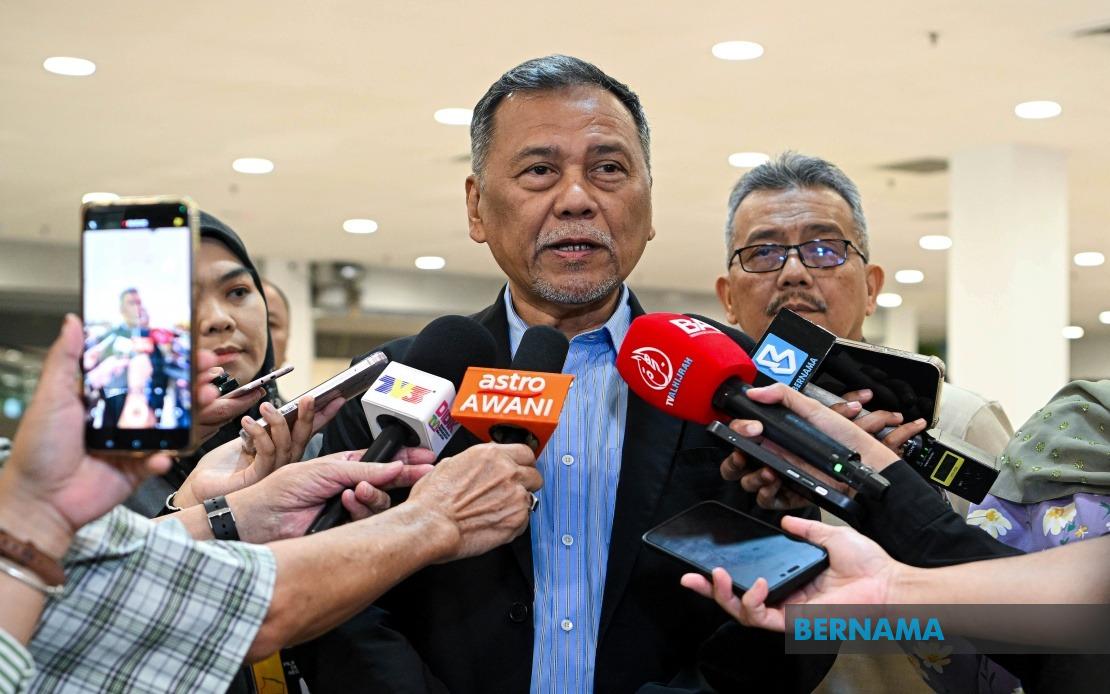
Preparations for the Negeri Sembilan state election are advancing smoothly with the Election Commission reporting that 464 nomination forms have been distributed to prospective candidates, though only 70 have secured their candidacy by submitting the required deposit payments. Election Commission chairman Datuk Seri Ramlan Harun made the disclosure in Seremban following an inspection of nomination centres, emphasizing that contestants wishing to participate should complete their financial commitments without delay to avoid last-minute complications during tomorrow's formal nomination process.
The urgency underscores the tight timeline facing both the electoral body and candidates seeking to contest the 36 state seats at stake. With nomination day scheduled for July 18, candidates who have acquired forms but not yet paid their deposits face a narrow window to finalize their participation. Ramlan's appeal for early payment reflects a standard election administration concern: the nomination process, condensed into a single day starting at 9 am and closing one hour later, requires all paperwork to be in order to prevent bottlenecks that could delay the announcement of eligible candidates by returning officers.
The Election Commission has taken a notably different approach to managing nominations compared to the recent Johor state election. Rather than establishing separate nomination centres within each state constituency, the Negeri Sembilan polls will utilize a centralized system anchored to the eight parliamentary constituencies across the state. This structural shift aims to improve coordination and accommodate local administrative requirements, reflecting lessons learned from previous electoral exercises and the need to balance efficiency with accessibility for candidates distributed across the state's diverse geography.
The scale of the nomination infrastructure underscores the complexity of managing a multi-seat election. A total of 761 Election Commission officers will be deployed across eight nomination centres tomorrow to oversee the process and ensure compliance with electoral procedures. This substantial deployment reflects the commission's commitment to maintaining order and professionalism during a critical phase that sets the foundation for the broader campaign and eventual polling day. The extensive rehearsals conducted at all nomination centres throughout the state overnight demonstrate the commission's determination to execute the process without hitches.
Security and conduct remain paramount considerations as the nomination phase approaches. Datuk Seri Ramlan issued a clear reminder to political parties, candidates, and their supporters that provocative behavior would not be tolerated, framing the appeal within the broader imperative to maintain harmony throughout the electoral process. The instruction that candidates arrive early to avoid congestion reflects practical experience from previous elections, where last-minute rushes have occasionally created friction. Political parties have also been reminded to adhere strictly to election regulations and avoid common violations during the campaign period, signaling the commission's zero-tolerance stance toward infractions.
The eligible voter base for the Negeri Sembilan election comprises 889,490 registered voters according to the electoral roll updated on June 4, 2026. This constituency includes 867,151 ordinary voters, alongside 16,884 military personnel and their spouses, and 5,455 police personnel who are classified as early voters. The provision for early voting on July 28, five days before the general polling day on August 1, accommodates the needs of security force members and ensures their participation despite operational requirements. The relatively substantial early voter contingent underscores the security sector's significant presence in the state.
The dissolution of the Negeri Sembilan State Legislative Assembly on June 5 initiated this electoral cycle, following the consent of Tuanku Muhriz Tuanku Munawir, the Yang Dipertuan Besar of Negeri Sembilan. The dissolution came after months of political maneuvering and represents a moment of democratic renewal for the state, which operates within Malaysia's constitutional monarchy framework. The election will determine which coalition governments—whether Pakatan Harapan, Barisan Nasional, Perikatan Nasional, or potentially independent forces—will hold sway in the state legislature for the next term.
The previous election in 2023 established a competitive political landscape in Negeri Sembilan that persists heading into this contest. Pakatan Harapan secured 17 of 36 seats, claiming the largest bloc but falling short of a simple majority, while Barisan Nasional captured 14 seats and Perikatan Nasional won five, with an independent candidate also holding one seat. This distribution reflects the state's status as genuinely contested political territory, where outcomes cannot be taken for granted and where diverse coalitions possess realistic pathways to power. The intervening years have witnessed shifts in national political dynamics that will inevitably reverberate in the state contest.
The nomination process serves as a crucial electoral checkpoint, filtering prospective candidates into formally recognized contenders and establishing the final slate from which voters will choose. Beyond the administrative mechanics, nomination day generates its first major signals about candidate confidence, party strategizing, and the competitive intensity of various state constituencies. The relatively modest number of confirmed candidates at this stage suggests that many prospective hopefuls may still be deliberating their participation or awaiting party directives, a common pattern in Malaysian elections where party machinery often coordinates decisions hierarchically.
For Malaysian observers and regional analysts monitoring electoral trends, the Negeri Sembilan election holds particular significance as an early barometer of political sentiment in a state that has proven unpredictable in recent cycles. The state's diverse demographic composition, spanning urban centres like Seremban with more rural and semi-rural areas, creates a microcosm of Malaysian electoral dynamics. Results from Negeri Sembilan will likely influence perceptions of momentum and viability among competing coalitions, potentially affecting strategic calculations for future electoral contests at the federal or other state levels. The election also tests the Election Commission's capacity to manage nominations and subsequent voting processes smoothly, an operational consideration relevant across Malaysia's electoral infrastructure.

