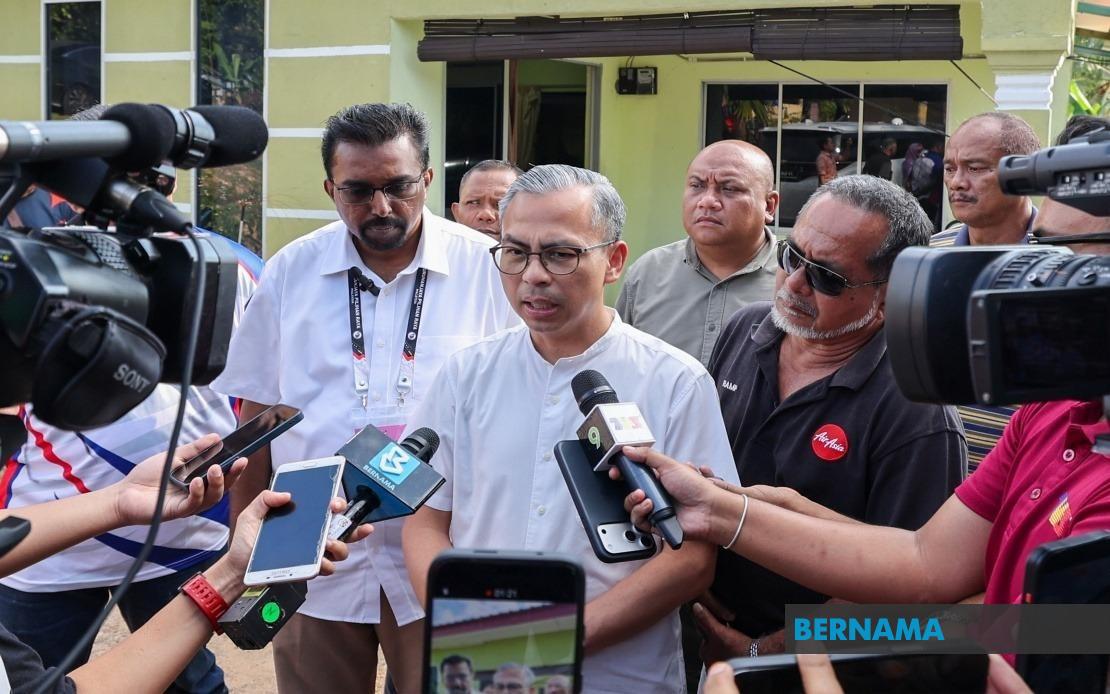
The Negeri Sembilan state election campaign is unfolding without significant disruption on social media platforms, according to Communications Minister Datuk Seri Fahmi Fadzil, who highlighted that the Malaysian Communications and Multimedia Commission has logged only 16 complaints since campaigning commenced. Speaking during the Ziarah Kasih MADANI programme at Felda Palong 1 on July 23, Fahmi indicated that the regulatory environment remains stable as voters prepare to cast ballots on August 1, with early voting set for July 28.
The breakdown of complaints reveals that the vast majority relate to conventional infrastructure concerns rather than deliberate misinformation campaigns. Among the 16 complaints received by MCMC, fourteen centred on telecommunications network disruptions, while the remaining two involved the creation of fraudulent social media accounts. This distribution suggests that technical service failures rather than coordinated disinformation efforts have dominated public concerns during the initial phase of the electoral campaign. Fahmi's characterisation of the situation as "under control" reflects confidence in both the regulatory machinery and the general conduct of online discourse during this critical political period.
Yet officials remain vigilant about the trajectory of the campaign in its final stretch. Fahmi cautioned that the culminating 72 to 96 hours before polling day typically witness a marked escalation in online activity across multiple platforms and from diverse political actors. This anticipated surge presents a particular vulnerability window for the spread of false information, misleading content, and coordinated campaigns designed to sway last-minute voter sentiment. The minister's explicit concern about potential "floods of false information" during these closing hours underscores the challenge of maintaining electoral integrity when time pressures coincide with heightened digital engagement.
To address potential violations during the campaign, Fahmi called upon citizens to take an active role as custodians of electoral fairness. Members of the public who identify content breaching election regulations or contravening the guidelines established by social media platform operators should report such material directly to the respective platforms. Should these companies fail to respond appropriately, complainants are encouraged to escalate matters to MCMC, creating a multi-layered reporting mechanism designed to catch problematic content before it achieves wide circulation. This distributed responsibility model reflects the understanding that regulating digital spaces requires participation from users, platforms, and government bodies working in concert.
Beyond the social media landscape, connectivity infrastructure emerged as another pressing concern requiring immediate intervention. During his visit to Felda Palong 1, Fahmi identified gaps in internet coverage that, while not pervasive within the settlement's residential zones themselves, created dead zones along the main access roads serving the various schemes. He characterised this as an unacceptable situation demanding urgent remediation, framing reliable connectivity as a fundamental public service obligation rather than a luxury amenity. The minister's observation that "wherever there is a road, there should be internet access" articulates a principle that extends beyond campaign considerations to encompass broader developmental and safety imperatives for rural communities.
The telecommunications infrastructure deficit carries implications beyond mere electoral or business convenience. Poor connectivity along key access routes creates genuine safety hazards during emergencies, when residents may need to summon assistance or receive critical information. This dimension elevated the issue in Fahmi's framing from a consumer service problem to a public safety matter warranting accelerated resolution. The urgency he communicated to MCMC reflected this understanding that rural connectivity gaps represent a legitimate governance failure requiring corrective action before the election concludes.
Understanding the persistence of coverage issues requires examining the complex landscape of Malaysia's telecommunications industry. Despite the signature of a memorandum of understanding on network sharing among telecommunications companies in the previous year, implementation progress has lagged considerably. The theoretical framework for enhanced coordination exists, yet practical deployment of resources across competing commercial interests and technical constraints has proceeded slowly. This gap between regulatory intention and operational execution characterises a common challenge in infrastructure policy across the region, where formal agreements often precede meaningful on-ground changes by months or years.
Authorities have identified multiple pathways to accelerate connectivity improvements across underserved areas. The construction of new telecommunications towers represents the conventional approach, though capital requirements and site identification complexities slow this solution. Simultaneously, optimisation of existing infrastructure offers faster gains, as underutilised or inefficiently deployed assets can be reconfigured to extend coverage. Notably, officials have also begun exploring interim measures through satellite services such as Starlink, reflecting growing recognition that traditional terrestrial networks alone may not efficiently serve sparsely populated areas. This pragmatic pluralism in technological solutions acknowledges that no single approach satisfies all geographical and demographic contexts.
Telecommunications companies have received additional directives to strengthen their customer feedback mechanisms, particularly by incorporating artificial intelligence tools that enable users to monitor complaint status in real time. This modernisation of the complaints process addresses a longstanding frustration whereby consumers lacking visibility into whether their issues are receiving attention often feel ignored by service providers. By deploying AI systems to provide transparent tracking, companies can demonstrate responsiveness while generating valuable data about recurring problems, potentially identifying systemic issues requiring infrastructure investment rather than individual case resolution.
The Negeri Sembilan election campaign thus encompasses two interconnected narratives about governance and regulation in the digital age. First, it demonstrates that with appropriate monitoring mechanisms and public participation, authorities can maintain reasonable order within social media environments, preventing coordinated disinformation operations from completely overrunning the campaign discourse. Second, it illustrates how electoral campaigns shed light on broader infrastructure deficits affecting communities, particularly in rural areas where telecommunications access remains uneven. Fahmi's approach of addressing both dimensions simultaneously—by both monitoring digital content and pressing for physical connectivity improvements—reflects a holistic understanding that electoral integrity depends not merely on regulating information flows but also on ensuring that all citizens possess the means to access information and participate fully in the democratic process.

