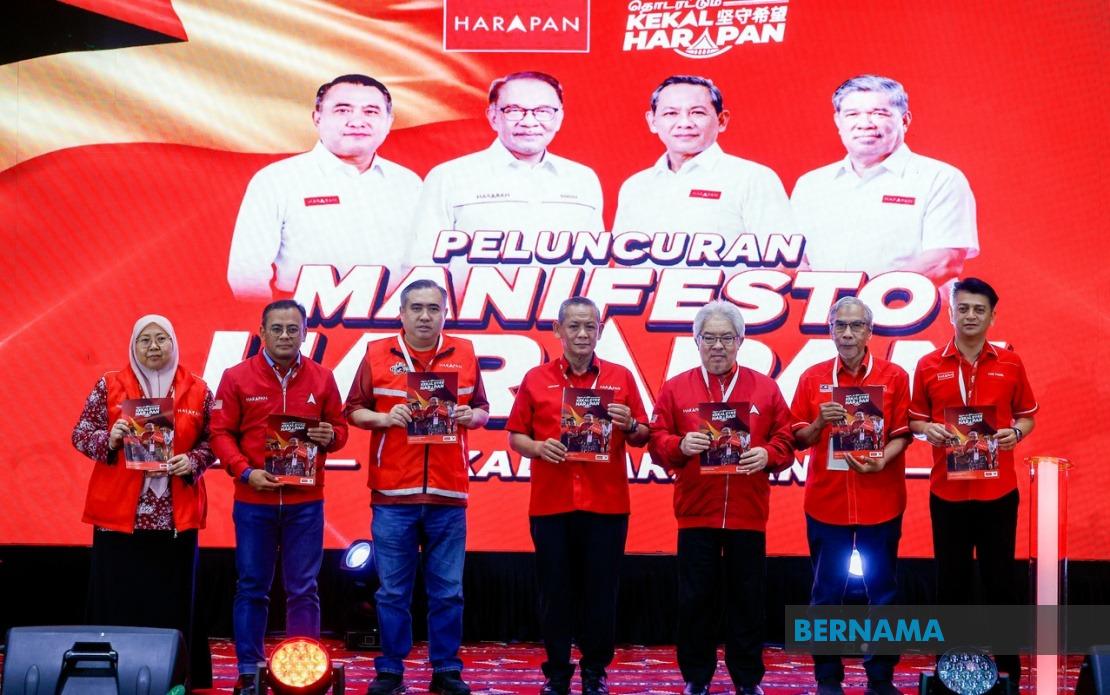
Pakatan Harapan is positioning itself as a practical governing force in the upcoming Negeri Sembilan state election, with coalition leadership insisting that its manifesto represents actionable commitments built on measurable track record rather than aspirational political language. Datuk Seri Aminuddin Harun, who serves as both state coalition chairman and Menteri Besar, made this distinction clear when launching the coalition's election platform in Seremban, arguing that voters should evaluate promises based on proven capacity to deliver rather than rhetorical appeal.
The timing of this messaging reflects a broader strategic shift among PH leaders across Malaysia. Rather than presenting an entirely new policy agenda, the coalition is deliberately anchoring its campaign narrative in continuity and incremental improvement of existing programmes. This approach carries particular weight in Negeri Sembilan, where PH has held state power for eight consecutive years, providing a concrete foundation for claims about performance-based governance. By framing the next five-year term as a consolidation and enhancement phase rather than a radical transformation period, the coalition seeks to reassure voters concerned about policy instability while simultaneously highlighting achievements that might otherwise remain invisible in election campaigns focused on future promises.
Aminuddin's emphasis on "ensuring these plans become a reality" over the coming five years underscores a recognition that Malaysian voters increasingly demand substantive proof of implementation capacity. The distinction between formulating initiatives and executing them effectively has become central to electoral competition, particularly as citizens face tangible pressures from inflation, housing affordability, and service delivery gaps. In this context, PH's strategy of highlighting eight years of governing experience serves as implicit counterargument to opposition parties that may lack comparable administrative records in Negeri Sembilan.
The manifesto theme "Negeri Sembilan Kekal Harapan" (Negeri Sembilan Stays With Harapan) encapsulates this continuity narrative while framing the election as fundamentally about maintaining stability and momentum. The ten key commitments outlined in the platform have not been detailed in available reporting, but the emphasis on "building a strong foundation for Negeri Sembilan that can benefit future generations" suggests focus on long-term structural development rather than short-term populist gestures. This intergenerational framing carries particular resonance in Malaysian politics, where demographic concerns about youth employment and young family formation continue to shape electoral priorities.
For regional observers and Malaysian business stakeholders, this positioning reflects how coalition politics has evolved since Pakatan Harapan's federal government took office in 2018 and subsequently lost power in 2020. The intervening years of governance experience, combined with subsequent return to federal office in 2022, have matured PH's approach to campaign messaging. Rather than running primarily as a reform movement defined by opposition to incumbent corruption, the coalition must now compete partly on grounds of administrative competence, budget execution, and visible project delivery.
Negeri Sembilan presents particular strategic importance in this context. As a relatively compact state with approximately 1.15 million residents, it functions as a testing ground where governance outcomes become visible to voters more readily than in larger jurisdictions. State-level services including education quality, infrastructure maintenance, public health provision, and licensing efficiency operate at scale where individual citizens can form empirical judgments about administration quality. These factors explain why Aminuddin's focus on "continuing existing initiatives while enhancing them" carries substantive weight beyond mere campaign rhetoric.
The coalition chairman's own positioning as Menteri Besar contesting the Linggi state seat personalizes this narrative about deliverable governance. His electoral fortunes become directly tied to voter assessment of administrative performance under his stewardship, creating alignment between coalition messaging and his individual political survival. This tight coupling of leadership accountability to campaign promises potentially strengthens voter confidence that commitments will be pursued with urgency, though it simultaneously increases personal political risk if implementation falters after election victory.
For opposition parties in Negeri Sembilan, PH's emphasis on proven delivery and incremental improvement presents both challenge and opportunity. Opposition forces must either demonstrate superior capacity to deliver transformational change that PH has supposedly exhausted over eight years, or convince voters that existing initiatives require fundamental restructuring rather than enhancement. The debate between continuity and change thus becomes central to electoral competition, with each coalition articulating distinct theories about what voters prioritize in state-level governance.
The manifesto's framing also carries implications for broader Malaysian federalism and centre-state relations. As state governments increasingly function as laboratories for policy experimentation and service delivery innovation, Negeri Sembilan's electoral outcome may influence thinking about how other states present their administrative records during upcoming elections. If PH's emphasis on deliverable governance rather than radical promises succeeds electorally, other coalition-governed states may adopt similar messaging strategies, subtly shifting Malaysian campaign discourse away from sweeping transformation narratives toward pragmatic incremental improvement.

