The 16th Negeri Sembilan State Election, scheduled for August 1 with early voting on July 28, will present Malaysian voters with one of the most fragmented political landscapes in the state's recent history. The distribution of contest formats across the 36 available seats reveals a dramatic shift toward multi-candidate races, fundamentally reshaping how voters will approach their electoral choices and potentially affecting strategic voting patterns across the state.
Among the 36 legislative assembly constituencies in contention, the structural composition has undergone substantial realignment since the 2023 state polls. Straight fights between two candidates will occur in just 11 seats, representing a sharp 59 percent drop from the 27 such contests two years ago. This contraction signals a broader fragmentation of Malaysia's political landscape, as smaller parties and independent movements have intensified their push into traditional strongholds previously dominated by the major coalitions. The corresponding expansion in multi-candidate contests reflects broader trends across Southeast Asia, where electoral competition increasingly involves more than two major political forces.
Three-cornered contests will dominate the ballot, occupying 21 of the 36 seats—a three-fold increase from the seven such races in 2023. This proliferation of three-way battles introduces significant new complexities for voters who must now navigate more nuanced choices between Pakatan Harapan, Barisan Nasional, Perikatan Nasional, and various smaller parties. Constituencies where three candidates compete often produce unpredictable outcomes, as vote-splitting can determine winners with reduced overall support margins compared to earlier binary contests. The Negeri Sembilan electorate will need to carefully consider how their votes distribute across competing visions, given that plurality voting in state elections does not require majority support to secure a seat.
Two constituencies will witness four-way contests, introducing yet another layer of electoral complexity. Jeram Padang will feature incumbent Datuk Mohd Zaidy Abdul Kadir of Barisan Nasional defending against challengers from Pakatan Harapan, Bersatu, and Parti Orang Asli Malaysia. The Rahang state seat presents an equally fractured contest, with incumbent Siaw Meow Keong from Pakatan Harapan facing opposition from Barisan Nasional, Parti Sosialis Malaysia, and Bersatu. These four-way races introduce uncertainty for established parties, as support could fragment significantly among candidates offering distinct policy platforms and representing different demographic constituencies.
Most remarkably, two constituencies will see five-cornered contests, a phenomenon absent entirely from the 2023 Negeri Sembilan state election. Nilai will pit incumbent J. Arul Kumar of Pakatan Harapan against competitors from Barisan Nasional, Bersatu, Barisan Jemaah Islamiah Se-Malaysia, and an independent candidate. Sri Tanjung presents a similarly crowded ballot, with incumbent Datuk Dr G. Rajasekaran from Pakatan Harapan contending against candidates from Barisan Nasional, Bersatu, and two independent candidates. Five-way contests create scenarios where winning candidates might secure office with significantly less than half the available votes, raising questions about electoral legitimacy and representativeness in a fragmented political environment.
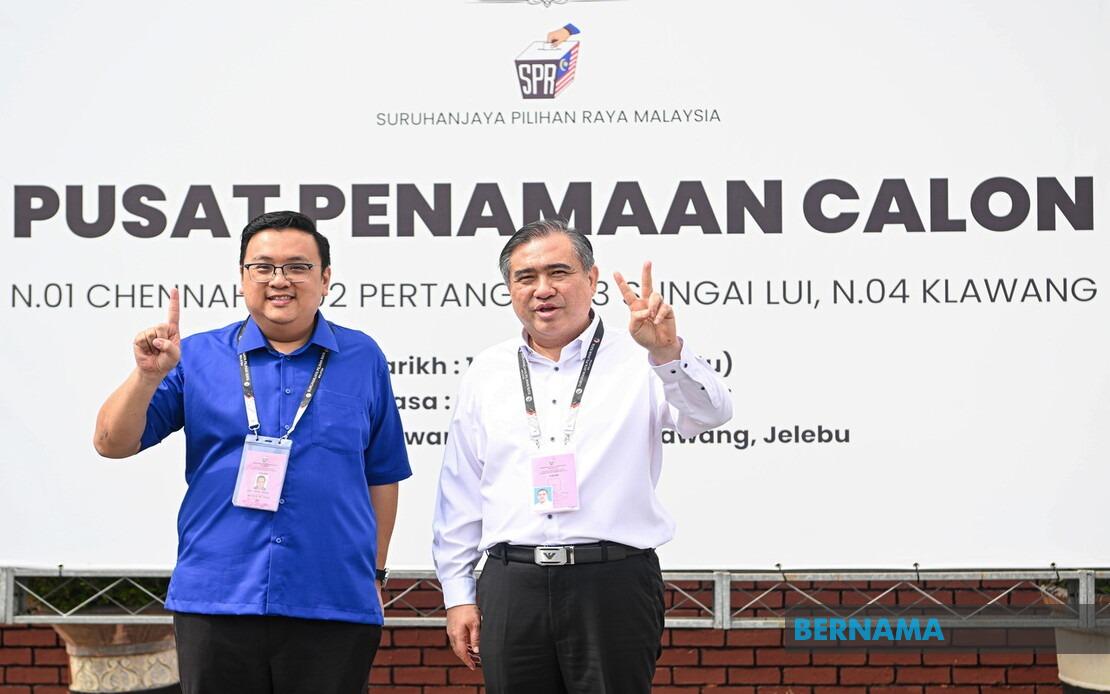
High-profile political figures will contest several of the most closely watched races. In Chennah, Transport Minister Anthony Loke, who serves as DAP secretary-general, will represent Pakatan Harapan in a straight fight against Barisan Nasional's Siow Kong Choon. The Rantau state seat will showcase a different dynamic, with UMNO deputy president and Foreign Minister Datuk Seri Mohamad Hasan defending his Barisan Nasional seat against Pakatan Harapan's Dr Azizul Hakim Mahdi. These contests involving national-level political figures often attract disproportionate media attention and campaign resources, potentially influencing overall voter sentiment beyond their specific constituencies.
The Linggi seat exemplifies the three-cornered contest pattern, featuring Negeri Sembilan Menteri Besar Datuk Seri Aminuddin Harun from Pakatan Harapan against Datuk Mohd Faizal Ramli of Barisan Nasional and Zamri Md Said representing Bersatu. This configuration suggests that even incumbent state leaders must now contend with fragmented opposition rather than facing a single unified challenger. Such contests reshape campaign strategies, as candidates must differentiate themselves not just from their primary rivals but across multiple political platforms simultaneously. The presence of Bersatu in numerous contests reflects the party's sustained effort to establish itself as a significant electoral force separate from both Pakatan Harapan and Barisan Nasional.
The proliferation of multi-candidate contests carries important implications for Malaysian electoral politics more broadly. The decline in straight fights suggests that political polarization has shifted from a binary framework toward a more complex multi-polar structure. This fragmentation can benefit candidates with concentrated support bases while potentially disadvantaging those whose backing spreads thinly across multiple constituencies. It also complicates post-election coalition mathematics, as no single bloc may command a clear majority even if individual parties achieve strong performances in their respective contests.
Electoral participation will substantially influence these fragmented contests. A total of 889,490 electors are eligible to vote, comprising 867,151 ordinary voters, 16,884 military personnel and their spouses, and 5,455 police personnel. Turnout levels in multi-candidate races often differ from binary contests, with voters sometimes remaining discouraged by apparent complexity or mobilizing with renewed enthusiasm around multiple viable alternatives. The competitive landscape across Negeri Sembilan may either boost voter engagement as additional choices attract diverse constituencies or potentially reduce participation if voters perceive overcrowding and uncertainty.
For Malaysian political observers, the Negeri Sembilan election serves as a bellwether for broader electoral trends. The state's pattern of proliferating three-cornered and multi-way contests may presage similar developments in future peninsular elections, as smaller parties consolidate their presence and political realignment continues. The outcome will provide crucial evidence about whether fragmentation advantages or disadvantages established coalitions and whether voters have genuinely shifted their preferences toward new political vehicles or are merely diversifying their tactical options within familiar structures. Understanding how Negeri Sembilan voters navigate this more complex ballot will inform strategic planning for all major political actors ahead of future electoral contests throughout Malaysia.

