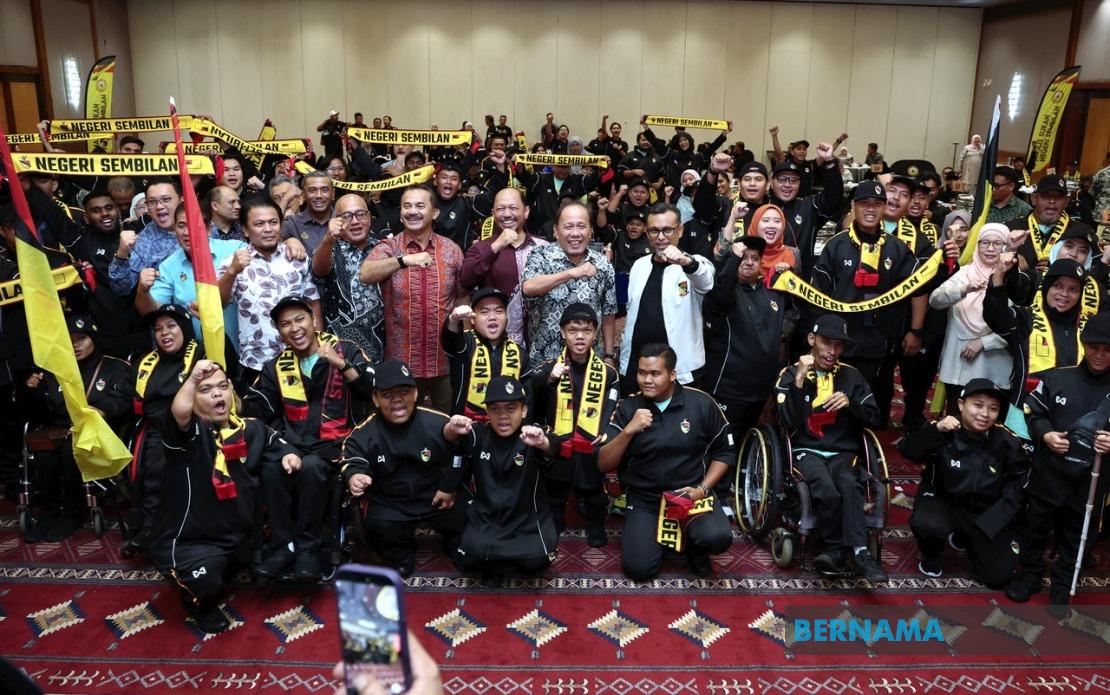
Negeri Sembilan has set its sights on securing 12 gold medals at the upcoming 2026 Para Malaysia Games, which will take place in Selangor starting September 5. The state's contingent of 80 para athletes faces this target as part of a broader effort to revitalize the state's sporting fortunes after what Menteri Besar Datuk Ismail Lasim described as a disappointing campaign at the main SUKMA Games, which concluded recently.
The Negeri Sembilan leadership views the para athlete competition as an opportunity for redemption and restoration of the state's competitive standing among the federation's teams. Datuk Ismail Lasim emphasized that this numerical target carries deeper significance beyond simple medal counting, representing instead the culmination of months of rigorous training, strategic discipline, and comprehensive preparation undertaken by each athlete competing on behalf of their state.
In remarks made following a formal flag handover ceremony to the Chef de Mission and Team Managers for the Para SUKMA Games, the Menteri Besar expressed confidence in the capacity of Negeri Sembilan's para athletes to deliver results that would restore pride to their constituencies and athletic programs. He stressed that every competitor must approach their events with absolute commitment, fully displaying the capabilities they have developed through dedicated preparation.
The messaging from state leadership clearly positions para athletes as individuals possessing exceptional resilience and competitive drive. Rather than viewing them as competing against conventional athletes, the rhetoric suggests these competitors represent a distinct form of sporting excellence that can elevate Negeri Sembilan's overall performance across both regular and para categories of national competition.
Historical context provides perspective on this ambition. At the 2024 Para SUKMA Games held in Sarawak, Negeri Sembilan's para contingent achieved considerably stronger results, collecting 14 gold medals alongside 19 silver and 20 bronze medals for a total haul of 53 medals. The current target of 12 gold medals therefore represents a modest reduction from that previous performance, though still demanding given the state's recent overall sporting trajectory.
The contrast with the regular SUKMA 2026 results underscores why state leadership has pivoted focus toward the para competition. Negeri Sembilan won merely seven gold medals out of 48 total medals at the main Games—a sharp decline from 19 gold medals out of 56 total medals achieved two years earlier. This represents not just a reduction in gold medal count but also a diminished overall medal output, indicating broader competitive weakness that the para campaign now represents an opportunity to counterbalance.
Financial incentives will accompany medal achievements, adding material motivation to the competitive drive already embedded within the athlete development program. This approach reflects recognition that elite para sport in Malaysia, like its conventional counterpart, operates within frameworks where recognition and reward systems significantly influence athlete commitment and performance optimization.
For Malaysian readers and regional observers, the para sports landscape represents an increasingly significant dimension of national competition. Para athletes demonstrate capacities that challenge conventional notions of athletic achievement and create compelling narratives around human resilience and sporting excellence. Negeri Sembilan's focus on this sector indicates growing recognition at state governance levels that para competition offers legitimate pathways to international standing and domestic prestige.
The September 5 commencement date places this competition within Malaysia's broader sporting calendar, occurring alongside other international commitments and regular domestic competitions. The Selangor venue selection also reflects logistical considerations around hosting quality para sporting infrastructure within proximity to existing medical, training, and administrative facilities in the Klang Valley region.
For Southeast Asian context, Malaysia's commitment to para sports development through structured state-level competitions like Para SUKMA aligns with regional trends toward greater inclusion and recognition of athletes with disabilities. The competition framework demonstrates how federal systems can decentralize sporting excellence while maintaining coherent national standards and competitive pathways.
Datuk Mustapha Nagoor, who chairs the State Youth and Sports Development Action Committee, and Marhizani Abdul Razak, director of Negeri Sembilan Sports Council, join the Menteri Besar in overseeing preparations. This multi-level governance structure ensures that athlete support extends beyond rhetoric into practical resource allocation and administrative coordination necessary for competitive success.
Ultimately, Negeri Sembilan's para sports campaign represents more than medal pursuit. It embodies state commitment to inclusive athletic development, demonstrates confidence in para athlete capabilities, and offers an avenue for restoring competitive reputation following setbacks in conventional competition. The September campaign will test whether the confidence expressed by state leadership translates into tangible achievement on the competition field.

