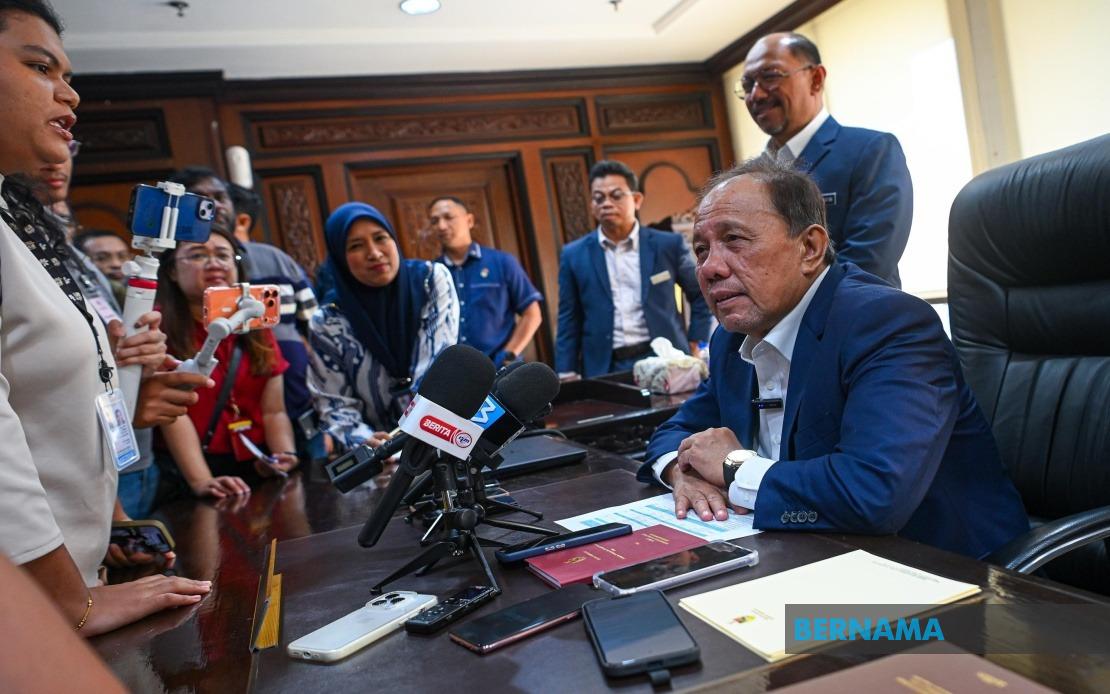
Negeri Sembilan's freshly appointed Menteri Besar Datuk Ismail Lasim has signalled his administration's intention to restructure the state executive framework by introducing Deputy Executive Council positions for strategic portfolios. The proposal, unveiled during his first full day at the helm, reflects an innovative approach to managing the responsibilities of Malaysia's smallest state ahead of what promises to be a demanding term in office.
Speaking at Wisma Negeri in Seremban, Ismail explained that the constraint of limited traditional Exco posts has prompted the government to explore this alternative structure. Rather than operate within the existing framework, the 67-year-old assemblyman representing Juasseh has identified the need to distribute leadership duties across a broader ministerial tier. This strategy acknowledges both the numerical limitations of the executive structure and the political complexities of governing with multiple coalition partners.
The Negeri Sembilan government rests on an alliance between Barisan Nasional and Perikatan Nasional, which collectively secured 25 of the 36 state assembly seats in the recent election. This two-thirds majority provides Ismail with considerable policy latitude, yet the distribution of executive positions across coalition partners requires careful calibration. The proposed Deputy Exco roles would predominantly go to assemblymen from BN's component parties as well as PAS and Parti Wawasan Negara, the latter being a newer political entity in the state's landscape.
What makes this structural initiative noteworthy within Malaysia's governance context is its departure from conventional executive arrangements. While most states maintain a fixed number of Exco posts established by constitutional provision, Negeri Sembilan is exploring an intermediate tier that could provide executive responsibility and profile to additional assemblymen without expanding the formal cabinet structure. This flexibility could serve as a model for other state governments managing coalition dynamics with limited portfolio availability.
The timing of this announcement carries significance. Ismail took his oath before Tuanku Muhriz Tuanku Munawir at Istana Besar Seri Menanti just three days prior, formally commencing his tenure as Menteri Besar. His first official day at the office saw the customary welcome from State Secretary Datuk Mohd Zafir Ibrahim and departmental heads, setting the stage for what appears to be a methodical transition. The newly minted leadership is clearly determined to establish administrative clarity quickly, with Ismail indicating that the full Exco lineup would be finalised by Friday or, at the latest, Monday.
Parallel to the Deputy Exco consideration, the state government is also examining the creation of Senior Exco positions. Although constitutional provisions exist for such appointments, Ismail noted that finalisation of this tier remains pending. This layered approach suggests the administration is contemplating a more hierarchical executive structure than has traditionally existed in Negeri Sembilan, potentially reflecting lessons learned from managing larger coalitions or attempting to accommodate political expectations across multiple parties.
The recent election result itself bears examination for Malaysian readers seeking to understand the state's political trajectory. Barisan Nasional's commanding 18-seat haul represents a strong mandate, while Perikatan Nasional's seven seats provide a junior coalition partner with meaningful representation. Pakatan Harapan's 11 seats leave the opposition competitive in many constituencies but without the critical mass to influence executive decision-making. This configuration suggests that governance decisions will largely reflect BN preferences, with Perikatan Nasional having leverage primarily through the coalition arrangement rather than numerical strength.
For Negeri Sembilan's civil service and development agenda, the expanded executive framework could yield both benefits and complications. More deputy-level positions mean additional oversight and input into implementation of state policies, potentially enhancing coordination between government agencies and political leadership. However, the proliferation of executive roles also creates greater potential for overlapping responsibilities and slower decision-making if lines of authority are not clearly delineated. Ismail's administration will need to publicly clarify the specific portfolios assigned to each Deputy Exco to avoid confusion amongst civil servants and the public.
The broader implication for Southeast Asian governance is modest but genuine. As Malaysian states experiment with executive structures responsive to coalition realities, they inadvertently test whether traditional Westminster-derived systems can accommodate contemporary political pluralism. Negeri Sembilan's innovation—if successfully implemented—might influence how other states managing complex coalition arrangements approach cabinet building in future transitions.
Ismail's measured approach to the announcement suggests he is building consensus before finalising the structure rather than imposing a predetermined hierarchy. His statement that specific deputy positions have not been determined indicates ongoing negotiations among coalition partners. This diplomatic cadence reflects political maturity and an awareness that hasty allocation of executive roles can fracture coalition unity. By allowing coalition partners input into final decisions, he may be laying groundwork for smoother administration in the months ahead.
The state government's focus on administrative strengthening comes at a time when Negeri Sembilan faces economic challenges common to smaller Malaysian states: dependency on tin mining legacy infrastructure, competition for federal development allocations, and the need to diversify revenue streams. How the expanded executive framework contributes to addressing these structural challenges will become apparent only once the full cabinet is constituted and begins implementing policy. For now, Ismail has signalled that his government intends to move decisively, with the formal announcement of the complete Exco composition expected within days.

