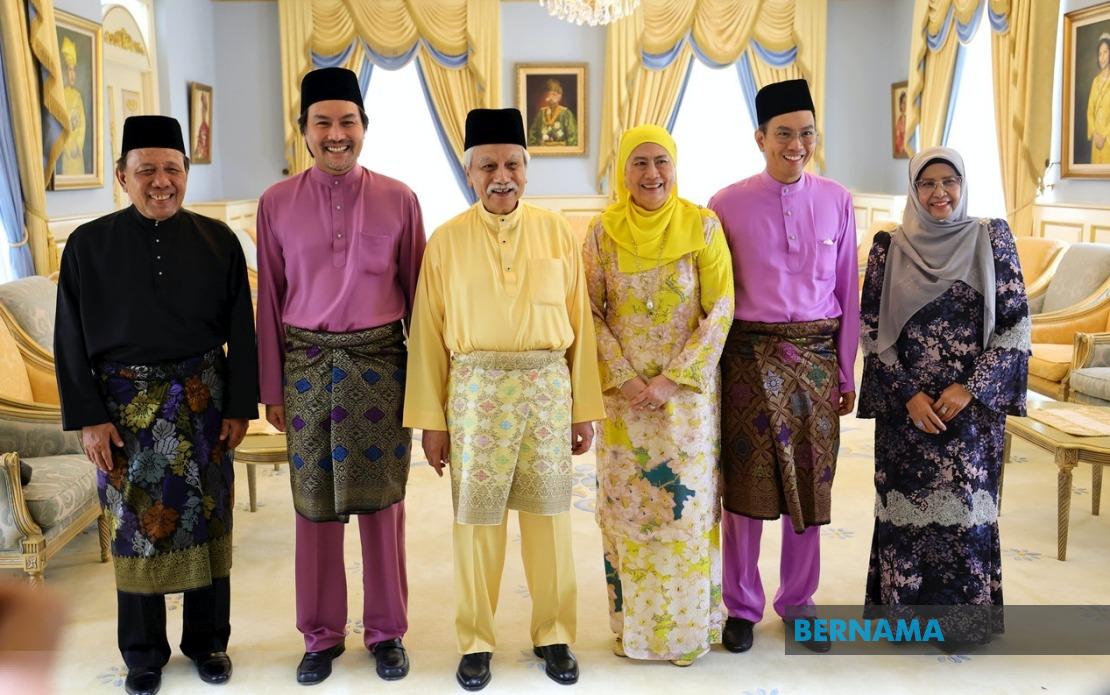
Newly appointed Negeri Sembilan Menteri Besar Datuk Ismail Lasim has signalled that the composition of the state's executive council should be resolved by the end of this week, following formal discussions with party leadership and approval from the Yang Dipertuan Besar. Speaking at his inaugural press conference shortly after taking the oath of office at Istana Besar Seri Menanti in Kuala Pilah, Ismail outlined a structured timeline for assembling his administration that reflects the complex coalition dynamics now shaping state governance in Malaysia's central region.
The process will unfold in carefully sequenced stages, beginning with internal consultations among Barisan Nasional leadership before the proposed cabinet is presented to Tuanku Muhriz Tuanuk Munawir for formal consent. Ismail has also committed to meeting UMNO president Datuk Seri Dr Ahmad Zahid Hamidi to discuss the executive council's composition, a step that underscores the continued significance of party hierarchy in determining ministerial portfolios. This multi-layered approval mechanism reflects constitutional protocols that govern state governance in Malaysia, where royal institutions retain explicit authority over executive appointments alongside political considerations.
The inclusion of Perikatan Nasional representatives in the executive council remains an open question requiring coordination between the two coalitions that together secured a commanding two-thirds majority in yesterday's state election. Ismail's reference to seeking Ahmad Zahid's views on this matter reveals the nuanced negotiations necessary when governing coalitions span multiple parties with distinct institutional interests and policy priorities. The potential cross-coalition appointments signal a desire to consolidate the broad electoral mandate while maintaining internal party discipline and rewarding component partners for their electoral contributions.
Regarding the size of the executive council itself, Ismail expressed preference for maintaining the traditional 10-member structure that has served the state administration previously. This proposed continuity stands in contrast to the temptation that often accompanies new administrations to expand cabinet sizes as a means of accommodating more politicians or rewarding additional constituencies. The retention of a comparatively lean executive framework suggests Ismail's intention to prioritise administrative efficiency and focused governance, particularly given that formal discussions on portfolio allocations have yet to commence.
Yesterday's electoral outcome delivered Barisan Nasional 18 state assembly seats from a total of 36 contested, while Perikatan Nasional secured seven seats, creating an unusually strong governing coalition that removes traditional concerns about legislative vulnerability or fractious backbenchers threatening government stability. This commanding electoral performance provides Ismail with considerable latitude in constructing his cabinet, allowing him to balance political reward mechanisms with administrative capability and policy coherence. The 103 candidates who contested across the 36 constituencies reflected the competition that characterised this round of state-level democratic engagement in Negeri Sembilan.
The swiftness with which Ismail is proceeding with cabinet finalisation reflects not only his personal determination but also the explicit preference articulated by the Yang Dipertuan Besar for expedited resolution. This royal guidance carries considerable weight in Malaysian political culture, where institutions of constitutional monarchy exercise legitimate influence over the pace and tenor of political transitions. Resolving cabinet appointments within days rather than weeks demonstrates responsiveness to these institutional expectations while projecting an image of decisive leadership to the broader electorate.
Ismail's emphasis on incorporating elected representatives from across the Barisan Nasional coalition, encompassing not merely UMNO but also component parties MCA and MIC, reflects commitment to maintaining the traditional multi-ethnic political architecture that has long characterised Malaysian federalism. This inclusive approach to portfolio distribution serves practical purposes in managing diverse community interests while upholding the inclusive coalition model that has structured Malaysian governance for decades. The careful attention to representation signals awareness that the cabinet's composition sends symbolic messages to various voter constituencies about whose interests will receive ministerial attention.
Beyond the mechanics of cabinet assembly, Ismail has identified the welfare and well-being of the populace as the foundational priority of his administration, articulating a values-oriented governance framework that positions elected government as fundamentally accountable to those who granted it democratic legitimacy. This rhetorical emphasis on popular welfare establishes the interpretive lens through which his government's subsequent policy decisions will presumably be evaluated by both supporters and critics. Such framing anticipates the inevitable scrutiny that will accompany implementation of state budgets, infrastructure projects, and regulatory initiatives across diverse policy domains.
The structural configuration now emerging in Negeri Sembilan represents a relatively stable governing arrangement compared to several other Malaysian states where coalition mathematics have generated persistent uncertainty or competing power centres. The absence of narrow majorities or contentious coalition partners removes a category of governance risk that has historically complicated state-level administration in Malaysia. This stability provides a foundation for medium-term policy implementation and reduces the political friction that narrow margins typically generate.
For Malaysian political observers and stakeholders monitoring state-level governance trends, the Negeri Sembilan transition illustrates how electoral outcomes translate into administrative reality through carefully calibrated institutional processes that blend democratic accountability with constitutional monarchy and party hierarchy. The forthcoming finalisation of the executive council will provide concrete indication of how Ismail reconciles the various pressures and considerations that invariably accompany the transformation of electoral victory into governmental authority. The coming days will determine not only which individuals receive ministerial position but also what policy priorities and constituency interests receive greatest emphasis within the state administration's governing agenda.

