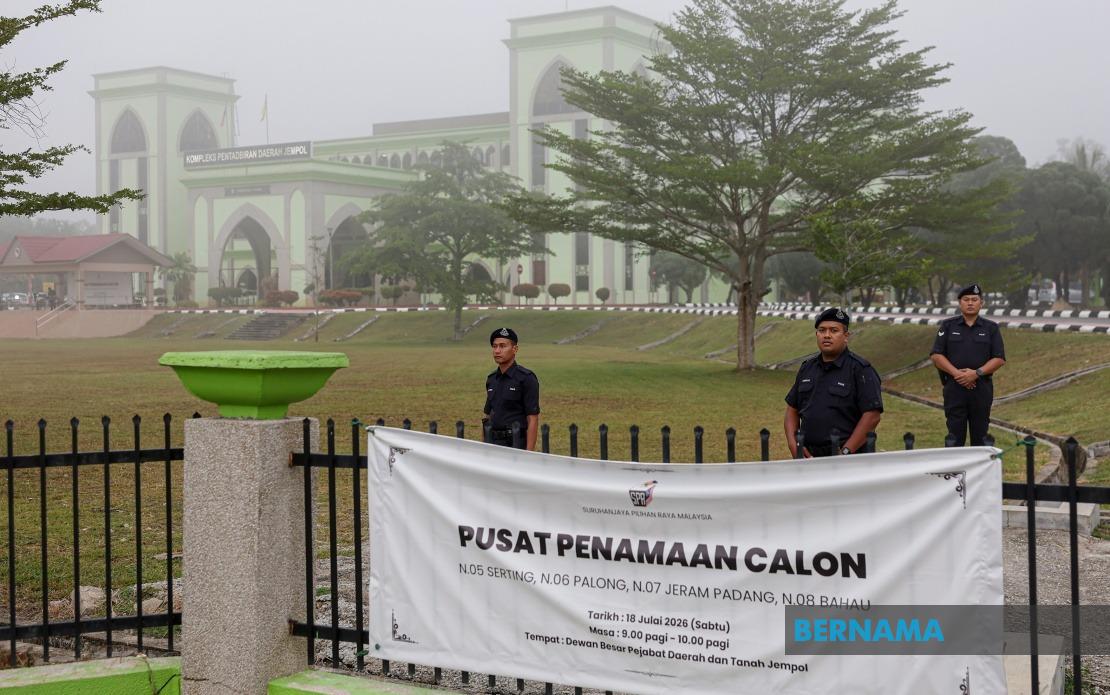
Negeri Sembilan's political machinery shifted into high gear on July 18 as all eight nomination centres opened precisely at 9 am to begin formal candidate registration for the 16th state election. The simultaneous opening of registration posts across the state marked the official start of a carefully choreographed electoral process designed to culminate in polling on August 1, providing voters with a decisive say in determining their state government for the next five years.
The nomination window remained open for just sixty minutes, closing at 10 am after which returning officers moved quickly to verify applications and publicly announce the complete roster of eligible candidates cleared to contest the election. This compressed timeframe reflects the Election Commission's precision in managing the procedural elements that must precede any state-level poll, ensuring all administrative requirements are satisfied before the campaign trail truly heats up.
Weather cooperated fully with electoral planners, with favourable atmospheric conditions reported across all seven districts, helping to facilitate smooth traffic flow and attendance at the nomination centres. Such logistical cooperation may seem trivial but carries practical significance in a state spread across diverse terrain where unexpected downpours could impede voter movement or complicate security operations.
Securing the nomination process ranked as a paramount concern for state authorities. Negeri Sembilan police chief Datuk Alzafny Ahmad deployed 2,393 personnel strategically across all eight centres, creating a visible security presence intended both to deter any potential disruption and to reassure election officials and candidates alike that the registration phase would unfold without incident. This substantial police footprint underscores the state's commitment to conducting a credible election free from intimidation or violence.
The electoral calendar now moves forward with precision timing. The formal campaign period stretches across fourteen days, commencing immediately upon the official announcement of qualified candidates and concluding at 11.59 pm on July 31. This fortnight affords political parties and independent candidates adequate time to canvas voters, articulate their platforms, and mobilise their grassroots networks across Negeri Sembilan's diverse communities.
Polling itself arrives on August 1, with early voting opportunities already scheduled for July 28 to accommodate military personnel, police officers, and their spouses who require flexibility in exercising their franchise. The Electoral Commission has registered 889,490 eligible voters across the state as of June 4, 2026, encompassing 867,151 ordinary citizens, 16,884 military and police families, and 5,455 uniformed personnel eligible for advance voting. This substantial electorate base reflects Negeri Sembilan's significant role within Malaysia's political landscape.
The 16th election arrives in the wake of substantial political shifts that transpired during the 15th state election in 2023. That contest saw Pakatan Harapan secure a commanding 17 of the 36 state assembly seats, positioning the coalition as the dominant force in Seremban. Barisan Nasional retained credible support through 14 seats while Perikatan Nasional secured five seats, establishing a three-way competitive dynamic within the state legislature. These earlier results provide essential context for understanding the political terrain candidates must navigate this time.
The dissolution of the Negeri Sembilan State Legislative Assembly on June 5 provided the formal catalyst for this election, occurring after the Yang Dipertuan Besar of Negeri Sembilan, Tuanku Muhriz Tuanku Munawir, granted consent for the chamber to be wound up. This constitutional process initiated the machinery leading inexorably toward the nomination day proceedings and subsequent electoral contest.
For Malaysian political observers and Southeast Asian analysts tracking state-level democratic processes, Negeri Sembilan's election cycle carries significance beyond its immediate constituency. The contest provides insight into voter sentiment toward the various coalitions governing Malaysia, particularly given Pakatan Harapan's control of both the federal government and this state apparatus. Any substantial shift in voting patterns could reverberate through national political calculations and influence coalition dynamics heading into future parliamentary contests.
The smooth execution of nomination procedures across all eight centres demonstrates Malaysia's capacity to administer multi-layered democratic exercises with relative efficiency. Despite occasional controversies surrounding electoral boundaries or campaign financing, the fundamental mechanics of voter registration, candidate nomination, and polling administration continue functioning as designed. This operational competence, though sometimes taken for granted, represents a meaningful achievement within the Southeast Asian context where electoral administration remains challenged in numerous jurisdictions.
Candidates who successfully navigated the nomination process now face the genuine work of campaigning. The fourteen-day sprint requires strategic resource allocation, whether through town halls, digital outreach, or traditional door-to-door engagement. For Pakatan Harapan, defending its majority necessitates energising the coalition vote while convincing fence-sitters that continuity serves the state's developmental interests. For Barisan Nasional and Perikatan Nasional, the imperative centres on persuading voters that alternative governance approaches merit serious consideration. Throughout this campaign period, the state's 889,490 registered voters will hear competing visions for Negeri Sembilan's future before casting their decisive ballots on August 1.

