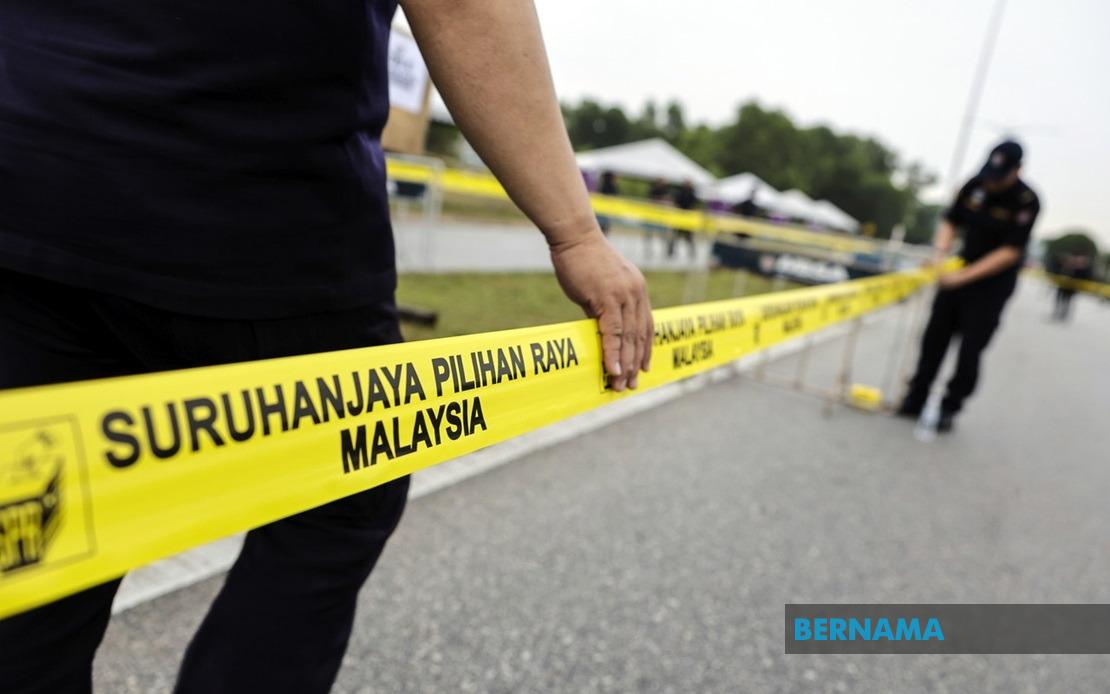
Voters and candidates preparing for Negeri Sembilan's 16th state election will largely benefit from pleasant weather during tomorrow's nomination proceedings, the Malaysian Meteorological Department indicated on Wednesday. The fair conditions expected across most of the state should facilitate the orderly conduct of the nomination process, which represents the formal launch of campaigning activities before the August 1 general election. However, officials cautioned that the afternoon may bring scattered thunderstorms to various locations, requiring election workers and participants to remain vigilant about changing atmospheric conditions.
Dr Mohd Hisham Mohd Anip, the department's director-general, outlined a nuanced forecast for the different regions of Negeri Sembilan. The morning hours should see dry conditions in the interior and southern districts of Jelebu, Jempol, Kuala Pilah, Rembau and Tampin, creating optimal circumstances for the opening of nomination centres. By contrast, the more coastal areas around Port Dickson and the state capital Seremban are anticipated to experience some rainfall during the morning hours. This geographical variation reflects typical atmospheric patterns for the region during this season, where maritime influences tend to produce earlier precipitation in coastal zones.
The meteorological authority's most significant caveat concerns the afternoon forecast, when thunderstorms are expected to develop across the majority of districts statewide. This pattern is characteristic of tropical afternoons in Peninsular Malaysia, where daytime heating generates convective activity. Dr Mohd Hisham emphasized that despite the thunderstorm risk, the expected rainfall should be transient in nature. Rather than sustained deluges that might disrupt proceedings, the department anticipates brief, passing showers that clear relatively quickly—a distinction important for election administrators planning logistics and security arrangements.
Temperature readings are forecast to follow typical patterns for mid-July in the state. Minimum values across Negeri Sembilan are expected to hover between 23 and 24 degrees Celsius, providing relatively cool conditions in the early morning hours when nomination centres open. Maximum temperatures reaching 32 to 33 degrees Celsius in the afternoon would create warm, humid conditions—warm enough to make outdoor campaigning challenging but not extreme by Malaysian standards. The combination of warm daytime temperatures with afternoon convection makes the afternoon thunderstorm forecast particularly plausible from a meteorological standpoint.
Election officials and candidates are advised to maintain awareness of real-time weather updates through the MetMalaysia website and official channels. This guidance proves especially pertinent for campaign teams organizing candidate movements, public gatherings, and media events throughout nomination day. The Election Commission's coordination with MetMalaysia underscores the practical importance of meteorological forecasts in electoral administration, affecting everything from voter turnout to the safety of polling and nomination centre operations.
The nomination proceedings commence tomorrow at 9 am, with all eight designated nomination centres accepting candidate registrations until 10 am. Following the formal submission deadline, returning officers will announce the confirmed candidate list, crystallizing the race for all 36 state assembly seats. The compressed timeline—with early voting on July 28 and general voting on August 1—means that tomorrow's weather conditions will set the tone for what promises to be an intensely contested campaign period across the state.
Negeri Sembilan's electoral landscape presents considerable complexity, with multiple coalitions and independent groupings competing for voter support. Pakatan Harapan has committed to contesting all 36 seats, with the People's Justice Party fielding 16 candidates, the Democratic Action Party 11, and the National Amanah party nine. Barisan Nasional is adopting a more selective approach, putting forward 25 candidates split between the United Malays National Organization's 16 nominees, the Malaysian Chinese Association's seven, and the Malaysian Indian Congress's two representatives. This configuration means that in numerous constituencies, voters will face multi-candidate contests rather than straightforward head-to-head battles.
Perikatan Nasional, the coalition comprising the Malaysian Pan-Islamic Party, Vision Party, Gerakan, and the Malaysian Indian People's Party, announced an 11-candidate slate that reflects the partnership's internal structure and seat-sharing arrangements. Smaller parties including the Parti Orang Asli Malaysia, Socialist Party of Malaysia, and Parti Barisan Jemaah Islamiah are each fielding single candidates, providing alternative voices in what has become an increasingly crowded electoral field. Parti Pribumi Bersatu Malaysia, a significant player in recent Malaysian politics, was expected to announce its candidate list separately, indicating ongoing internal deliberations about its strategic positioning in the contest.
The Electoral Commission has registered 889,490 eligible voters across Negeri Sembilan's 36 constituencies, comprising 867,151 ordinary voters alongside 16,884 military personnel and their families, and 5,455 police officers eligible for early voting on July 28. This substantial electorate—approaching 900,000 individuals—ensures that the Negeri Sembilan election carries meaningful implications for national political trajectories. The state assembly's 36 seats represent a significant contingent within Malaysia's federal structure, making state-level outcomes consequential for the broader balance of power between competing national coalitions.
The dissolution of the previous assembly on June 5 initiated the electoral timeline, with the commission setting the compressed schedule that culminates in the August 1 polling day. This abbreviated campaign period, compared to some previous Malaysian elections, requires all participants to mobilize rapidly and efficiently. Tomorrow's weather, while seemingly a minor administrative detail, acquires practical significance in facilitating that mobilization. Fair conditions in the morning should allow smooth processing of nomination submissions, while afternoon thunderstorms, though potentially disruptive to campaign launch events, should remain brief enough not to fundamentally impede the formal opening of the campaign.
For Malaysian observers tracking the broader trajectory of electoral politics, the Negeri Sembilan contest serves as a bellwether of sorts—the first major state-level election since the federal polls and consequent political realignments of recent months. The weather forecast, offering mostly favorable conditions with predictable afternoon disturbances, should at least ensure that campaign activities proceed without meteorological complications. The real determinants of the election's outcome will rest not with atmospheric conditions but with the complex interplay of coalition politics, candidate quality, voter sentiment, and campaign effectiveness that characterizes contemporary Malaysian electoral contests.

