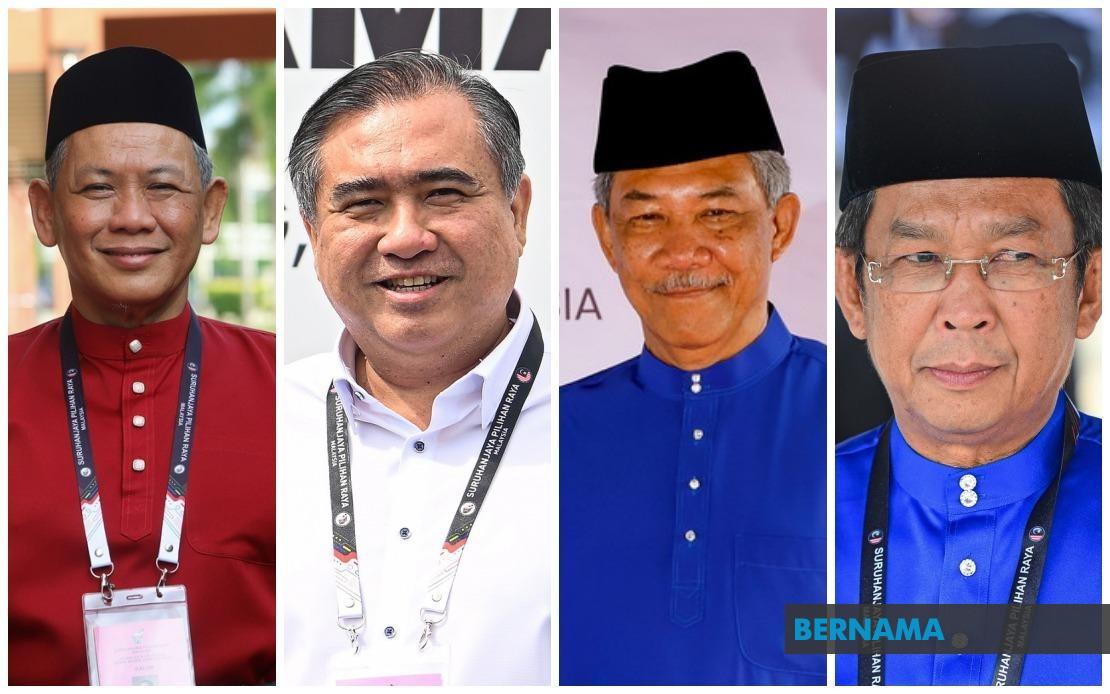
The 16th Negeri Sembilan state election is shaping up as a genuinely unpredictable contest, with established political heavyweights discovering that incumbency and national prominence offer limited protection. Senior leaders from the coalition and opposition parties are confronting surprisingly robust challenges in constituencies they might have previously considered secure, reflecting shifting voter sentiment and the growing viability of alternative political forces in the state.
At the centre of attention stands Datuk Seri Aminuddin Harun, the Pakatan Harapan chairman and caretaker Menteri Besar, who finds himself in a three-way tussle for the Linggi seat. His position is complicated by the fragmentation of the anti-government vote, with both BN incumbent Datuk Mohd Faizal Ramli and Bersatu candidate Datuk Zamri Md Said presenting credible alternatives. For Aminuddin, who also holds the position of PKR vice-president, this outcome underscores the challenge facing the state's ruling coalition as it navigates competing interests and the residual appeal of Bersatu among certain voter blocs.
The Chennah constituency presents another significant test, one with particular symbolic weight for DAP's national standing. Anthony Loke, the party's secretary-general and Transport Minister, has represented the seat comfortably since 2013, and Chennah has long served as a DAP stronghold. His opponent, Negeri Sembilan MCA Youth chief Siow Kong Choon, offers BN a strategic attempt to reclaim ground in what was previously considered a secure opposition territory. The contest signals that BN is mounting a serious challenge in constituencies beyond its traditional bases of support.
Perhaps the most striking matchup involves Datuk Seri Mohamad Hasan in Rantau, where the BN deputy chairman and Foreign Minister faces a generational and political challenge. At 70 years old, Mohamad—widely known as Tok Mat—has held the Rantau seat continuously since 2004, establishing himself as virtually synonymous with the constituency. His opponent, Dr Azizul Hakim Mahdi from PH, represents not merely political opposition but a fundamentally different demographic profile. The contest appears designed to test whether long tenure and established networks can withstand the appeal of fresh, younger candidates representing governing coalition politics.
The Pertang race adds another layer of complexity to this political picture. Incumbent Jalaluddin Alias of BN, who holds the position of Negeri Sembilan UMNO chief, confronts a three-way contest against Mohd Umry Abdul Khois representing PH and Mohd Faizal Fadli Mohd Idrus fielded by Bersatu. Jalaluddin's tenure since 2013 appears insufficient to guarantee success in an environment where voter sentiment is clearly fractionalised across multiple political vehicles.
The Nilai constituency exemplifies the fragmentation characterising this election. The five-cornered battle features DAP national deputy chairman J. Arul Kumar defending his seat against BN's Datuk Lai Chien Kong, Bersatu's Datuk V. Saravana Kumar, Berjasa's Zamani Ibrahim, and independent candidate Omar Mohd Isa. This level of competition reflects the difficulty opposition and independent candidates face in consolidating votes across a fragmented political landscape, even in constituencies where PH might claim historical advantages.
Similarly competitive is Sri Tanjung, where five candidates are vying for the seat currently held by PH's Dr G. Rajassekaran. The field encompasses BN's A. Achutan, two independent candidates—Saravanan Arumugam and Islah Wahyudi Zainudin—and Bersatu's Leevineshwaraan Murugan, who at 23 years old is the youngest candidate contesting the election. The emergence of such youthful candidates reflects attempts by political parties to refresh their appeal and demonstrate commitment to demographic change.
The candidate distribution across parties reveals the strategic positioning for this election. Pakatan Harapan is fielding candidates for all 36 seats, while Barisan Nasional enters with 25 candidates, Bersatu with 24, and Perikatan Nasional with 11. Additionally, Barisan Jemaah Islamiah Se-Malaysia, Parti Orang Asli Malaysia, and Parti Sosialis Malaysia each field a single candidate, with four independent nominations also recorded. This distribution suggests that the political competition has expanded significantly beyond the traditional BN-opposition binary.
A total of 103 candidates are competing for the 36 state assembly seats, a figure that underscores the intensity of this contest. The nomination process concluded on July 18, triggering a 14-day campaign period extending through July 31. Early voting was scheduled for July 28, with polling day set for August 1. This compressed timeline creates a frenetic political environment where candidates and parties must rapidly establish their messaging and mobilise supporters.
For Malaysian observers and the broader Southeast Asian political community, the Negeri Sembilan contest carries implications extending beyond the state's borders. The apparent weakness of previously secure incumbents, combined with the demonstrated viability of Bersatu as an alternative political force, suggests that Malaysian voters are increasingly willing to entertain different political configurations rather than defaulting to established power structures. The rise of independent candidates and smaller parties equally indicates that voters may be seeking options outside the primary political coalitions, a trend that could reshape the political landscape beyond this particular state election.
The electoral dynamics in Negeri Sembilan also merit attention from parties and observers across Southeast Asia, as they illuminate broader questions about voter behaviour in post-pandemic politics. The apparent unpredictability of the contest, combined with generational tensions evident in certain races, suggests that traditional assumptions about electoral outcomes require constant recalibration in response to evolving political sentiment and demographic change.

